


Characterization and Function of MicroRNA∗s in Plants
- PMID: 29312425
- PMCID: PMC5744440
- DOI: 10.3389/fpls.2017.02200
Characterization and Function of MicroRNA∗s in Plants
Abstract
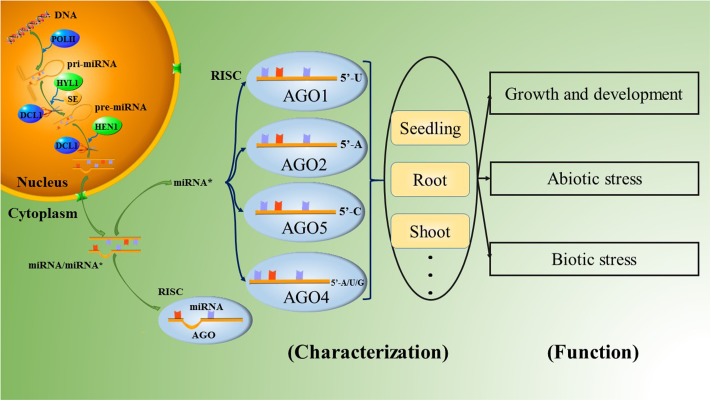
MicroRNAs, a group of non-coding RNA molecules, play essential roles in a wide range of cellular processes in different molecules, cells, and organisms. In plants, microRNAs are a class of 20- to 24-nucleotides endogenous small RNAs that repress gene expression. The microRNA guide strand (miRNA) and its complementary strand (miRNA∗) both originate from the miRNA/miRNA∗ duplex. Generally, the guide strands act as post-transcriptional regulators that suppress gene expression by cleaving their target mRNA transcripts, whereas the complementary strands were thought to be degraded as 'passenger strands.' However, the complementary strand has been confirmed to possess significant biological functionality in recent reports. In this review, we summarized the binding characteristics of the miRNA∗ strands with ARGONAUTE proteins, their tissue-specific accumulations and their biological functions, illustrating the essential roles of miRNA∗s in biological processes and therefore providing directions for further exploration.
Keywords: ARGONAUTE protein; miRNA; miRNA∗; passenger strand; stress response.
Figures
References
LinkOut - more resources
Full Text Sources
Other Literature Sources
