Impact of sarcopenic overweight on the outcomes after living donor liver transplantation
- PMID: 29312971
- PMCID: PMC5756775
- DOI: 10.21037/hbsn.2017.02.02
Impact of sarcopenic overweight on the outcomes after living donor liver transplantation
Abstract
Background: The effect of body composition disturbances has been recently in focus. Sarcopenic obesity, a co-occurrence of low muscle mass and high body fat was reportedly predictive of high mortality in patients with cirrhosis. However, the impact of the interacting sarcopenia and overweight on the outcomes after liver transplantation is still unclear.
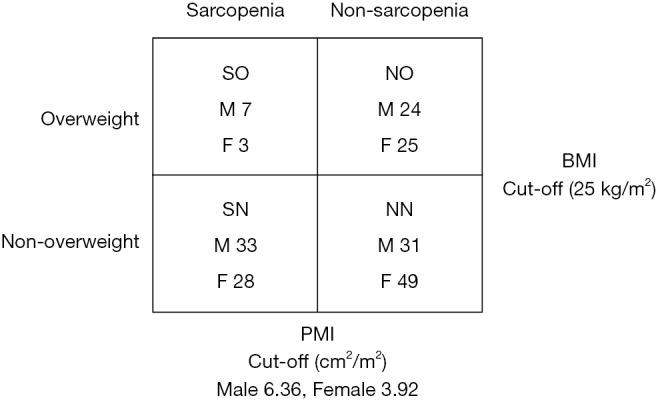
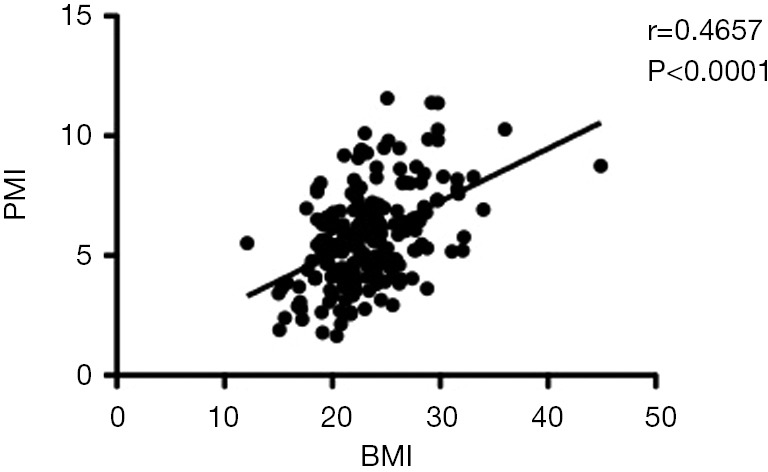
Methods: We evaluated 200 patients undergoing adult-to-adult living donor liver transplantation at our institution between January 2008 and November 2013 classified according to BMI and psoas muscle index (PMI) on admission to transplant into 4 subgroups; sarcopenic overweight (SO), sarcopenic non-overweight (SN), non-sarcopenic overweight and non-sarcopenic non-overweight (NN). Short-term outcomes and overall post-transplant survival were compared among the four subgroups.
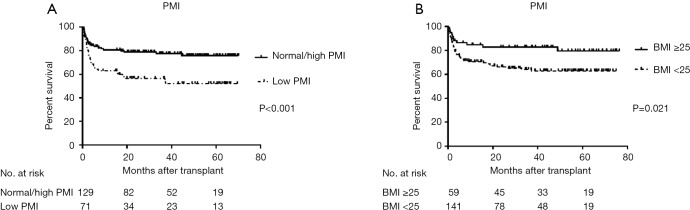
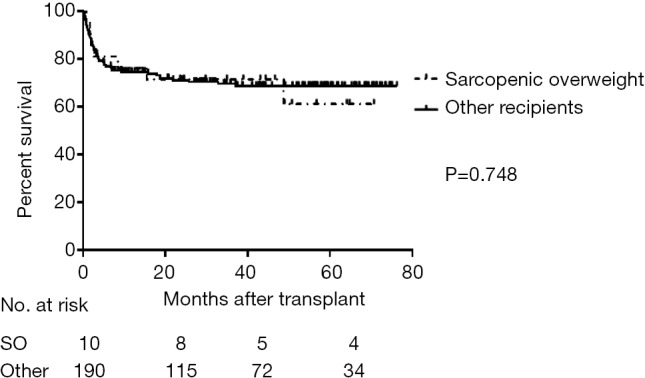
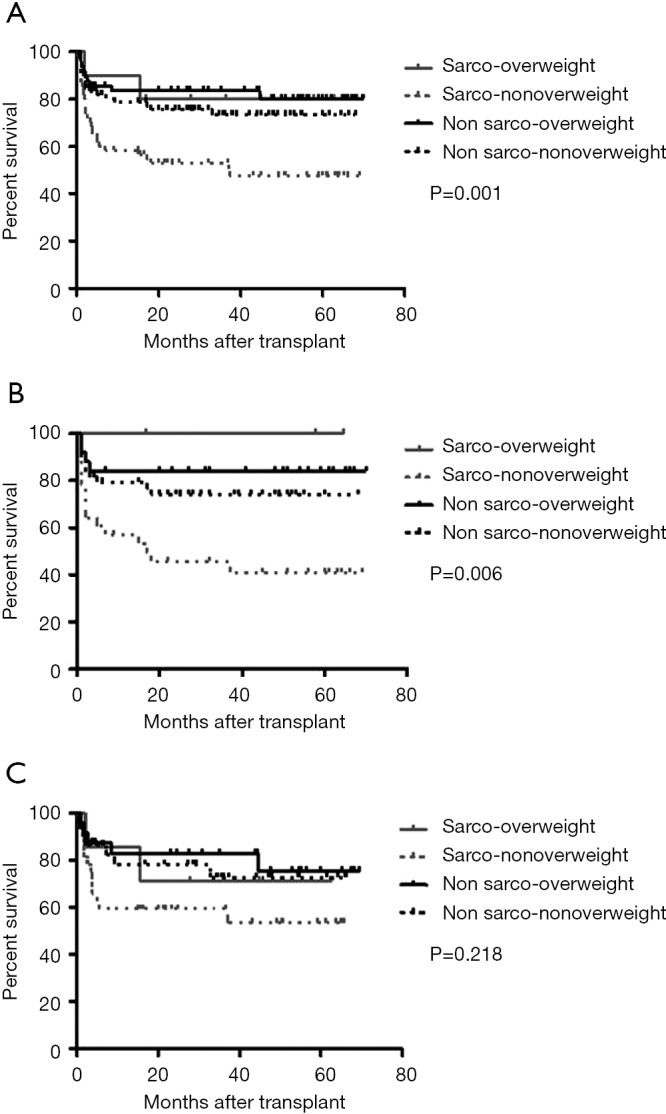
Results: Sarcopenic patients with preoperative low PMI had higher incidence of postoperative bacteremia and major postoperative complications, and poorer overall post-transplant survival than non-sarcopenic patients with normal/high PMI (P<0.001, respectively). Overweight recipients had a significantly higher overall survival (OS) rate than non-overweight patients (P=0.021). SO subgroup (low PMI and BMI ≥25) had statistically indifferent incidence of postoperative bacteremia, major postoperative complications or overall post-transplant survival than other recipients. In contrast, SN subgroup (low PMI and BMI <25) had higher incidence of postoperative bacteremia (P<0.001), major postoperative complications (P<0.001) than the SO subgroup and possessed the poorest OS among the four recipient subgroups (P=0.001).
Conclusions: In living donor liver transplantation, preoperative SO did not confer added significant morbidity or mortality risks than the stand-alone sarcopenia.
Keywords: Living donor liver transplantation (LDLT); overweight; psoas muscle index (PMI); sarcopenia.
Conflict of interest statement
Conflicts of Interest: The authors have no conflicts of interest to declare.
Figures
References
LinkOut - more resources
Full Text Sources
Other Literature Sources