


Genomic comparisons of Streptococcus suis serotype 9 strains recovered from diseased pigs in Spain and Canada
- PMID: 29316972
- PMCID: PMC5759227
- DOI: 10.1186/s13567-017-0498-2
Genomic comparisons of Streptococcus suis serotype 9 strains recovered from diseased pigs in Spain and Canada
Erratum in
-
Correction to: Genomic comparisons of Streptococcus suis serotype 9 strains recovered from diseased pigs in Spain and Canada.Vet Res. 2019 Sep 16;50(1):62. doi: 10.1186/s13567-019-0680-9. Vet Res. 2019. PMID: 31526397 Free PMC article.
Abstract
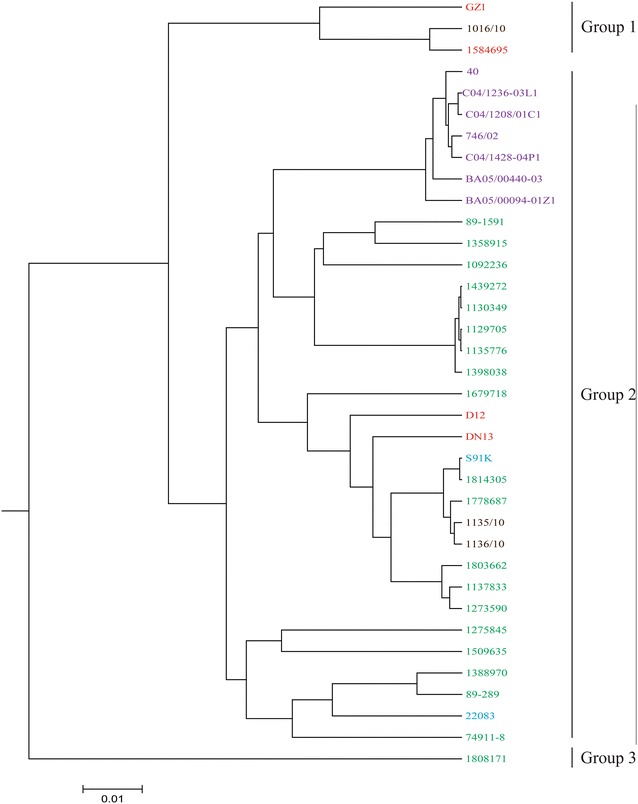
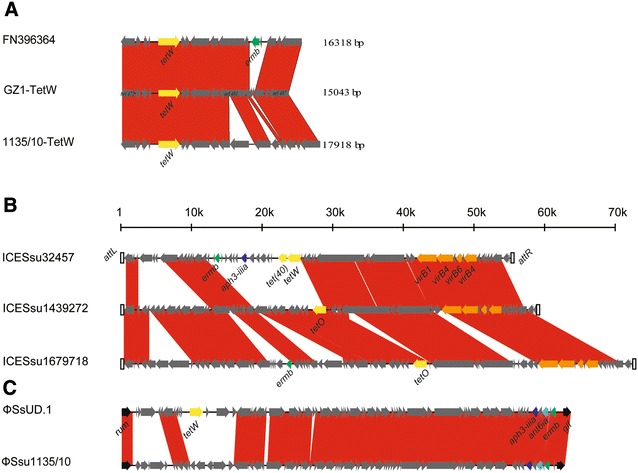
Streptococcus suis is one of the most important bacterial pathogens in the porcine industry and also a zoonotic agent. Serotype 9 is becoming one of the most prevalent serotypes within the S. suis population in certain European countries. In the present study, serotype 9 strains isolated from a country where infection due to this serotype is endemic (Spain), were compared to those recovered from Canada, where this serotype is rarely isolated from diseased pigs. For comparison purposes, strains from Brazil and the only strain isolated from a human case, in Thailand, were also incorporated. Firstly, sequence types (STs) were obtained followed by detection of putative virulence factors. Phylogenetic trees were constructed using the non-recombinant single nucleotide polymorphisms from core genomes of tested strains. Most Spanish strains were either ST123 or ST125, whereas Canadian strains were highly heterogeneous. However, the distribution of putative virulence factors was similar in both groups of strains. The fact that ST16 strains harbored more putative virulence genes and shared greater similarity with the genome of human serotype 2 strains suggests that they present a higher zoonotic and virulence potential than those from Canada and Spain. More than 80% of the strains included in this study carried genes associated with resistance to tetracycline, lincosamides and macrolides. Serotype 9 strains may be nearly 400 years old and have evolved in parallel into 2 lineages. The rapid population expansion of dominant lineage 1 occurred within the last 40 years probably due to the rapid development of the porcine industry.
Figures

References
-
- Hill JE, Gottschalk M, Brousseau R, Harel J, Hemmingsen SM, Goh SH. Biochemical analysis, cpn60 and 16S rDNA sequence data indicate that Streptococcus suis serotypes 32 and 34, isolated from pigs, are Streptococcus orisratti. Vet Microbiol. 2005;107:63–69. doi: 10.1016/j.vetmic.2005.01.003. - DOI - PubMed
Publication types
MeSH terms
Substances
LinkOut - more resources
Full Text Sources
Other Literature Sources
Medical
