. 2018 Jan 9;145(1):dev154500.
doi: 10.1242/dev.154500.

A mutation in Ccdc39 causes neonatal hydrocephalus with abnormal motile cilia development in mice

Affiliations

A mutation in Ccdc39 causes neonatal hydrocephalus with abnormal motile cilia development in mice

Zakia Abdelhamed et al. Development. .

Abstract

Pediatric hydrocephalus is characterized by an abnormal accumulation of cerebrospinal fluid (CSF) and is one of the most common congenital brain abnormalities. However, little is known about the molecular and cellular mechanisms regulating CSF flow in the developing brain. Through whole-genome sequencing analysis, we report that a homozygous splice site mutation in coiled-coil domain containing 39 (Ccdc39) is responsible for early postnatal hydrocephalus in the progressive hydrocephalus (prh) mouse mutant. Ccdc39 is selectively expressed in embryonic choroid plexus and ependymal cells on the medial wall of the forebrain ventricle, and the protein is localized to the axoneme of motile cilia. The Ccdc39prh/prh ependymal cells develop shorter cilia with disorganized microtubules lacking the axonemal inner arm dynein. Using high-speed video microscopy, we show that an orchestrated ependymal ciliary beating pattern controls unidirectional CSF flow on the ventricular surface, which generates bulk CSF flow in the developing brain. Collectively, our data provide the first evidence for involvement of Ccdc39 in hydrocephalus and suggest that the proper development of medial wall ependymal cilia is crucial for normal mouse brain development.

Keywords: Brain development; Cerebrospinal fluid; Cilia; Ependymal cells; Hydrocephalus.


Conflict of interest statement

Competing interestsThe authors declare no competing or financial interests.

Figures
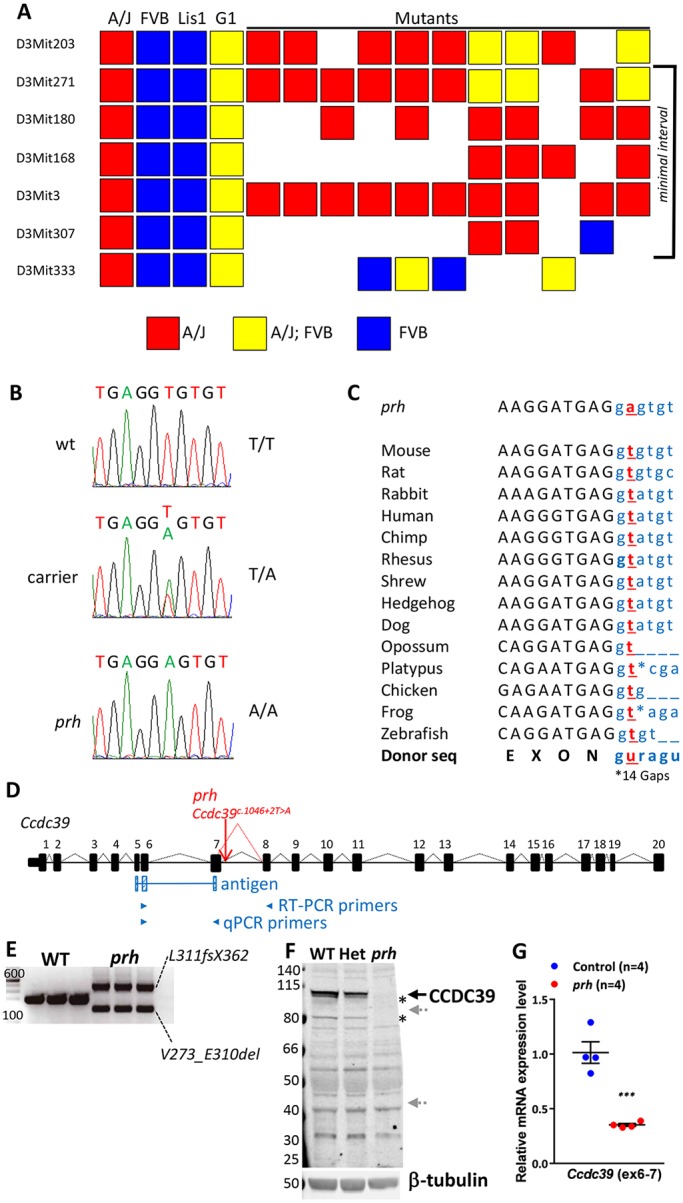
Fig. 1.
Fig. 1.
The prh mutation (chr3:g.33731448A>T) is at a conserved mRNA splicing donor site within Ccdc39 intron 7 (Ccdc39c.930+2T>A). (A) Genetic map of the region containing prh bounded proximally by D3Mit271 and distally by D3Mit307. (B) Sanger sequencing traces of the genomic DNA showing a homozygous chr3:g.33731448A>T change in the prh sequence. (C) The conserved splice donor site sequence (AGguragu) within Ccdc39 intron 7 in 14 different species from the UCSC genome database and nucleotide change found in prh (Ccdc39c.930+2T>A, red). Protein coding and intronic sequences are shown in black upper and blue lower case, respectively. (D) The wild-type Ccdc39 gene (from the UCSC genome database) and with the prh mutation. (E) RT-PCR on P1 brain showing two abnormal Ccdc39 transcripts, but no native isoform of Ccdc39, in the prh mutants. DNA size marker (left, bp). (F) Western blotting with CCDC39 antibody on P8 brain lysate from wild type (WT), heterozygous (Het) and prh mutant. CCDC39 protein was not found in the prh mutants and was reduced in the heterozygotes. No shorter protein products are detected of the size predicted to be encoded by the abnormal Ccdc39 mRNAs (∼99 kDa and ∼40 kDa, gray arrows). The CCDC39 isoforms are also missing in the prh mutant (asterisks). β-tubulin, loading control. (G) Quantitative RT-PCR on P1 brain RNA showing reduced Ccdc39 mRNA levels in the prh mutants. The locations of qPCR primers are indicated in D. ***P<0.001.
Fig. 2.
Fig. 2.
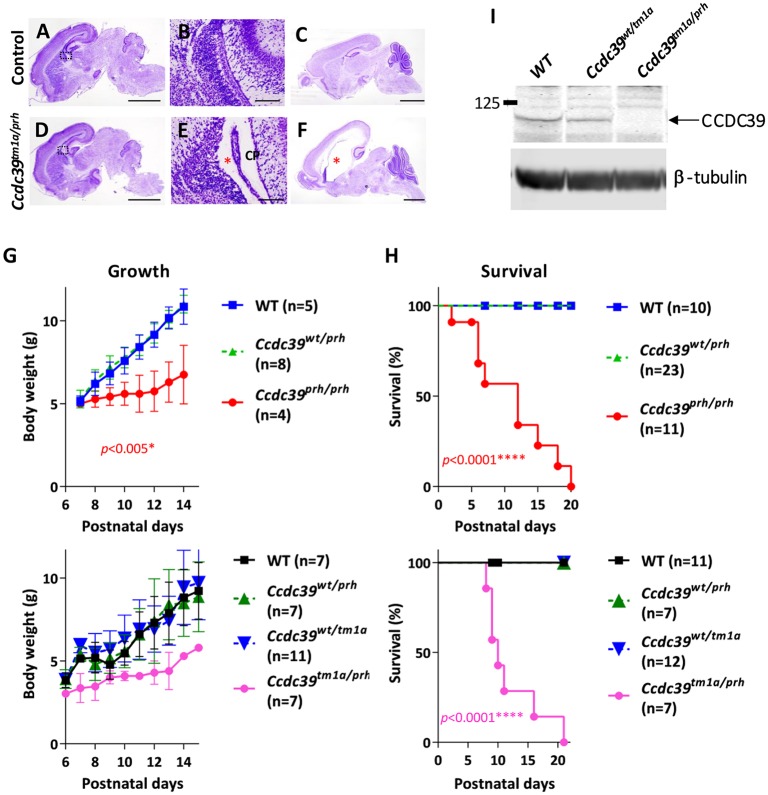
Ccdc39tm1a/prh mice phenocopy Ccdc39prh/prh mice. (A-F) Nissl staining of sections of P0 control (A,B) and Ccdc39tm1a/prh (D,E) mutant mouse brains. The Ccdc39tm1a/prh mice show moderate ventriculomegaly (asterisk in E), reproducing the brain phenotype of Ccdc39prh/prh mice at P0. Nissl staining of sections of P9 Ccdc39tm1a/prh (F) and control (C) mouse brains. Ccdc39tm1a/prh mice developed severe hydrocephalus with substantially enlarged lateral ventricles (asterisk in F). Body weight (G) and survival rate (H) of postnatal Ccdc39tm1a/prh mice recapitulated the phenotypes of Ccdc39prh/prh mice. The failure of the Ccdc39tm1a allele to complement the Ccdc39prh mutation is consistent with prh being an allele of Ccdc39. P values are generated in the comparisons of null mutant with wild type. (I) Western blotting with CCDC39 antibody on P8 brain lysate from Ccdc39wt/wt (WT), Ccdc39wt/tm1a and Ccdc39tm1a/prh mice. β-Tubulin, loading control. CP, choroid plexus. Scale bars: 2 mm (A,C,D,F), 0.5 mm (B,E).
Fig. 3.
Fig. 3.
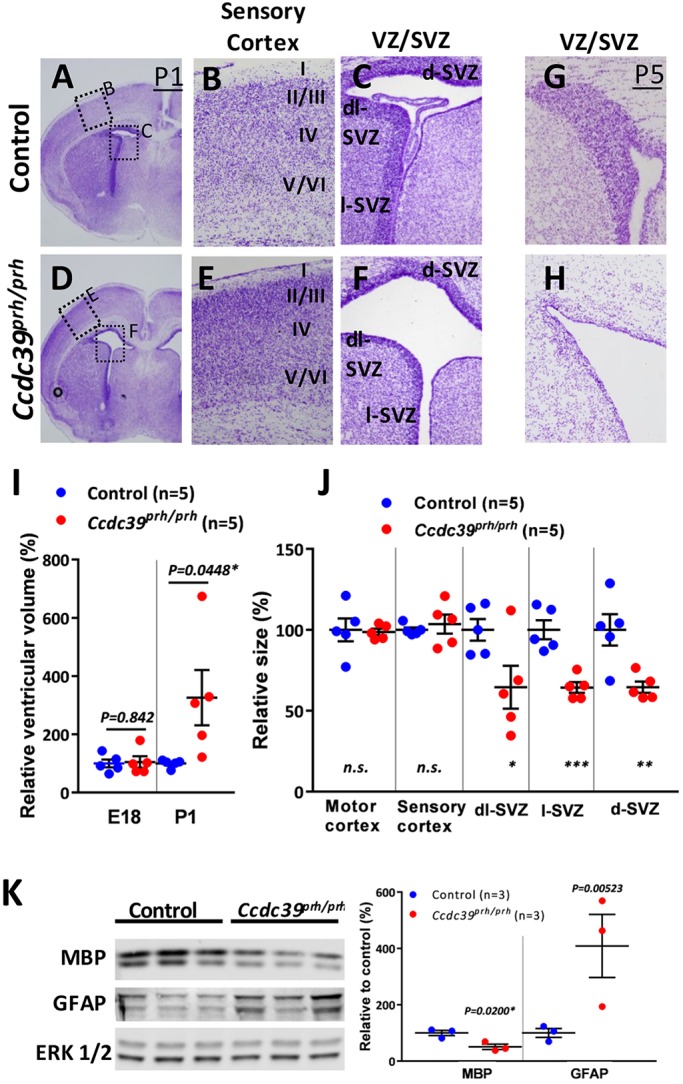
Postnatal hydrocephalus in Ccdc39prh/prh mice. (A-H) Nissl staining of P1 (A-F) and P5 (G,H) mutant and control brains. Development of the cerebral cortical layers was comparable between Ccdc39wt/wt (B) and Ccdc39prh/prh mutant (E) brain, whereas postnatal neural VZ/SVZ progenitors were significantly reduced in the Ccdc39prh/prh mutant at P1 (C,F) and nearly absent at P5 (G,H). (I) Cerebral ventricular size in E18 and P1 brains. (J) P1 mutant brain had significantly smaller VZ/SVZ than control littermate. *P<0.05, **P<0.01 and ***P<0.001. (K) Western blotting of whole brain lysate from P10 brains. Reduced MBP and increased GFAP proteins indicated hypomyelination and enhanced gliosis in the mutant brains as compared with control littermates. ERK1/2, loading control. d-, dorsal; l-, lateral; dl-, dorsolateral.
Fig. 4.
Fig. 4.
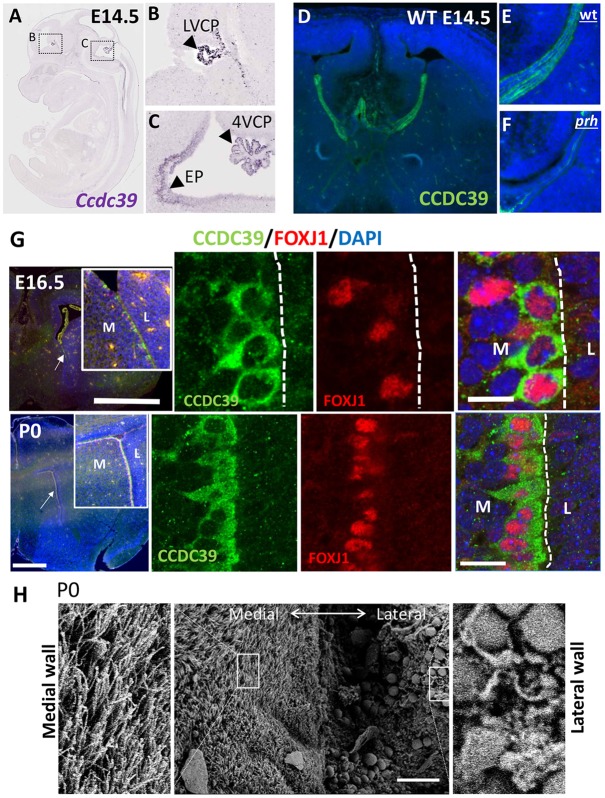
Ccdc39 expression in choroid plexus and ependymal epithelial cells of the prenatal mouse brain, and fully ciliated ependymal cells in the P0 mouse forebrain. (A-C) RNA in situ hybridization for Ccdc39 mRNA at E145 (adapted from Eurexpress.org). Ccdc39 is expressed (arrowheads) in the choroid plexus (CP) of the lateral ventricle (LV) and fourth ventricle (4V), as well as in ependymal cells (EP) and ependymal wall of the ventral fourth ventricle. (D-F) Immunohistochemistry with CCDC39 antibody of E14.5 wild-type (D,E) and prh mutant (F) brains. The CCDC39 protein is reduced to nearly undetectable levels in the prh mutant. (G) Immunohistochemistry with CCDC39 (green) and FOXJ1 (red) antibodies in E16 and P0 mouse brain. M, medial; L, lateral. Arrows indicate the location of the high-magnification images in the insets. (H) SEM images of ventromedial walls of P0 mouse forebrain showing fully ciliated ependymal cells. Magnifications of boxed areas are shown to each side. Scale bars: 1 mm in G (top left); 500 µm in G (bottom left); 5 µm in G (top right); 10 µm in G (bottom left); 50 µm in H.
Fig. 5.
Fig. 5.
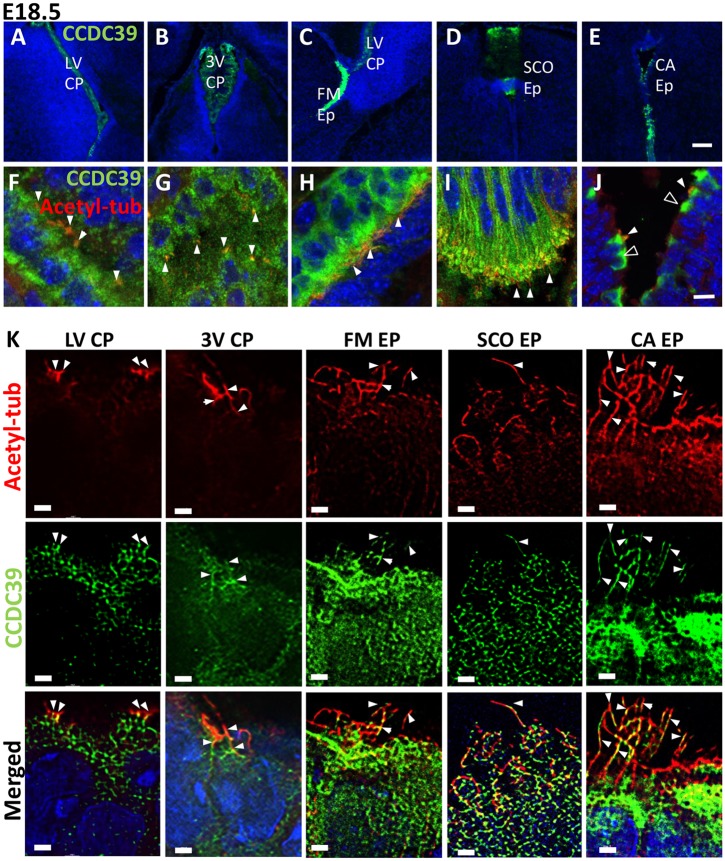
Axonemal and cytoplasmic localization of CCDC39 in the E18 mouse brain. (A-J) Immunohistochemistry with CCDC39 (green) and acetylated tubulin (red) antibodies in the E18 mouse brain. Ccdc39 is expressed in multiciliated choroid plexus epithelium cells, ependymal cells in the medial walls of the foramen of Monro, subcommissural organ, and central aqueducts. (K) SRRF images of CCDC39 in the axoneme. Solid arrowheads indicate expression of CCDC39 within cilia. Open arrowheads indicate CCDC39 expression within developing ependymal cells that are not yet ciliated. LV, lateral ventricle; 3V, third ventricle; FM, foramen of Monro; SCO, subcommissural organ; CA, central aqueduct; CP, choroid plexus; Ep/EP, ependymal cells. Scale bars: 100 µm (A-E), 10 µm (F-J), 1 µm (K).
Fig. 6.
Fig. 6.
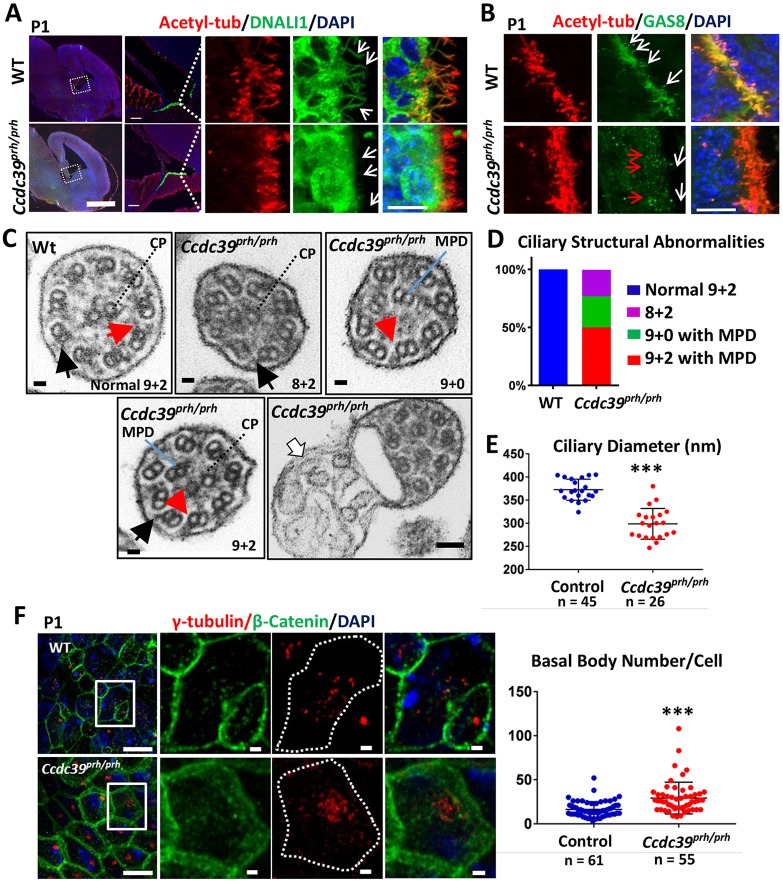
Ciliary structural abnormalities in ependymal cells of the Ccdc39prh/prh mutant mouse. (A) Immunofluorescence of the P1 brain for acetylated α-tubulin (red) and DNALI1 (green). Boxed regions are shown at higher magnification on the right. DNALI1 staining appears to colocalize with the acetylated α-tubulin staining within the axoneme of wild-type ependymal cells, but not in mutant (arrows). (B) Immunofluorescence of the P1 brain for acetylated α-tubulin (red) and GAS8 (green). An abnormal punctate staining pattern of GAS8 was detected in the apical side of the ependymal cells (red arrows), and no localization of GAS8 within the axoneme (white arrows) was found in the mutant. (C) TEM images of ependymal cilia in Ccdc39prh/prh and wild-type mice. A variety of microtubule disorganizations was found in the mutant, including absence of inner dynein arm (red arrows), mislocalization of one or two microtubule peripheral doublets (MPD), and absence of the central pair (CP). Outer dynein arms were preserved in the mutant (black arrows). Ectopic abnormal ciliary membrane inclusions were occasionally found in the mutant (white arrow). (D) About 27% (7/26) of mutant cilia lost the CP and showed MPD (green), ∼23% (5/26) lost MPD (purple), and ∼50% (13/26) showed normal CP and MPD (red). (E) Cross-sectional diameter of ependymal cilia was significantly reduced in the Ccdc39prh/prh mutant. ***P<0.0001. (F) P1 ependymal cilia stained for γ-tubulin (red) and β-catenin (green). Note the increased number of γ-tubulin-stained basal bodies in the Ccdc39prh/prh ependymal cells. Four sections from two animals each; ***P<0.00001. Scale bars: 1 mm in A (left); 100 µm in A (middle); 10 µm in A (right), B and F (right); 100 nm in C; 1 μm in F (left).
Fig. 7.
Fig. 7.
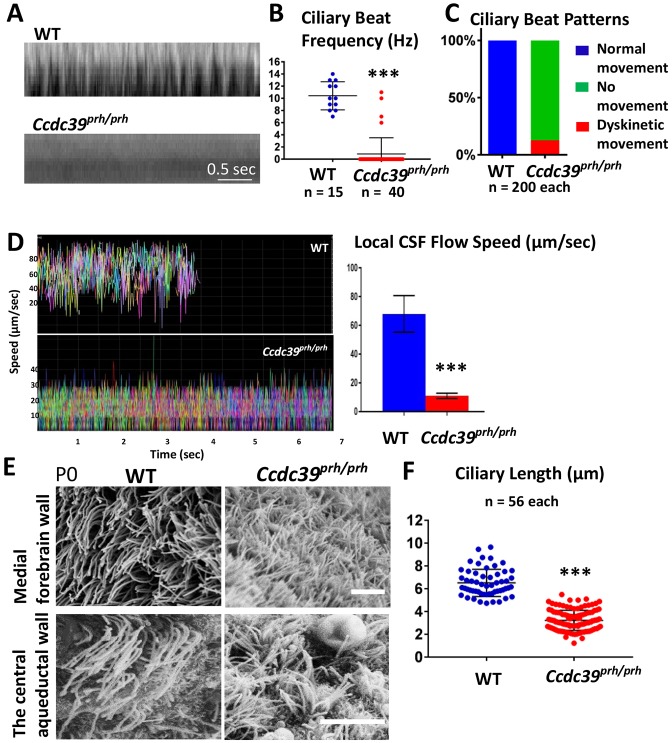
Abnormalities in ependymal cilia beating and CSF flow in Ccdc39prh/prh mice. (A) Representative kymograph of P7 wild-type and Ccdc39prh/prh mutant ependymal cilia from the high-speed video microscopy study. (B) Ciliary beat frequency was significantly reduced in the Ccdc39prh/prh mutant ependymal cilia. ***P<0.0001. (C) Ependymal ciliary beat patterns analyzed in the slowed down videos showed that mutant cilia were unable to generate a repetitive beating pattern (green) and only few (∼12%) showed dyskinetic movement (red). (D) The velocity of the fluorescent micro-beads analyzed from tracks in ex vivo P7 mouse brain ventricles of control and Ccdc39prh/prh mutants (see also Movies 7, 8). All micro-beads tested in the wild-type brain showed consistent speed at 68±0.7 µm/s and moved out of the field by 5 s of imaging. The speed of floating beads was significantly reduced in the Ccdc39prh/prh mice to 11±0.07 µm/s. More than 350 micro-beads were analyzed and are displayed in different colors in the graph. Two animals from each genotype were tested. Data represent mean±s.e.m. ***P<0.0001. (E) SEM images of multiciliated ependymal cells on the ventromedial forebrain wall and the central aqueduct wall of P0 mutant and wild-type mice. The Ccdc39prh/prh ependymal cells have shorter, thinner, but more abundant cilia. Scale bars: 5 µm. (F) Ependymal cilia length is significantly reduced in the Ccdc39prh/prh mutant. ***P<0.0001.
Fig. 8.
Fig. 8.
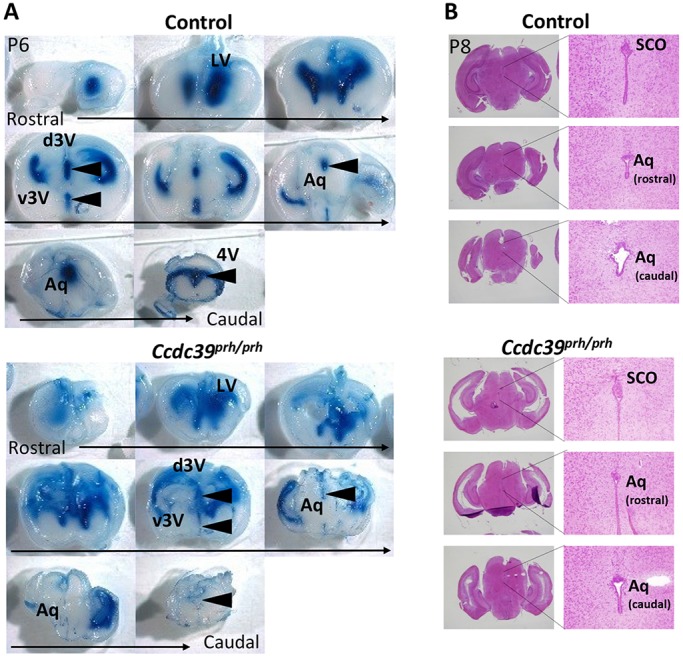
Retardation in CSF flow is not due to a physical obstruction in the central aqueduct of early postnatal prh mice. (A) CSF flow analysis in P6 Ccdc39prh/prh and control mice. Evans Blue dye injected into an anterior horn of the lateral ventricle (LV) traveled through the ventricular system and was detected in the third (3V) and fourth (4V) ventricles within 10 min in control mice (5/5) but not in the mutant (7/8) (arrowheads). (B) Histology of the central aqueduct (Aq) was comparable in mutant and littermate control mice at P8. SCO, subcommissural organ; d, dorsal; v, ventral.

References

    1. Adams D. J., Doran A. G., Lilue J. and Keane T. M. (2015). The mouse genomes project: a repository of inbred laboratory mouse strain genomes. Mamm. Genome 26, 403-412. 10.1007/s00335-015-9579-6 - DOI - PubMed
    1. Antony D., Becker-Heck A., Zariwala M. A., Schmidts M., Onoufriadis A., Forouhan M., Wilson R., Taylor-Cox T., Dewar A., Jackson C. et al. (2013). Mutations in CCDC39 and CCDC40 are the major cause of primary ciliary dyskinesia with axonemal disorganization and absent inner dynein arms. Hum. Mutat. 34, 462-472. 10.1002/humu.22261 - DOI - PMC - PubMed
    1. Banizs B., Pike M. M., Millican C. L., Ferguson W. B., Komlosi P., Sheetz J., Bell P. D., Schwiebert E. M. and Yoder B. K. (2005). Dysfunctional cilia lead to altered ependyma and choroid plexus function, and result in the formation of hydrocephalus. Development 132, 5329-5339. 10.1242/dev.02153 - DOI - PubMed
    1. Banizs B., Komlosi P., Bevensee M. O., Schwiebert E. M., Bell P. D. and Yoder B. K. (2007). Altered pH(i) regulation and Na(+)/HCO3(−) transporter activity in choroid plexus of cilia-defective Tg737(orpk) mutant mouse. Am. J. Physiol. Cell Physiol. 292, C1409-C1416. 10.1152/ajpcell.00408.2006 - DOI - PubMed
    1. Bekker J. M., Colantonio J. R., Stephens A. D., Clarke W. T., King S. J., Hill K. L. and Crosbie R. H. (2007). Direct interaction of Gas11 with microtubules: implications for the dynein regulatory complex. Cell Motil. Cytoskelet. 64, 461-473. 10.1002/cm.20196 - DOI - PubMed

Publication types

Substances