. 2018 Jan 10;8(1):6.
doi: 10.1038/s41398-017-0022-5.

Gut microbiome populations are associated with structure-specific changes in white matter architecture

Affiliations

Gut microbiome populations are associated with structure-specific changes in white matter architecture

Irene M Ong et al. Transl Psychiatry. .

Abstract

Altered gut microbiome populations are associated with a broad range of neurodevelopmental disorders including autism spectrum disorder and mood disorders. In animal models, modulation of gut microbiome populations via dietary manipulation influences brain function and behavior and has been shown to ameliorate behavioral symptoms. With striking differences in microbiome-driven behavior, we explored whether these behavioral changes are also accompanied by corresponding changes in neural tissue microstructure. Utilizing diffusion tensor imaging, we identified global changes in white matter structural integrity occurring in a diet-dependent manner. Analysis of 16S ribosomal RNA sequencing of gut bacteria also showed changes in bacterial populations as a function of diet. Changes in brain structure were found to be associated with diet-dependent changes in gut microbiome populations using a machine learning classifier for quantitative assessment of the strength of microbiome-brain region associations. These associations allow us to further test our understanding of the gut-brain-microbiota axis by revealing possible links between altered and dysbiotic gut microbiome populations and changes in brain structure, highlighting the potential impact of diet and metagenomic effects in neuroimaging.


Conflict of interest statement

The authors declare that they have no competing financial interests.

Figures
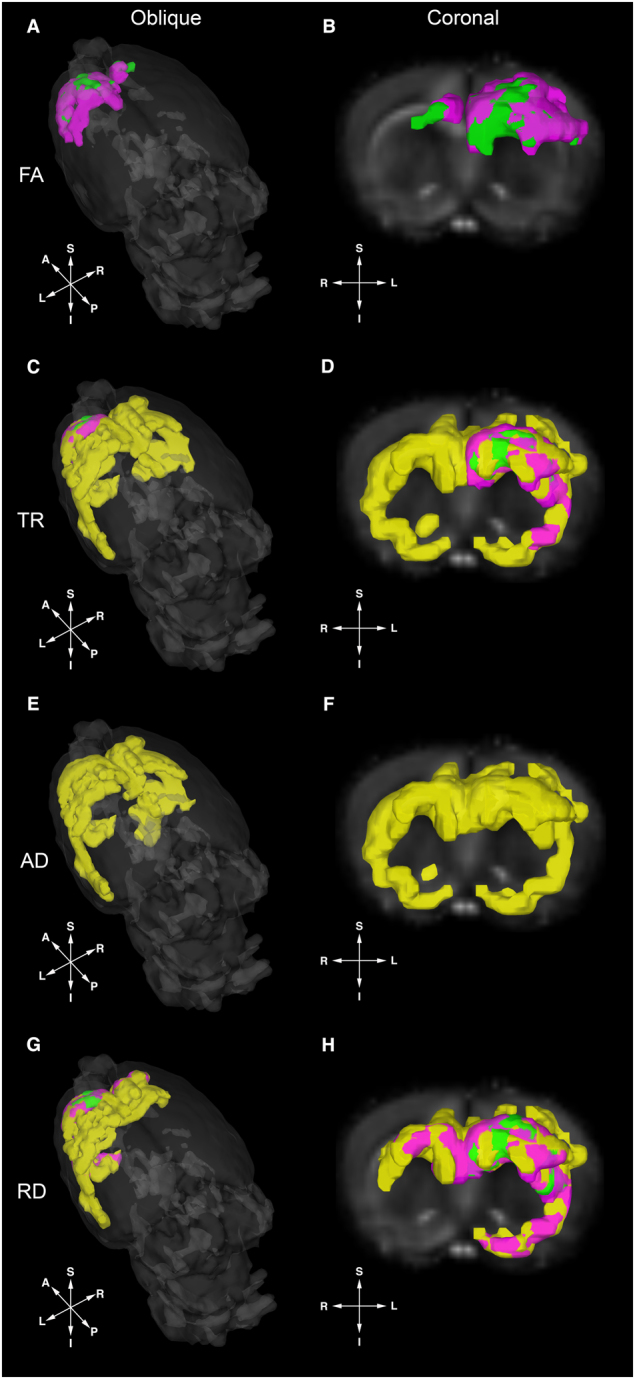
Fig. 1
Fig. 1. Diet impacts multiple measures of the diffusion tensor in a diet-dependent manner.
Ex-vivo diffusion tensor imaging (DTI) was performed 21 days after immediately post-weaned male rats were assigned to one of four assigned diets (n = 20; n = 5 in each diet group) to measure diet-dependent changes in the diffusion tensor when referenced to control animals. Following tract-based spatial statistics (TBSS) analysis, areas of increased FA (a, b) and decreased trace (TR) (c, d) axial (AD) (e, f) and radial diffusivity (RD) (g, h) for each experimental diet group (as compared to the standard diet) were identified and are displayed over masked oblique and coronal fractional anisotropy (FA) maps. No voxels corresponding to decreased FA or increased TR, AD, or RD were identified. Areas highlighted in yellow (high fat), green (high fiber), and magenta (high protein, low carbohydrate) represent diet-specific voxels where tract-based spatial statistics (TBSS) analysis revealed statistically significant diffusion tensor differences between each of the enriched diet groups and the control diet group. No significant changes were found in FA for the fat diet group or in AD for the fiber diet group
Fig. 2
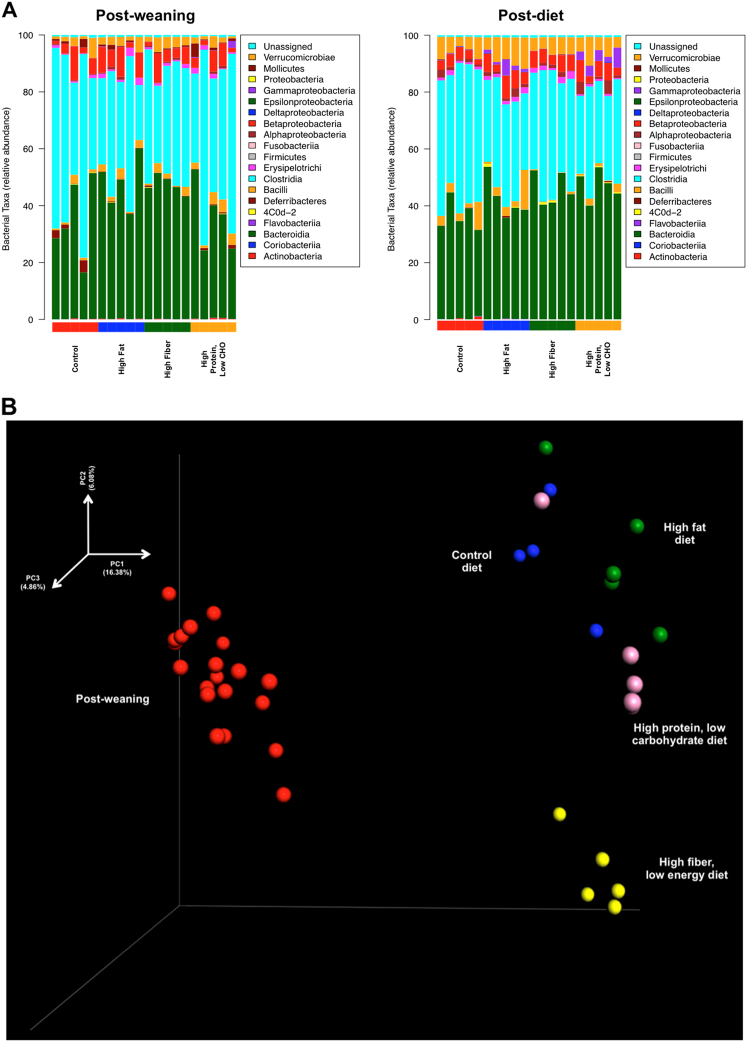
Fig. 2. Diet shapes both the relative abundance and composition of gut microbiome populations.
Immediately post-weaned male rats were singly housed and were assigned to one of four experimental diets for 21 days (n = 20) including a control (standard) chow, high fat, high fiber, and high protein, low carbohydrate diet. a Taxonomic distribution of major identified bacteria taxa (at the class level) immediately post-weaning and after 21 days on the assigned experimental diet with values representing the average relative abundance across all samples within the indicated group. b 16 S rRNA gene surveys (analyzed by weighted UniFrac-based PCoA) from immediately post-weaned animals and after 3-weeks on a control (blue), high-fat diet (green), high protein, low carbohydrate (pink), and high-fiber diet (yellow). Principle coordinates 1 and 2 (PC1, PC2) are the x- and y-axis, respectively, and are scaled on the basis of percent variance with PC3 depicted by the shading of each point
Fig. 3
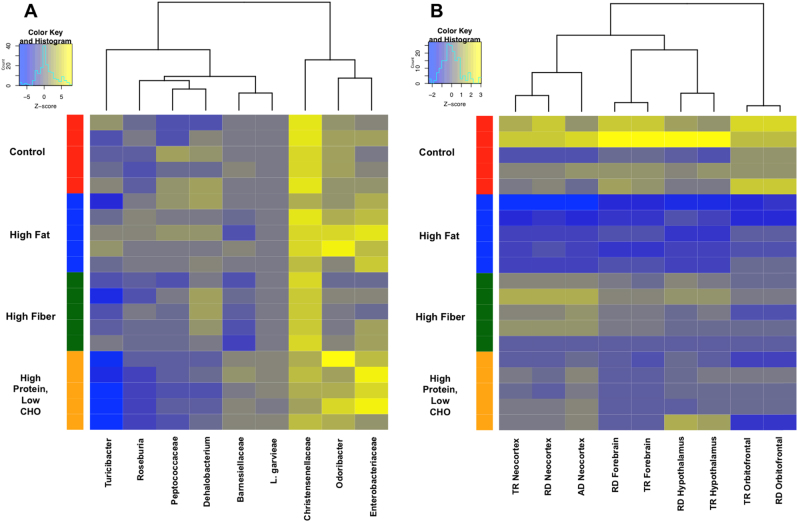
Fig. 3. Discriminatory OTUs and measures of the diffusion tensor can both predict animal diet.
Predictive modeling with Random Forest with leave-one-out cross-validation identified nine features from both the gut microbiome and from experimentally measured diffusion tensor values that were able to predict the diet of the animal with 100% and 95% accuracy, respectively. Hierarchically clustered heatmaps for discriminatory elements and their relationship to diet are shown here for identified OTUs (a) and for identified diffusion tensor measurements (b)
Fig. 4
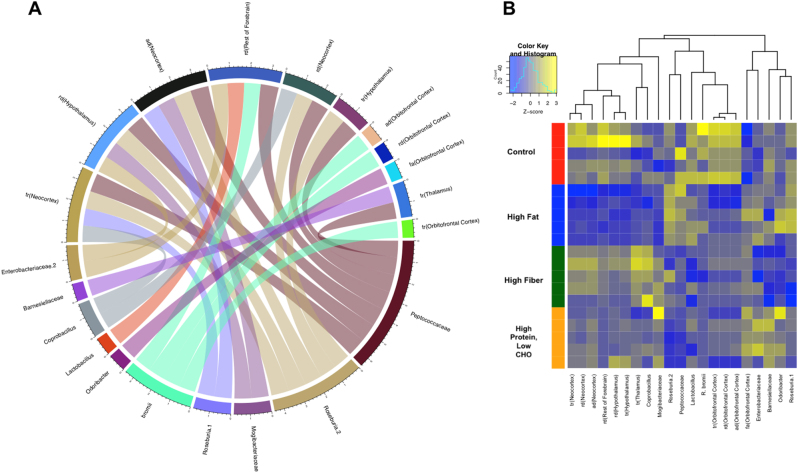
Fig. 4. Specific bacterial populations are predictive of diffusion tensor measurements in corresponding brain ROIs.
Regression-based ensemble analysis of OTUs and calculated diffusion tensor measurements identified unique populations of gut bacterial genera that are predictive of ROI-specific tensor changes (Table S5). A Circos plot (a) and a hierarchically clustered heatmap (b) illustrate the most robust predictive relationships between OTUs and brain diffusion tensor ROIs identified in our analysis. fa fractional anisotropy, tr trace, rd radial diffusivity, ad axial diffusivity

References

    1. Gevers D, et al. The treatment-naive microbiome in new-onset Crohn’s disease. Cell Host Microbe. 2014;15:382–392. doi: 10.1016/j.chom.2014.02.005. - DOI - PMC - PubMed
    1. Hsiao EY, et al. Microbiota modulate behavioral and physiological abnormalities associated with neurodevelopmental disorders. Cell. 2013;155:1451–1463. doi: 10.1016/j.cell.2013.11.024. - DOI - PMC - PubMed
    1. Tillisch K, et al. Consumption of fermented milk product with probiotic modulates brain activity. Gastroenterology. 2013;144:1394–401. doi: 10.1053/j.gastro.2013.02.043. - DOI - PMC - PubMed
    1. Heijtz RD, et al. Normal gut microbiota modulates brain development and behavior. Proc. Natl. Acad. Sci. 2011;108:3047–3052. doi: 10.1073/pnas.1010529108. - DOI - PMC - PubMed
    1. Whitehead WE, Palsson O, Jones KR. Systematic review of the comorbidity of irritable bowel syndrome with other disorders: what are the causes and implications? Gastroenterology. 2002;122:1140–1156. doi: 10.1053/gast.2002.32392. - DOI - PubMed

Publication types

Substances

LinkOut - more resources