Review
. 2017:2017:8526438.
doi: 10.1155/2017/8526438. Epub 2017 Nov 26.

Polyphenols and Oxidative Stress in Atherosclerosis-Related Ischemic Heart Disease and Stroke

Affiliations
Review

Polyphenols and Oxidative Stress in Atherosclerosis-Related Ischemic Heart Disease and Stroke

Yu-Chen Cheng et al. Oxid Med Cell Longev. 2017.

Abstract

Good nutrition could maintain health and life. Polyphenols are common nutrient mainly derived from fruits, vegetables, tea, coffee, cocoa, mushrooms, beverages, and traditional medicinal herbs. They are potential substances against oxidative-related diseases, for example, cardiovascular disease, specifically, atherosclerosis-related ischemic heart disease and stroke, which are health and economic problems recognized worldwide. In this study, we reviewed the risk factors for atherosclerosis, including hypertension, diabetes mellitus, hyperlipidemia, obesity, and cigarette smoking as well as the antioxidative activity of polyphenols, which could prevent the pathology of atherosclerosis, including endothelial dysfunction, low-density lipoprotein oxidation, vascular smooth muscle cell proliferation, inflammatory process by monocytes, macrophages or T lymphocytes, and platelet aggregation. The strong radical-scavenging properties of polyphenols would exhibit antioxidative and anti-inflammation effects. Polyphenols reduce ROS production by inhibiting oxidases, reducing the production of superoxide, inhibiting OxLDL formation, suppressing VSMC proliferation and migration, reducing platelet aggregation, and improving mitochondrial oxidative stress. Polyphenol consumption also inhibits the development of hypertension, diabetes mellitus, hyperlipidemia, and obesity. Despite the numerous in vivo and in vitro studies, more advanced clinical trials are necessary to confirm the efficacy of polyphenols in the treatment of atherosclerosis-related vascular diseases.


Figures
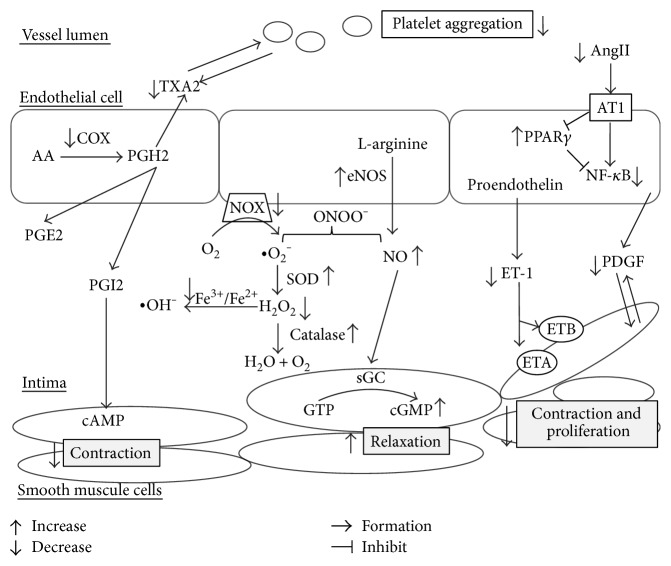
Figure 1
Figure 1
Effects of polyphenols in endothelial cells and smooth muscle cells. AA: arachidonic acid; COX: cyclooxygenase; PGE2/H2/I2: prostaglandin E2/H2/I2; TXA2: thromboxane A2; eNOS: endothelial nitric oxide synthase; NO: nitric oxide; ET-1: endothelin-1; ETA/B: endothelin A/B receptor; LDL: low-density lipoprotein; PDGF: platelet-derived growth factor; NOX: NADPH oxidase; SOD: superoxidase dismutase; H2O2: hydrogen peroxide; GTP: guanosine triphosphate; sGC: soluble guanylate cyclase; cGMP: cyclic guanosine monophosphate; AngII: angiotensin II; AT1: angiotensin II receptor type 1; PPARγ: peroxisome proliferator-activated receptor γ; NF-κB: nuclear factor kappa B.
Figure 2
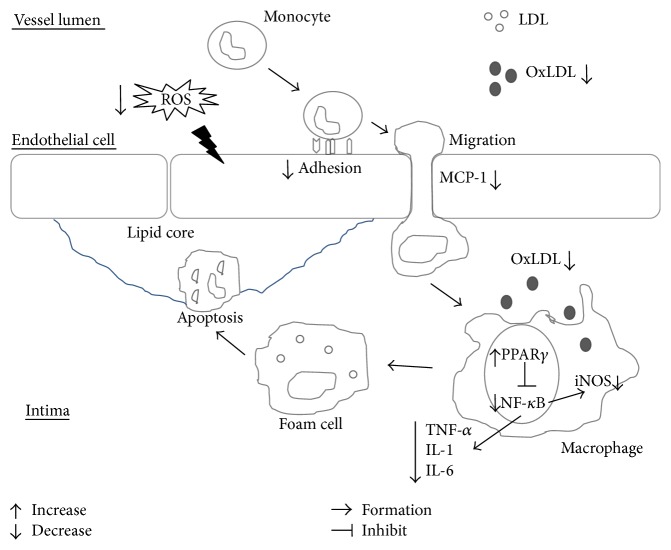
Figure 2
Effects of polyphenols in LDL and inflammatory process with monocytes and macrophages. ROS: reactive oxygen species; LDL: low-density lipoprotein; OxLDL: oxidized low-density lipoprotein; MCP-1: monocyte chemoattractant protein 1; iNOS: inducible nitric oxide synthase; TNF-α: tumor necrosis factor-α; IL-1: interleukin-1; IL-6: interleukin-6; PPARγ: peroxisome proliferator-activated receptor γ; NF-κB: nuclear factor kappa B.
Figure 3
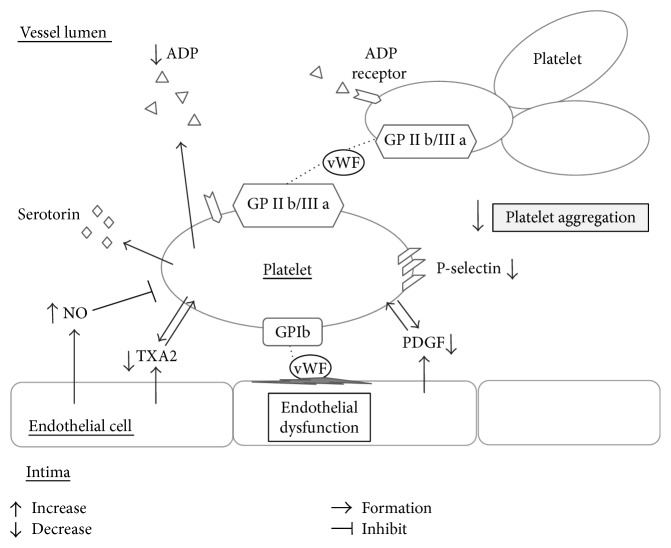
Figure 3
Effects of polyphenols in platelets. ADP: adenosine diphosphate; NO: nitric oxide; TXA2: thromboxane A2; GP1b: glycoprotein Ib; GPIIb/IIIa: glycoprotein IIb/IIIa; vWF: Von Willebrand factor; PDGF: platelet-derived growth factor.
Figure 4
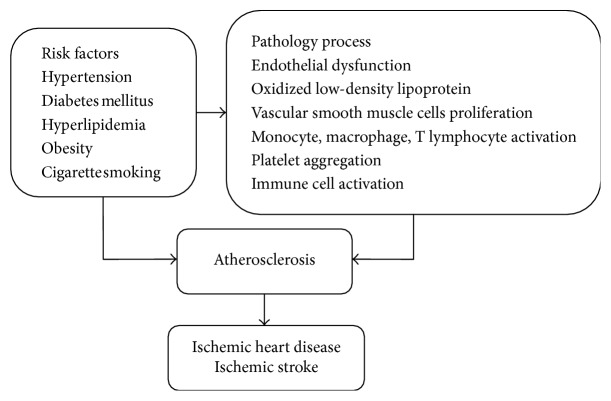
Figure 4
Risk factors and pathology process of atherosclerosis leading to ischemic heart disease or ischemic stroke.

References

    1. Herrington W., Lacey B., Sherliker P., Armitage J., Lewington S. Epidemiology of atherosclerosis and the potential to reduce the global burden of atherothrombotic disease. Circulation Research. 2016;118(4):535–546. doi: 10.1161/CIRCRESAHA.115.307611. - DOI - PubMed
    1. Barquera S., Pedroza-Tobías A., Medina C., et al. Global overview of the epidemiology of atherosclerotic cardiovascular disease. Archives of Medical Research. 2015;46(5):328–338. doi: 10.1016/j.arcmed.2015.06.006. - DOI - PubMed
    1. Inoue N. Stress and atherosclerotic cardiovascular disease. Journal of Atherosclerosis and Thrombosis. 2014;21(5):391–401. doi: 10.5551/jat.21709. - DOI - PubMed
    1. Olmez I., Ozyurt H. Reactive oxygen species and ischemic cerebrovascular disease. Neurochemistry International. 2012;60(2):208–212. doi: 10.1016/j.neuint.2011.11.009. - DOI - PubMed
    1. Forstermann U., Xia N., Li H. Roles of vascular oxidative stress and nitric oxide in the pathogenesis of atherosclerosis. Circulation Research. 2017;120(4):713–735. doi: 10.1161/CIRCRESAHA.116.309326. - DOI - PubMed