


Pharmacological modulation of mitochondrial calcium homeostasis
- PMID: 29319185
- PMCID: PMC6046065
- DOI: 10.1113/JP274959
Pharmacological modulation of mitochondrial calcium homeostasis
Abstract
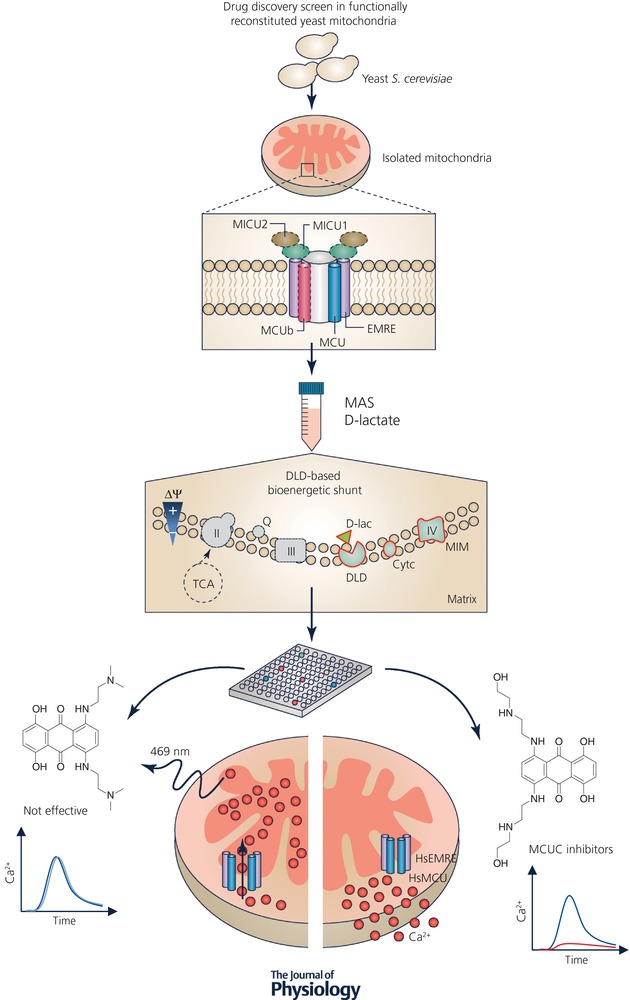
Mitochondria are pivotal organelles in calcium (Ca2+ ) handling and signalling, constituting intracellular checkpoints for numerous processes that are vital for cell life. Alterations in mitochondrial Ca2+ homeostasis have been linked to a variety of pathological conditions and are critical in the aetiology of several human diseases. Efforts have been taken to harness mitochondrial Ca2+ transport mechanisms for therapeutic intervention, but pharmacological compounds that direct and selectively modulate mitochondrial Ca2+ homeostasis are currently lacking. New avenues have, however, emerged with the breakthrough discoveries on the genetic identification of the main players involved in mitochondrial Ca2+ influx and efflux pathways and with recent hints towards a deep understanding of the function of these molecular systems. Here, we review the current advances in the understanding of the mechanisms and regulation of mitochondrial Ca2+ homeostasis and its contribution to physiology and human disease. We also introduce and comment on the recent progress towards a systems-level pharmacological targeting of mitochondrial Ca2+ homeostasis.
Keywords: calcium; calcium signaling; drug discovery; drug screening; mitochondria; mitochondrial calcium uniporter.
© 2018 The Authors. The Journal of Physiology © 2018 The Physiological Society.
Figures
References
-
- Arduino DM, Wettmarshausen J, Vais H, Navas‐Navarro P, Cheng Y, Leimpek A, Ma Z, Delrio‐Lorenzo A, Giordano A, Garcia‐Perez C, Medard G, Kuster B, Garcia‐Sancho J, Mokranjac D, Foskett JK, Alonso MT & Perocchi F (2017). Systematic identification of MCU modulators by orthogonal interspecies chemical screening. Mol Cell 67, 711–723.e7. - PMC - PubMed
-
- Beutner G, Sharma VK, Lin L, Ryu SY, Dirksen RT & Sheu SS (2005). Type 1 ryanodine receptor in cardiac mitochondria: transducer of excitation‐metabolism coupling. Biochim Biophys Acta 1717, 1–10. - PubMed
Publication types
MeSH terms
Substances
LinkOut - more resources
Full Text Sources
Other Literature Sources
Medical
Miscellaneous
