


Interprofessional education in graduate medical education: survey study of residency program directors
- PMID: 29321024
- PMCID: PMC5763580
- DOI: 10.1186/s12909-017-1104-z
Interprofessional education in graduate medical education: survey study of residency program directors
Abstract
Background: The overarching purpose of this study is to examine the current trends in interprofessional education (IPE) within graduate medical education in the Unites States.
Methods: A survey was sent to program directors across with different specialties between March and April 2016. The survey was completed by 233 out of 1757 program directors, which represents a response rate of 13.3%.
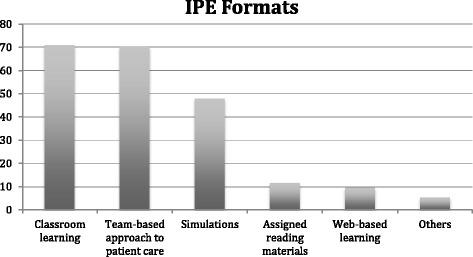
Results: IPE is currently being used by over 60% of the GME program directors that completed the survey. The median number of IPE hours is 60. Classroom learning (70.8%) and team-based approaches (70.1%) to patient care are the two most common forms of IPE. The two most prevalent reasons for implementing IPE are improving collaboration (92.2%) and communication (87%). More than half of the program directors agreed or strongly agreed that lack of time both for teachers (54.4) and for residents (51.5%) are barriers to IPE. About one third of the respondents whose programs do not include IPE are interested in implementing some IPE in the future.
Conclusion: IPE in its varying formats has been implemented as a training model by many residency programs. Further studies are needed to explore the comparative effectiveness of the different modalities of IPE.
Keywords: Graduate medical education; Interprofessional education; Program directors; Residency; Survey.
Conflict of interest statement
Ethics approval and consent to participate
The Indiana University IRB approved the study in the ‘exempted’ category and deemed that individual participants’ consent was not required. Instead, an information sheet was included in the survey.
Consent for publication
Not applicable
Competing interests
The authors declare that they have no competing interests.
Publisher’s Note
Springer Nature remains neutral with regard to jurisdictional claims in published maps and institutional affiliations.

References
-
- Makary M, Daniel M. Medical error—the third leading cause of death in the US. BMJ. 2016;353(6):1–5. - PubMed
MeSH terms
LinkOut - more resources
Full Text Sources
Other Literature Sources
Miscellaneous
