


Plasma adiponectin levels and type 2 diabetes risk: a nested case-control study in a Chinese population and an updated meta-analysis
- PMID: 29321603
- PMCID: PMC5762808
- DOI: 10.1038/s41598-017-18709-9
Plasma adiponectin levels and type 2 diabetes risk: a nested case-control study in a Chinese population and an updated meta-analysis
Abstract
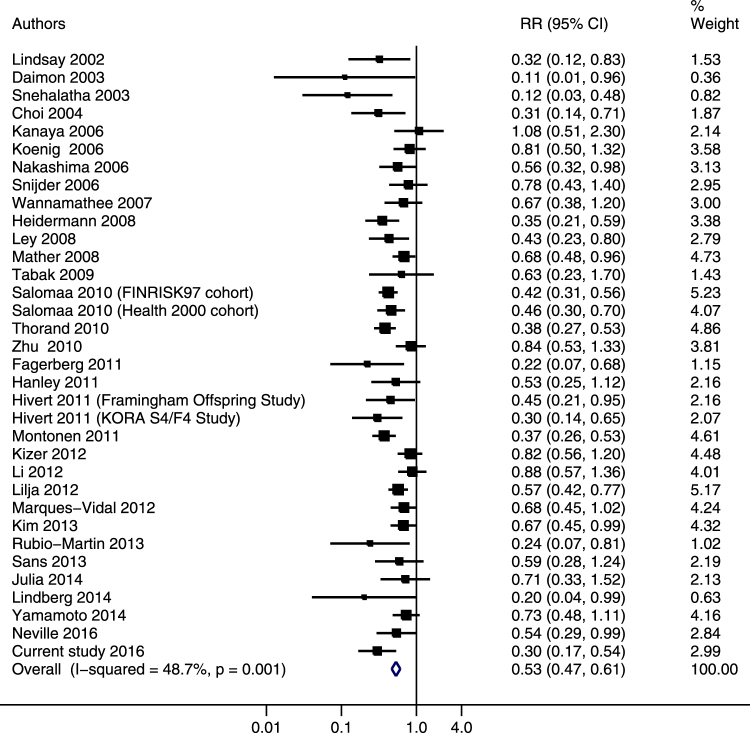
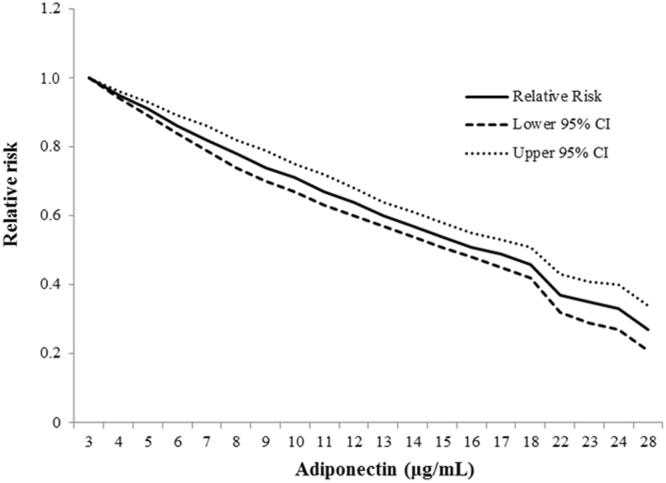
Results from previous prospective studies assessing the relation between adiponectin and type 2 diabetes (T2D) were not entirely consistent, and evidence in Chinese population is scarce. Moreover, the last meta-analysis did not examine the impact of metabolic variables on the adiponectin-T2D association. Therefore, we prospectively evaluated the adiponectin-T2D association among 571 T2D cases and 571 age-sex-matched controls nested within the Singapore Chinese Health Study (SCHS). Furthermore, we conducted an updated meta-analysis by searching prospective studies on Pubmed till September 2016. In the SCHS, the odds ratio of T2D, comparing the highest versus lowest tertile of adiponectin levels, was 0.30 (95% confidence interval: 0.17, 0.55) in the fully-adjusted model. The relation was stronger among heavier participants (body mass index ≥23 kg/m2) compared to their leaner counterparts (P for interaction = 0.041). In a meta-analysis of 34 prospective studies, the pooled relative risk was 0.53 (95% confidence interval: 0.47, 0.61) comparing the extreme tertiles of adiponectin with moderate heterogeneity (I 2 = 48.7%, P = 0.001). The adiponectin-T2D association remained unchanged after adjusting for inflammation and dyslipidemia markers, but substantially attenuated with adjustment for insulin sensitivity and/or glycaemia markers. Overall evidence indicates that higher adiponectin levels are associated with decreased T2D risk in Chinese and other populations.
Conflict of interest statement
The authors declare that they have no competing interests.
Figures
References
-
- Li, S., Shin, H. J., Ding, E. L. & van Dam, R. M. Adiponectin levels and risk of type 2 diabetes: a systematic review and meta-analysis. JAMA.302, 179–188 (2009). - PubMed
Publication types
MeSH terms
Substances
Grants and funding
LinkOut - more resources
Full Text Sources
Other Literature Sources
Medical
Molecular Biology Databases
