


Effect of health literacy on the quality of life of older patients with long-term conditions: a large cohort study in UK general practice
- PMID: 29322478
- PMCID: PMC5891567
- DOI: 10.1007/s11136-017-1775-2
Effect of health literacy on the quality of life of older patients with long-term conditions: a large cohort study in UK general practice
Abstract
Purpose: The levels of health literacy in patients with long-term conditions (LTCs) are critical for better disease management and quality of life (QoL). However, the impact of health literacy on QoL in older adults with LTCs is unclear. This study examined the association between health literacy and domains of QoL in older people with LTCs, investigating key socio-demographic and clinical variables, as confounders.
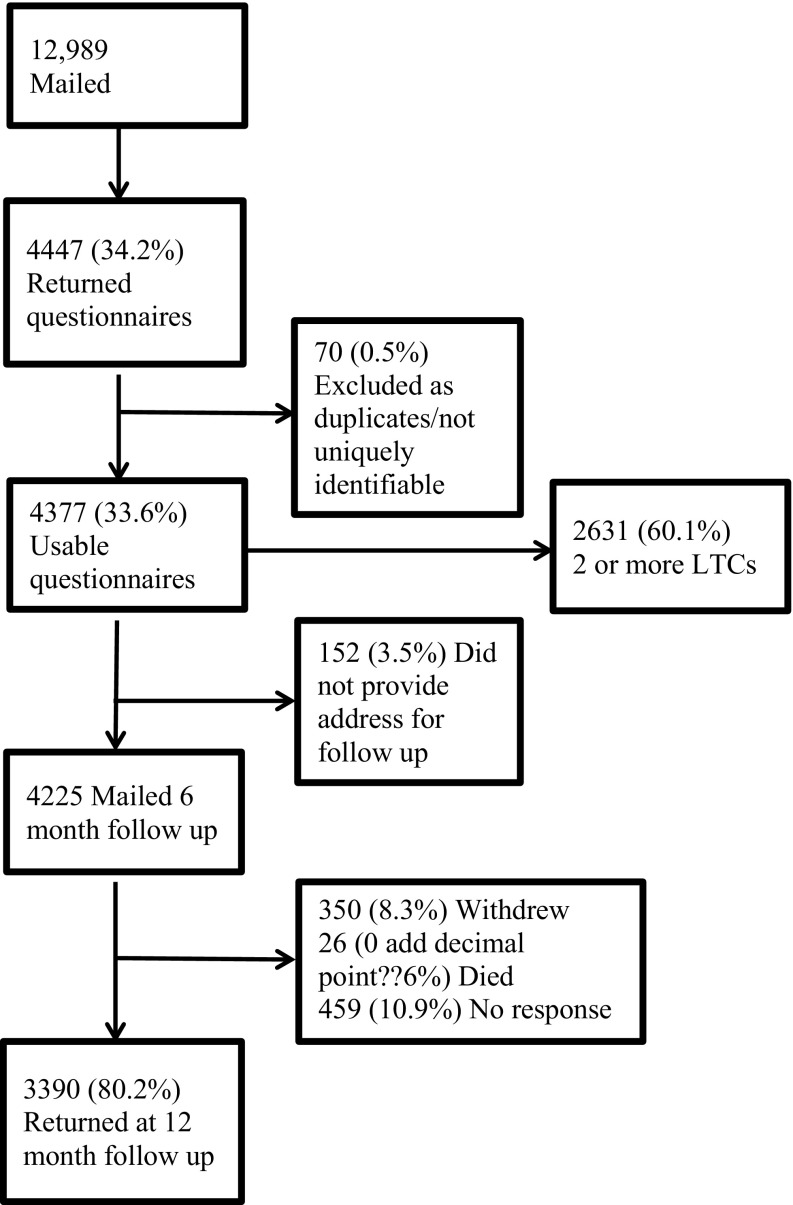
Methods: A prospective cohort study was conducted on older adults (n = 4278; aged 65 years and over) with at least one LTC, registered in general practices in Salford, UK. Participants completed measures of health literacy, QoL, multi-morbidity, depression, social support, and socio-demographic characteristics. Multivariate linear regressions were performed to examine the effects of health literacy on four QoL domains at baseline, and then changes in QoL over 12 months.
Results: At baseline, poor health literacy was associated with lower scores in all four QoL domains (physical, psychological, social relationships and environment), after adjusting for the effects of multi-morbidity, depression, social support and socio-demographic factors. At 12-month follow-up, low health literacy significantly predicted declines in the physical, psychological and environment domains of QoL, but not in social relationships QoL.
Conclusions: This is the largest, most complete assessment of the effects of health literacy on QoL in older adults with LTCs. Low health literacy is an independent indicator of poor QoL older patients with LTCs. Interventions to improve health literacy in older people with LTCs are encouraged by these findings.
Keywords: Health literacy; Long-term conditions; Older adults; Quality of life.
Conflict of interest statement
Conflict of interest
The authors declare that they have no conflict of interest.
Ethical approval
All procedures performed in studies involving human participants were in accordance with the ethical standards of the institutional and/or national research committee and with the 1964 Helsinki declaration and its later amendments or comparable ethical standards. This study was approved by the NRES Committee North West–Lancaster (Ref: 14/NW/0206) and all participants provided informed consent prior to participation.
Informed consent
Informed consent was obtained from all individual participants included in this study.
References
-
- Panagioti M, Richardson G, Small N, Murray E, Rogers A, Kennedy A, et al. Self-management support interventions to reduce health care utilisation without compromising outcomes: A systematic review and meta-analysis. BMC Health Services Research. 2014;14:356. doi: 10.1186/1472-6963-14-356. - DOI - PMC - PubMed
MeSH terms
Grants and funding
LinkOut - more resources
Full Text Sources
Other Literature Sources
Medical
