


Preconception Health Indicators for Public Health Surveillance
- PMID: 29323604
- PMCID: PMC5903944
- DOI: 10.1089/jwh.2017.6531
Preconception Health Indicators for Public Health Surveillance
Abstract
Objectives: In response to an expressed need for more focused measurement of preconception health (PCH), we identify a condensed set of PCH indicators for state and national surveillance.
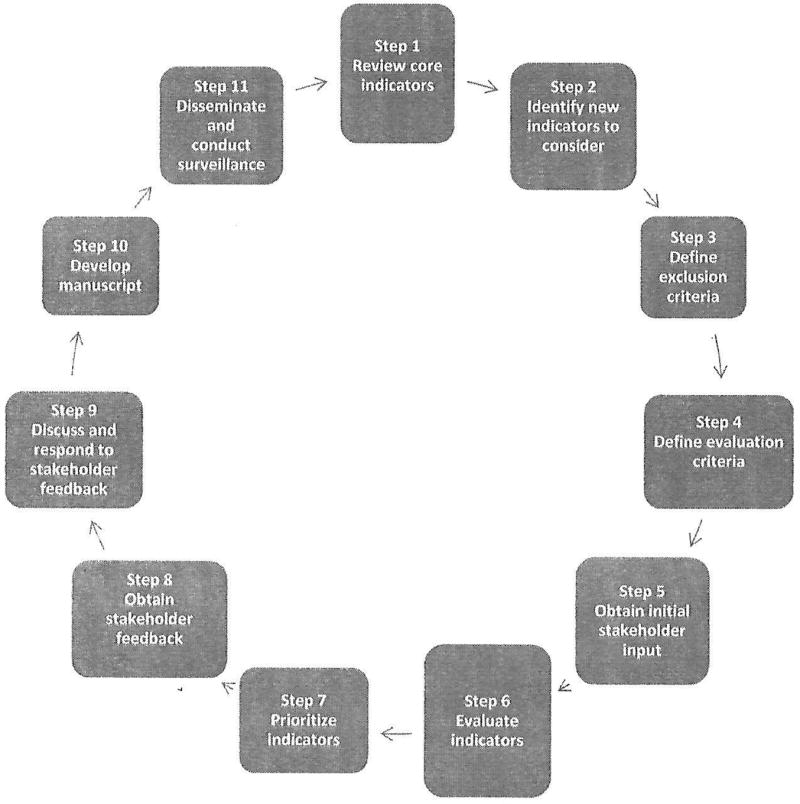
Methods: We used a systematic process to evaluate, prioritize, and select 10 PCH indicators that maternal and child health programs can use for surveillance. For each indicator, we assessed prevalence, whether it was addressed by professional recommendations, Healthy People 2020 objectives, or Centers for Disease Control and Prevention winnable battles, measurement simplicity, data completeness, and stakeholders' input.
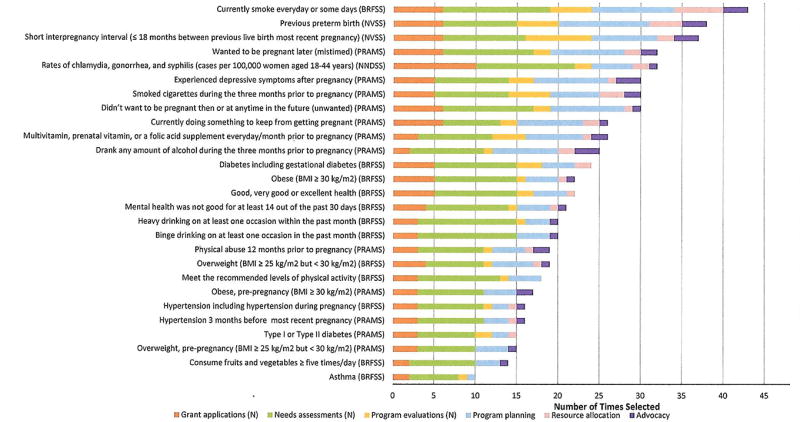
Results: Fifty PCH indicators were evaluated and prioritized. The condensed set includes indicators that rely on data from the Pregnancy Risk Assessment Monitoring System (n = 4) and the Behavioral Risk Factor Surveillance System (n = 6). The content encompasses heavy alcohol consumption, depression, diabetes, folic acid intake, hypertension, normal weight, recommended physical activity, current smoking, unwanted pregnancy, and use of contraception.
Conclusions: Having a condensed set of PCH indicators can facilitate surveillance of reproductive-aged women's health status that supports monitoring, comparisons, and benchmarking at the state and national levels.
Keywords: indicators; preconception; surveillance; women's health.
Conflict of interest statement
Figures
References
-
- Healthy People 2020. Office of Disease Prevention and Health Promotion. [Accessed May 31, 2016]; at www.healthypeople.gov.
-
- American College of Obstetricians and Gynecologists. ACOG Committee Opinion number 313, September 2005. The importance of preconception care in the continuum of women's health care. Obstet Gynecol. 2005;106:665–6. - PubMed
-
- American Diabetes Association. Preconception care of women with diabetes. Diabetes care. 2004;27:S76–8. - PubMed
-
- Gavin L, Moskosky S, Carter M, et al. Providing quality family planning services: Recommendations of CDC and the U.S. Office of Population Affairs. MMWR Recomm Rep. 2014;63:1–54. - PubMed
-
- Jack BW, Atrash H, Coonrod DV, Moos MK, O'Donnell J, Johnson K. The clinical content of preconception care: an overview and preparation of this supplement. Am J Obstet Gynecol. 2008;199:S266–79. - PubMed
MeSH terms
Grants and funding
LinkOut - more resources
Full Text Sources
Other Literature Sources
Medical
