E-Cigarettes: Use, Effects on Smoking, Risks, and Policy Implications
- PMID: 29323609
- PMCID: PMC6251310
- DOI: 10.1146/annurev-publhealth-040617-013757
E-Cigarettes: Use, Effects on Smoking, Risks, and Policy Implications
Abstract
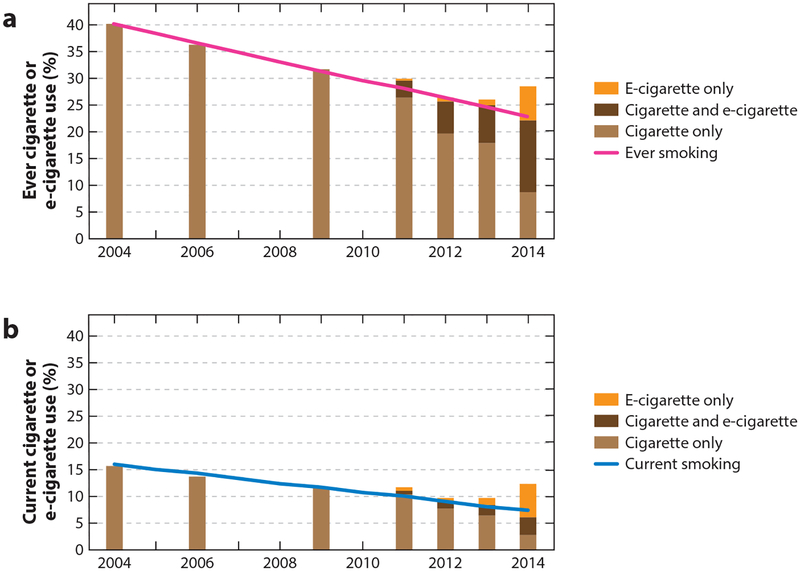
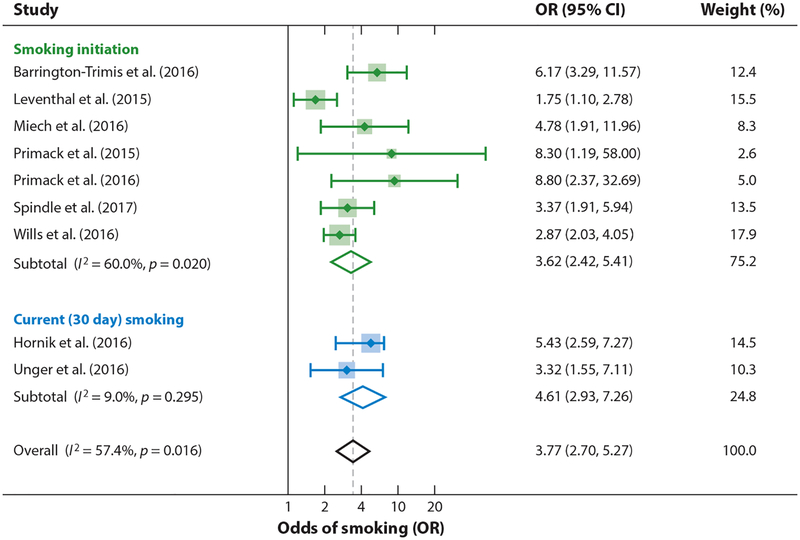
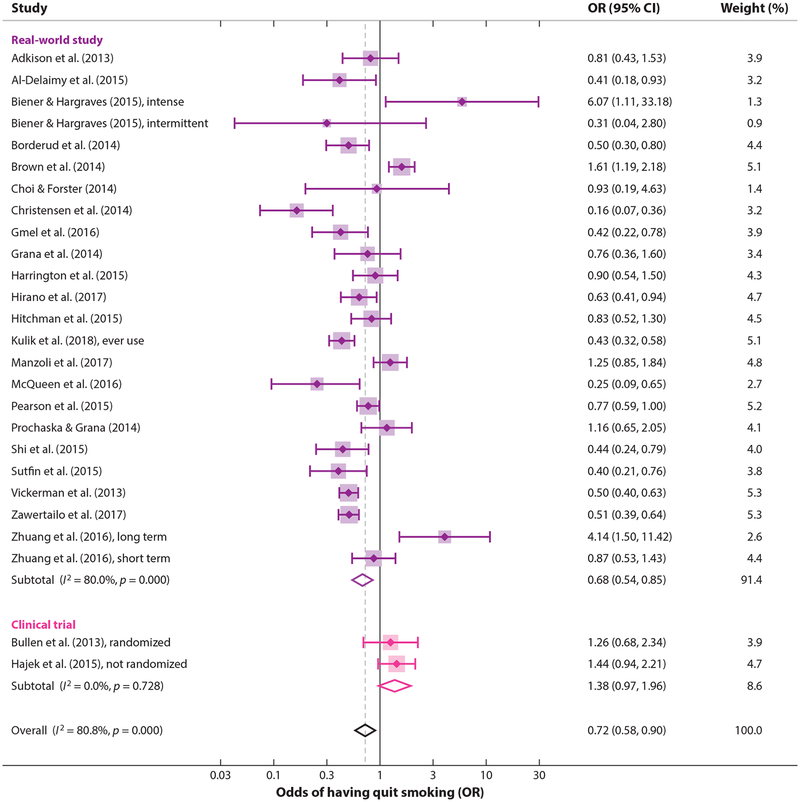
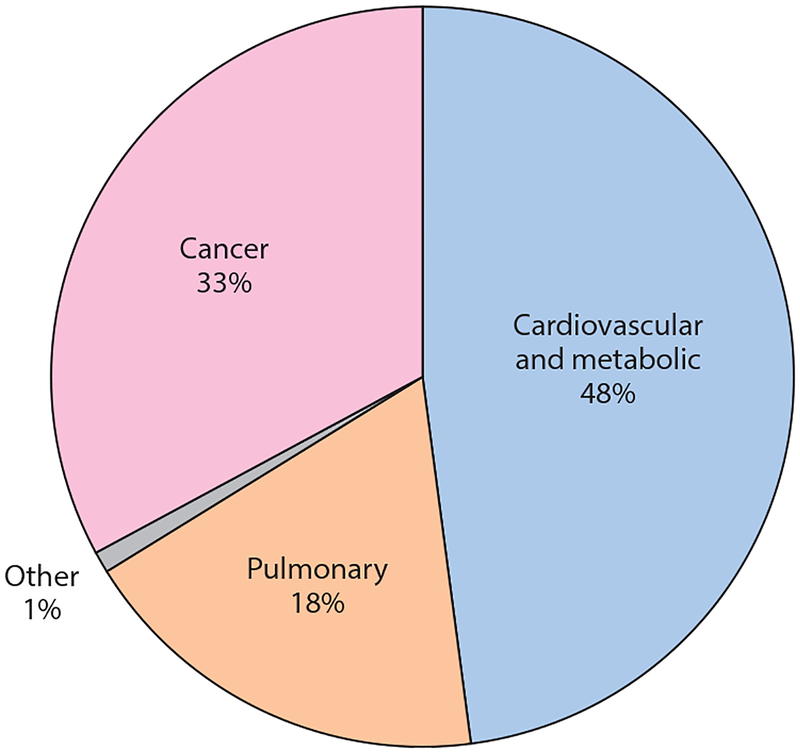
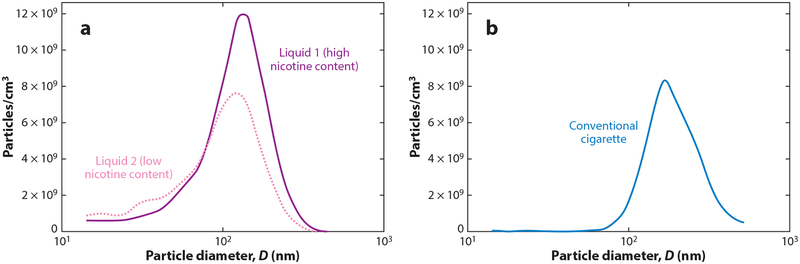
Since e-cigarettes appeared in the mid-2000s, some practitioners, researchers, and policy makers have embraced them as a safer alternative to conventional cigarettes and an effective way to stop smoking. While e-cigarettes deliver lower levels of carcinogens than do conventional cigarettes, they still expose users to high levels of ultrafine particles and other toxins that may substantially increase cardiovascular and noncancer lung disease risks, which account for more than half of all smoking-caused deaths, at rates similar to conventional cigarettes. Moreover, rather than stimulating smokers to switch from conventional cigarettes to less dangerous e-cigarettes or quitting altogether, e-cigarettes are reducing smoking cessation rates and expanding the nicotine market by attracting youth.
Keywords: cancer; cardiovascular disease; lung disease; smoking cessation; smoking initiation.
Figures
References
-
- Abrams DB. 2014. Promise and peril of e-cigarettes: Can disruptive technology make cigarettes obsolete? JAMA 311:135–36 - PubMed
-
- AIHA (Am. Ind. Hyg. Assoc.). 2014. White Paper: Electronic Cigarettes in the Indoor Environment Falls Church, VA: AIHA
Publication types
MeSH terms
Substances
Grants and funding
LinkOut - more resources
Full Text Sources
Other Literature Sources
Medical