


Predicting Lameness in Sheep Activity Using Tri-Axial Acceleration Signals
- PMID: 29324700
- PMCID: PMC5789307
- DOI: 10.3390/ani8010012
Predicting Lameness in Sheep Activity Using Tri-Axial Acceleration Signals
Abstract
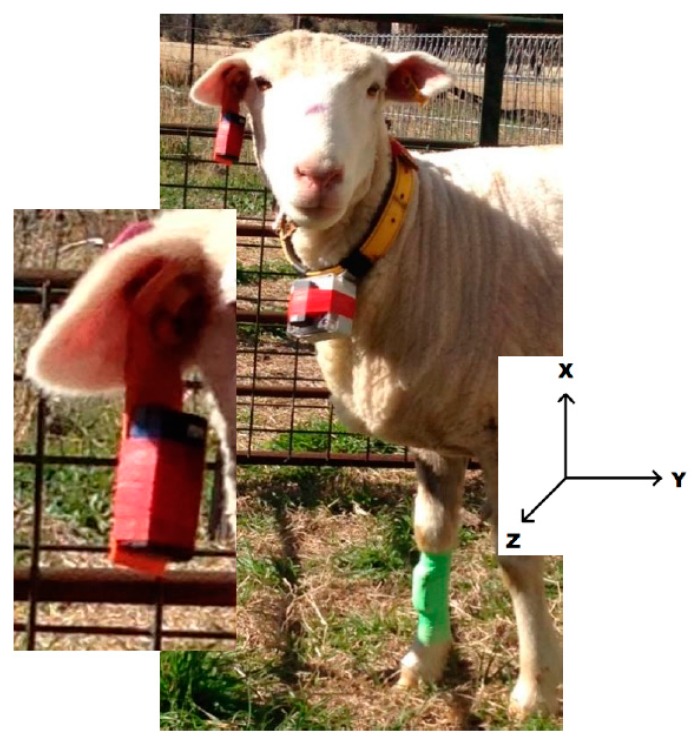
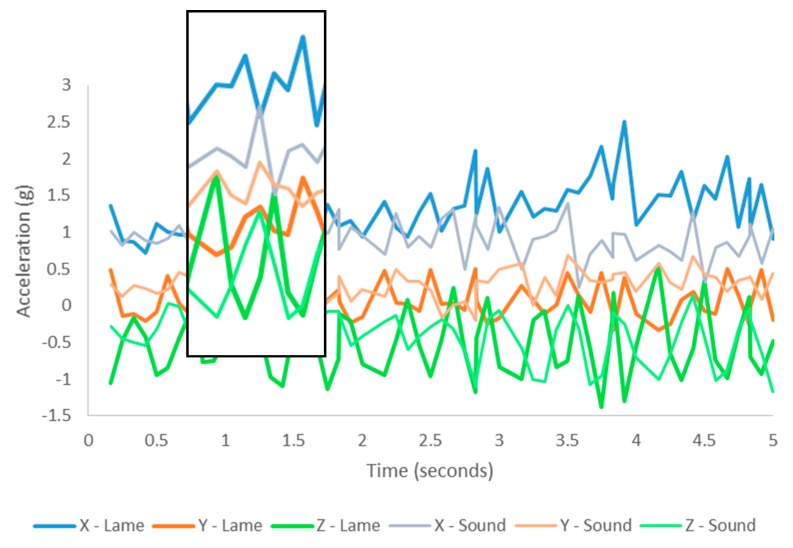
Lameness is a clinical symptom associated with a number of sheep diseases around the world, having adverse effects on weight gain, fertility, and lamb birth weight, and increasing the risk of secondary diseases. Current methods to identify lame animals rely on labour intensive visual inspection. The aim of this current study was to determine the ability of a collar, leg, and ear attached tri-axial accelerometer to discriminate between sound and lame gait movement in sheep. Data were separated into 10 s mutually exclusive behaviour epochs and subjected to Quadratic Discriminant Analysis (QDA). Initial analysis showed the high misclassification of lame grazing events with sound grazing and standing from all deployment modes. The final classification model, which included lame walking and all sound activity classes, yielded a prediction accuracy for lame locomotion of 82%, 35%, and 87% for the ear, collar, and leg deployments, respectively. Misclassification of sound walking with lame walking within the leg accelerometer dataset highlights the superiority of an ear mode of attachment for the classification of lame gait characteristics based on time series accelerometer data.
Keywords: acceleromter; activity; behavior; lameness; on-animal sensor; sheep.
Conflict of interest statement
The authors declare no conflict of interest. The founding sponsors had no role in the design of the study; in the collection, analyses, or interpretation of data; in the writing of the manuscript, and in the decision to publish the results.
Figures


References
-
- Winter A. Lameness in sheep. Small Rumin. Res. 2008;76:149–153. doi: 10.1016/j.smallrumres.2007.12.008. - DOI
-
- Hodgkinson O. The importance of feet examination in sheep health management. Small Rumin. Res. 2010;92:67–71. doi: 10.1016/j.smallrumres.2010.04.007. - DOI
-
- Animal Health Australia. [(accessed on 6 November 2017)]; Available online: www.animalhealthaustralia.com.au/wp-content/uploads/2015/09/LBN_Arthriti....
LinkOut - more resources
Full Text Sources
Other Literature Sources
