


Amplicon-based next-generation sequencing of plasma cell-free DNA for detection of driver and resistance mutations in advanced non-small cell lung cancer
- PMID: 29325035
- PMCID: PMC5913609
- DOI: 10.1093/annonc/mdy005
Amplicon-based next-generation sequencing of plasma cell-free DNA for detection of driver and resistance mutations in advanced non-small cell lung cancer
Abstract
Background: Genomic analysis of plasma cell-free DNA is transforming lung cancer care; however, available assays are limited by cost, turnaround time, and imperfect accuracy. Here, we study amplicon-based plasma next-generation sequencing (NGS), rather than hybrid-capture-based plasma NGS, hypothesizing this would allow sensitive detection and monitoring of driver and resistance mutations in advanced non-small cell lung cancer (NSCLC).
Patients and methods: Plasma samples from patients with NSCLC and a known targetable genotype (EGFR, ALK/ROS1, and other rare genotypes) were collected while on therapy and analyzed blinded to tumor genotype. Plasma NGS was carried out using enhanced tagged amplicon sequencing of hotspots and coding regions from 36 genes, as well as intronic coverage for detection of ALK/ROS1 fusions. Diagnostic accuracy was compared with plasma droplet digital PCR (ddPCR) and tumor genotype.
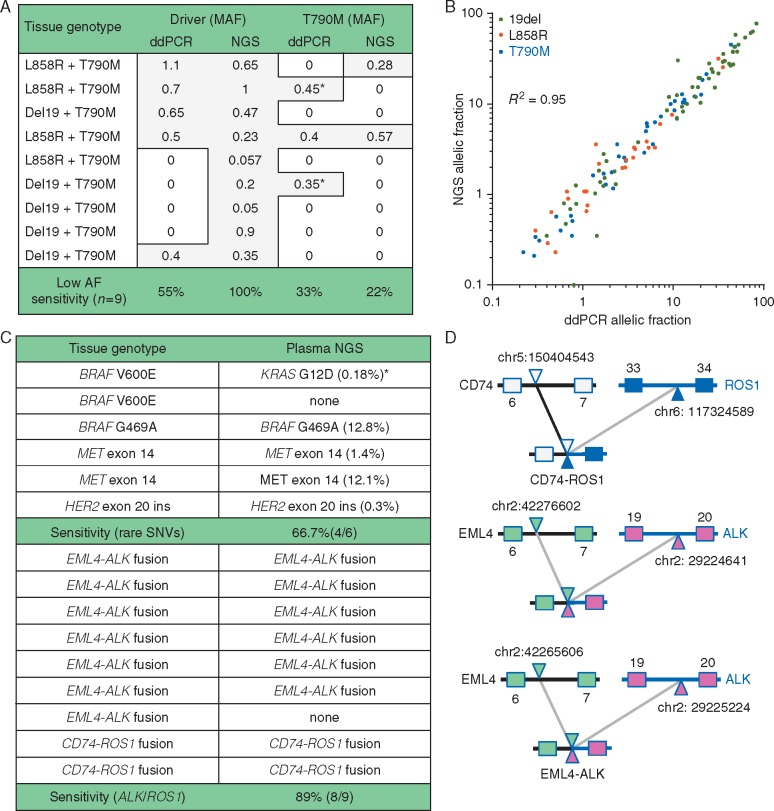
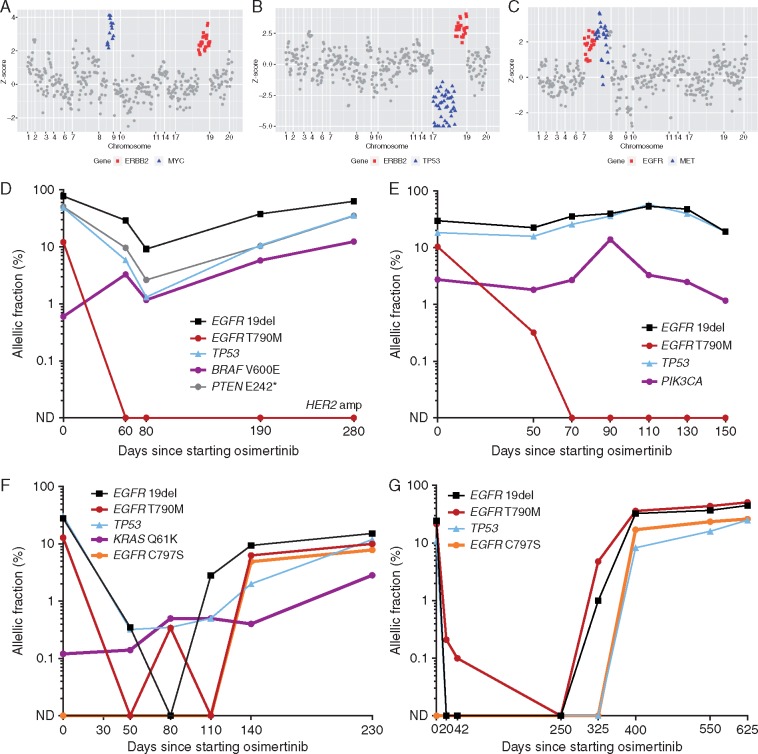
Results: A total of 168 specimens from 46 patients were studied. Matched plasma NGS and ddPCR across 120 variants from 80 samples revealed high concordance of allelic fraction (R2 = 0.95). Pretreatment, sensitivity of plasma NGS for the detection of EGFR driver mutations was 100% (30/30), compared with 87% for ddPCR (26/30). A full spectrum of rare driver oncogenic mutations could be detected including sensitive detection of ALK/ROS1 fusions (8/9 detected, 89%). Studying 25 patients positive for EGFR T790M that developed resistance to osimertinib, 15 resistance mechanisms could be detected including tertiary EGFR mutations (C797S, Q791P) and mutations or amplifications of non-EGFR genes, some of which could be detected pretreatment or months before progression.
Conclusions: This blinded analysis demonstrates the ability of amplicon-based plasma NGS to detect a full range of targetable genotypes in NSCLC, including fusion genes, with high accuracy. The ability of plasma NGS to detect a range of preexisting and acquired resistance mechanisms highlights its potential value as an alternative to single mutation digital PCR-based plasma assays for personalizing treatment of TKI resistance in lung cancer.
Figures
References
-
- Barlesi F, Mazieres J, Merlio J-P. et al. Routine molecular profiling of patients with advanced non-small cell lung cancer: results of a 1-year nationwide programme of the French Cooperative Thoracic Intergroup (IFCT). Lancet 2016; 387(10026): 1415–1426. - PubMed
Publication types
MeSH terms
Substances
Grants and funding
LinkOut - more resources
Full Text Sources
Other Literature Sources
Medical
Research Materials
Miscellaneous
