


Relationship between cardiac microvascular dysfunction measured with 82Rubidium-PET and albuminuria in patients with diabetes mellitus
- PMID: 29325551
- PMCID: PMC5763541
- DOI: 10.1186/s12933-017-0652-1
Relationship between cardiac microvascular dysfunction measured with 82Rubidium-PET and albuminuria in patients with diabetes mellitus
Abstract
Background: Albuminuria is of one the strongest predictors of cardiovascular disease (CVD) in diabetes. Diabetes is associated with cardiac microvascular dysfunction (CMD), a powerful, independent prognostic factor for cardiac mortality. The aim of this study was to evaluate the relationship between CMD and microvascular complications in patients without known CVD.
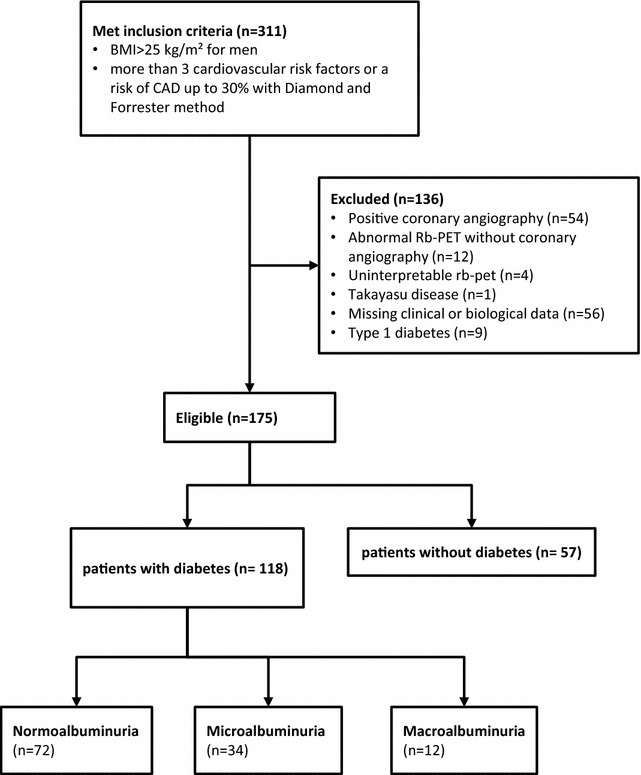
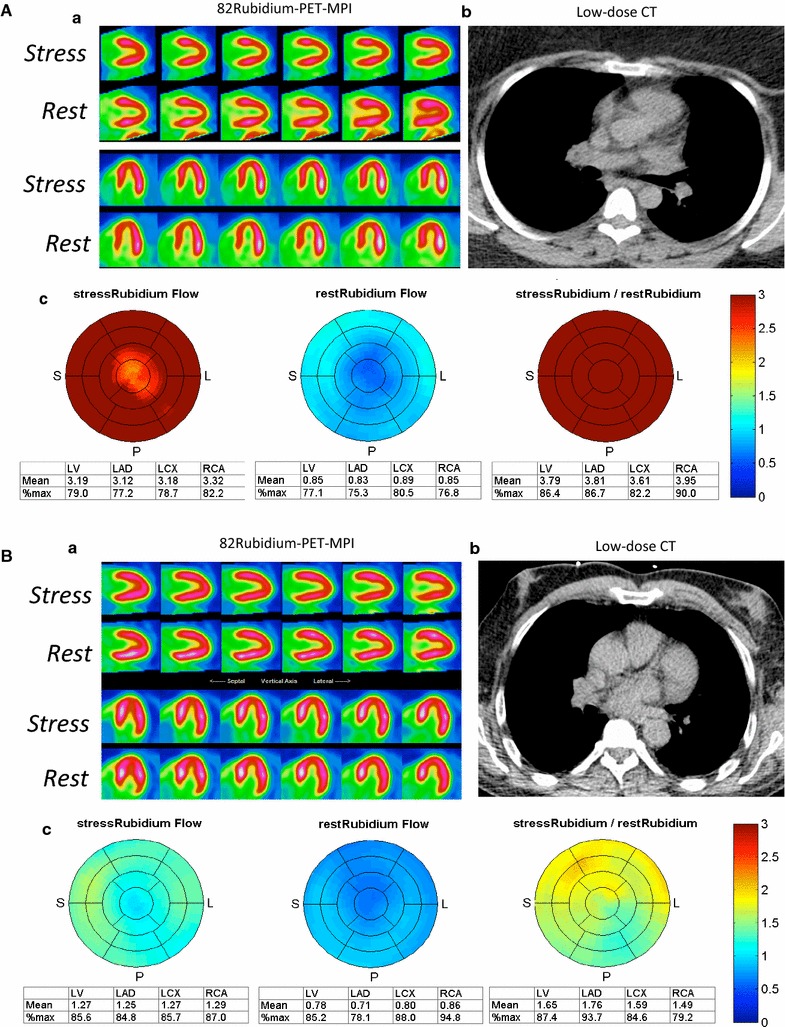
Methods: In this monocentric study, myocardial flow reserve (MFR) was measured with cardiac 82Rubidium positron emission tomography (Rb-PET) in 311 patients referred to nuclear medicine department of Bichat University Hospital for screening of coronary artery disease from 2012 to 2014. Patients with hemodynamically relevant stenosis on coronary angiography or myocardial ischemia on Rb-PET were excluded. Among patients with diabetes, MFR values were compared according to the presence of retinopathy and albuminuria.
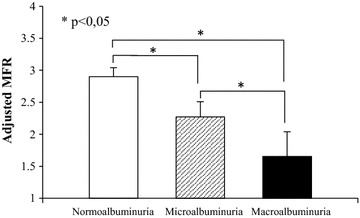
Results: Overall, 175 patients (118 with type 2 diabetes) were included. MFR was significantly lower in patients with diabetes compared with those without diabetes (2.6 ± 1.1 vs. 3.3 ± 1.7; p < 0.005). In patients with diabetes, MFR decreased progressively in relation to albumin urinary excretion (normoalbuminuria: 2.9 ± 1.1, microalbuminuria: 2.3 ± 1.0, macroalbuminuria: 1.8 ± 0.7; p < 0.0001). MFR was not significantly different in patients with vs. without retinopathy (2.4 ± 1.0 vs. 2.7 ± 1.1, p = 0.07). Microalbuminuria and macroalbuminuria remained strongly associated with impaired MFR after multiple adjustments [odds ratio 2.6 (95% CI 1.1-8.4) and 5.3 (95% CI 1.2-44.7), respectively]. This association was confirmed when analyses were restricted to patients with low levels of coronary calcifications on computed tomography.
Conclusions: Impaired MFR was more frequent in patients with diabetes and was strongly associated with the degree of albuminuria suggesting that CMD and albuminuria might share common mechanisms.
Keywords: Albuminuria; Coronary microvascular dysfunction; Diabetes; Diabetic nephropathy.
Figures
References
-
- Gregg EW, Williams DE, Geiss L. Changes in diabetes-related complications in the United States. N Engl J Med. 2014;371(3):286–287. - PubMed
-
- Matsushita K, Coresh J, Sang Y, Chalmers J, Fox C, Guallar E, et al. Estimated glomerular filtration rate and albuminuria for prediction of cardiovascular outcomes: a collaborative meta-analysis of individual participant data. Lancet Diabetes Endocrinol. 2015;3(7):514–525. doi: 10.1016/S2213-8587(15)00040-6. - DOI - PMC - PubMed
Publication types
MeSH terms
Substances
LinkOut - more resources
Full Text Sources
Other Literature Sources
Medical
