


Do ketone bodies mediate the anti-seizure effects of the ketogenic diet?
- PMID: 29325899
- PMCID: PMC5858992
- DOI: 10.1016/j.neuropharm.2018.01.011
Do ketone bodies mediate the anti-seizure effects of the ketogenic diet?
Abstract
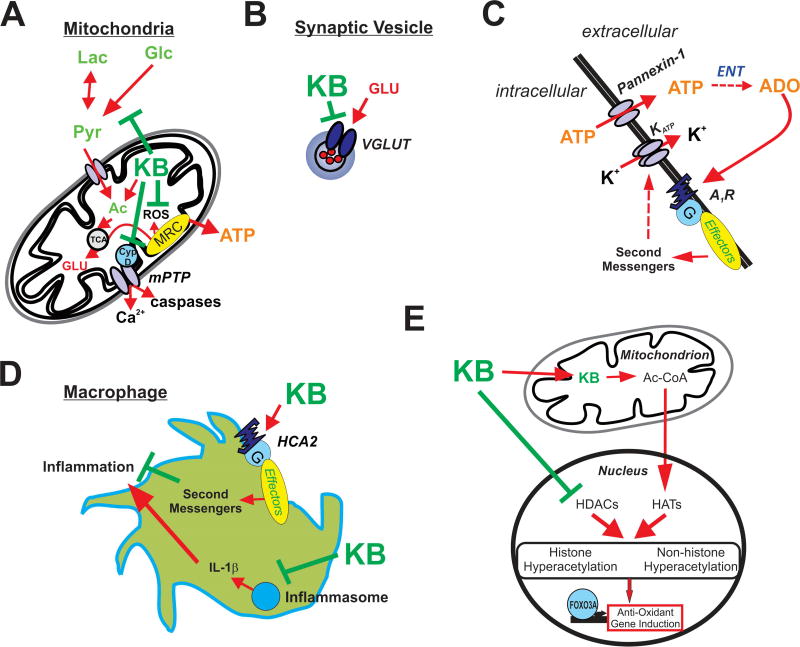
Although the mechanisms underlying the anti-seizure effects of the high-fat ketogenic diet (KD) remain unclear, a long-standing question has been whether ketone bodies (i.e., β-hydroxybutyrate, acetoacetate and acetone), either alone or in combination, contribute mechanistically. The traditional belief has been that while ketone bodies reflect enhanced fatty acid oxidation and a general shift toward intermediary metabolism, they are not likely to be the key mediators of the KD's clinical effects, as blood levels of β-hydroxybutyrate do not correlate consistently with improved seizure control. Against this unresolved backdrop, new data support ketone bodies as having anti-seizure actions. Specifically, β-hydroxybutyrate has been shown to interact with multiple novel molecular targets such as histone deacetylases, hydroxycarboxylic acid receptors on immune cells, and the NLRP3 inflammasome. Clearly, as a diet-based therapy is expected to render a broad array of biochemical, molecular, and cellular changes, no single mechanism can explain how the KD works. Specific metabolic substrates or enzymes are only a few of many important factors influenced by the KD that can collectively influence brain hyperexcitability and hypersynchrony. This review summarizes recent novel experimental findings supporting the anti-seizure and neuroprotective properties of ketone bodies.
Keywords: Acetoacetate; Beta-hydroxybutyrate; Epilepsy; Ketogenic diet; Ketone bodies; Neuroprotection.
Copyright © 2018 Elsevier Ltd. All rights reserved.
Figures
References
-
- Balasse EO, Fery F. Ketone body production and disposal: effects of fasting. Diabetes and exercise. Diabetes Metab. Rev. 1978;5:247–270. - PubMed
-
- Bough KJ, Wetherington J, Hassel B, Pare JF, Gawryluk JW, Greene JG, Shaw R, Smith Y, Geiger JD, Dingledine RJ. Mitochondrial biogenesis in the anticonvulsant mechanism of the ketogenic diet. Ann. Neurol. 2006;60:223–235. - PubMed
-
- Buchhalter JR, D’Alfonso S, Connolly M, Fung E, Michoulas A, Sinasac D, Singer R, Smith J, Singh N, Rho JM. The relationship between D-beta-hydroxybutyrate blood concentrations and seizure control in children treated with the ketogenic diet for medically intractable epilepsy. Epilepsia Open. 2017 doi: 10.1002/epi4.12058. - DOI - PMC - PubMed
Publication types
MeSH terms
Substances
Grants and funding
LinkOut - more resources
Full Text Sources
Other Literature Sources
Medical
