


Dental erosion, prevalence and risk factors among a group of adolescents in Stockholm County
- PMID: 29327216
- PMCID: PMC5807473
- DOI: 10.1007/s40368-017-0317-5
Dental erosion, prevalence and risk factors among a group of adolescents in Stockholm County
Abstract
Aims: To investigate the prevalence and risk factors of dental erosion (DE) among a group of adolescents in Stockholm County.
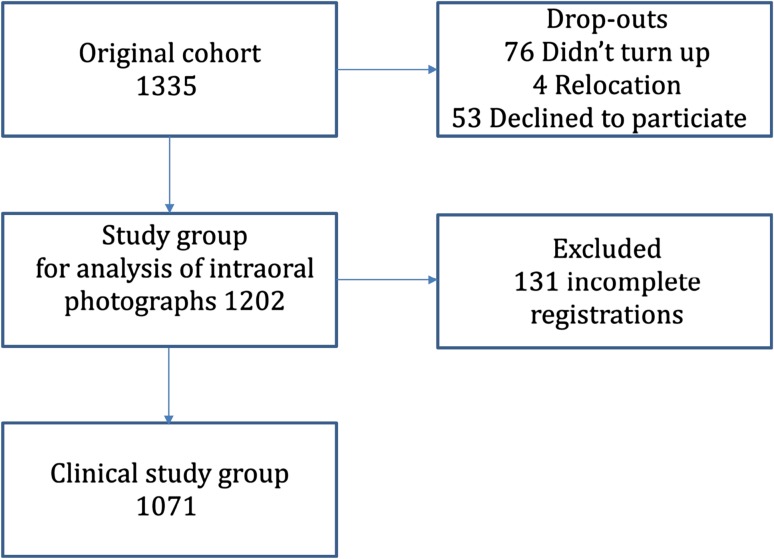
Materials and methods: This cross sectional cohort study was conducted at three clinics of the Public Dental Service in Stockholm County. Fifteen and 17 year old adolescents (1335) who scheduled their regular dental health examination were asked to participate. After drop-outs a sample of 1071 individuals, 547 males and 524 females were enrolled in the study. Presence of erosive wear was diagnosed (yes/no) on marker teeth by trained dentists/dental hygienists and photographs were taken. The adolescents answered a questionnaire regarding oral symptoms, dietary and behavioural factors. Two calibrated specialist dentists performed evaluation of the photographs for severity of DE using a modified version of the Simplified Erosion Partial Recording System (SEPRS).
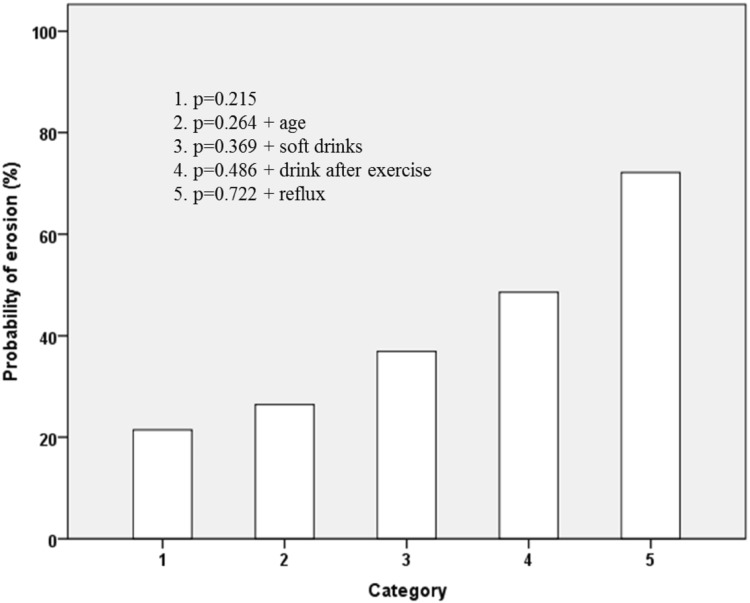
Results: DE was clinically diagnosed in 28.3% of 15 years old and 34.3% of 17 years old. Severe erosive wear (grade 3 and 4 according to SEPRS) was found in 18.3% of the adolescents based upon the intra-oral photographs. DE was more prevalent and severe among males than females. Clinically diagnosed erosive lesions correlated significantly with soft drink consumption (p < 0.001), the use of juice or sport drinks as a thirst quencher after exercise (p = 0.006) and tooth hypersensitivity when eating and drinking (p = 0.012). Furthermore, self-assessed gastric reflux was a factor strongly associated with DE (p < 0.001).
Conclusion: The study indicated that DE was common among adolescents in Stockholm County and associated with both internal and external risk factors.
Keywords: Adolescents; Dental erosion; Prevalence; Risk factors.
Conflict of interest statement
The authors declare that they have no conflict of interest.
Figures
References
-
- Al-Dlaigan YH, Shaw L, Smith AJ. Dental erosion in a group of British 14-year-old school children Part I: prevalence and influence of differing socioeconomic backgrounds. Br Dent J. 2001;190:145–149. - PubMed
-
- Altman DG. Practical statistics for medical research. London: Chapman & Hall; 1995.
MeSH terms
LinkOut - more resources
Full Text Sources
Other Literature Sources
