


Identification and in silico analysis of functional SNPs of human TAGAP protein: A comprehensive study
- PMID: 29329296
- PMCID: PMC5766082
- DOI: 10.1371/journal.pone.0188143
Identification and in silico analysis of functional SNPs of human TAGAP protein: A comprehensive study
Abstract
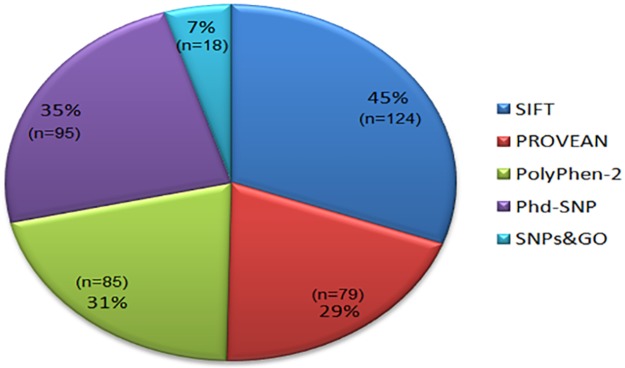
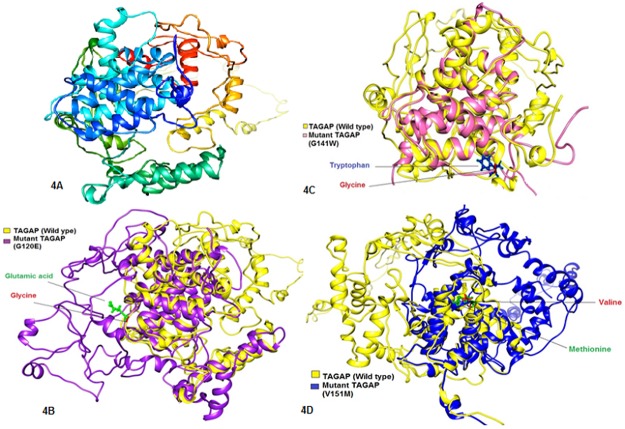
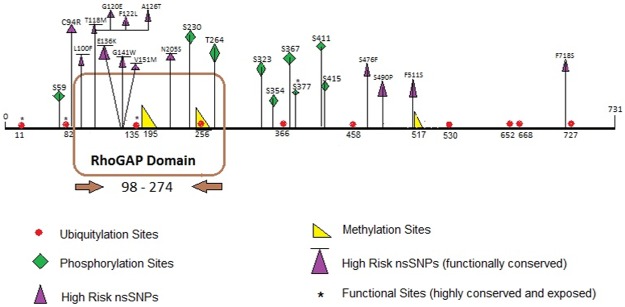
Genetic polymorphisms in TAGAP gene have been associated with many diseases including rheumatoid arthritis, multiple sclerosis and other autoimmune disorders. Identifying functional SNPs in such disease associated genes is an uphill task hence before planning larger population study, it is better to scrutinize putative functional SNPs. In this study we used various computational approaches to identify nsSNPs which are deleterious to the structure and/or function of TAGAP protein that might be causing these diseases. Computational analysis was performed by five different in silico tools including SIFT, PROVEAN, PolyPhen-2, PhD-SNP and SNPs&GO. The study concludes that mutations of Glycine → Glutamic Acid at position 120, Glycine → Tryptophan at position 141 and Valine → Methionine at position 151 are major mutations in native TAGAP protein which might contribute to its malfunction and ultimately causing disease. The study also proposed 3D structures of native TAGAP protein and its three mutants. Future studies should consider these nsSNPs as main target mutations in various diseases involving TAGAP malfunction. This is the first comprehensive study, where TAGAP gene variants were analyzed using in silico tools hence will be of great help while considering large scale studies and also in developing precision medicines for cure of diseases related to these polymorphisms. Furthermore, animal models of various autoimmune diseases and having these mutations might be of help in exploring their precise roles.
Conflict of interest statement
Figures
References
-
- Collins FS, Brooks LD, Chakravarti A. A DNA polymorphism discovery resource for research on human genetic variation. Genome Res. 1998; 8: 1229–1231. - PubMed
-
- Lander ES. The new genomics: global views of biology. Science. 1996; 274: 536–539. - PubMed
-
- Capriotti E, Altman RB. Improving the prediction of disease-related variants using protein three-dimensional structure. BMC Bioinformatics. 2011; 12: S3 doi: 10.1186/1471-2105-12-S4-S3 - DOI - PMC - PubMed
-
- Barroso I, Gurnell M, Crowley VE, Agostini M, Schwabe JW, Soos MA, et al. Dominant negative mutations in human PPARgamma associated with severe insulin resistance, diabetes mellitus and hypertension. Nature. 1999; 402: 880–883. doi: 10.1038/47254 - DOI - PubMed
-
- Petukh M, Kucukkal TG, Alexov E. On human disease-causing amino acid variants: statistical study of sequence and structural patterns. Hum Mutat. 2015. 36; 524–534. doi: 10.1002/humu.22770 - DOI - PMC - PubMed
MeSH terms
Substances
LinkOut - more resources
Full Text Sources
Other Literature Sources
Molecular Biology Databases
