


Impact of seasonal influenza vaccination in the presence of vaccine interference
- PMID: 29329684
- PMCID: PMC5825190
- DOI: 10.1016/j.vaccine.2017.12.067
Impact of seasonal influenza vaccination in the presence of vaccine interference
Abstract
Background: Annual influenza vaccination is a key to preventing widespread influenza infections. Recent reports of influenza vaccine effectiveness (VE) indicate that vaccination in prior years may reduce VE in the current season, suggesting vaccine interference. The purpose of this study is to evaluate the potential effect of repeat influenza vaccinations in the presence of vaccine interference.
Methods: Using literature-based parameters, an age-structured influenza equation-based transmission model was used to determine the optimal vaccination strategy, while considering the effect of varying levels of interference.
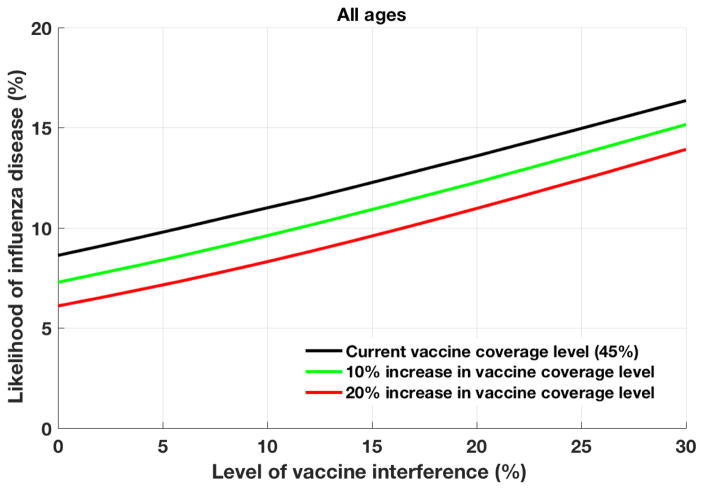
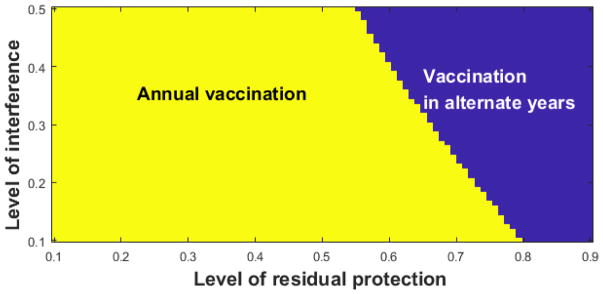
Results: The model shows that, even in the presence of vaccine interference, revaccination reduces the influenza attack rate and provides individual benefits. Specifically, annual vaccination is a favored strategy over vaccination in alternate years, as long as the level of residual protection is less than 58% or vaccine interference effect is minimal. Furthermore, the negative impact of vaccine interference may be offset by increased vaccine coverage levels.
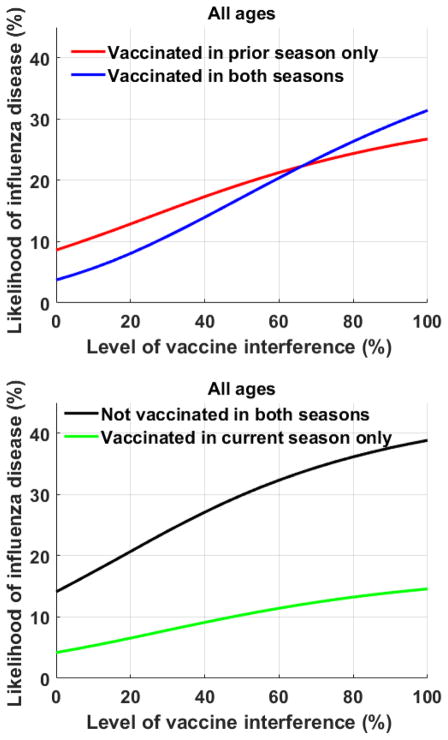
Conclusions: Even in the presence of potential vaccine interference, our work provides a population-level perspective on the potential merits of repeated influenza vaccination. This is because repeat vaccination groups had lower attack rates than groups that omitted the second vaccination unless vaccine interference was at very high, perhaps implausible, levels.
Keywords: Influenza; Vaccination; Vaccine effectiveness; Vaccine interference.
Copyright © 2017. Published by Elsevier Ltd.
Conflict of interest statement
Richard Zimmerman has active research grants from Sanofi Pasteur, Pfizer Inc., and Merck & Co., Inc. Mary Patricia Nowalk and Jonathan Raviotta have received or currently receive grant funding from Pfizer, Inc. and Merck & Co., Inc. The other authors have no conflicts to declare.
Figures
References
-
- Grohskopf LA, Sokolow LZ, Olsen SJ, Bresee JS, Broder KR, Karron RA. Prevention and Control of Influenza with Vaccines: Recommendations of the Advisory Committee on Immunization Practices, United States, 2015–16 Influenza Season. MMWR Morbidity and mortality weekly report. 2015;64:818–25. - PMC - PubMed
-
- Ohmit SE, Thompson MG, Petrie JG, Thaker SN, Jackson ML, Belongia EA, et al. Influenza vaccine effectiveness in the 2011–2012 season: protection against each circulating virus and the effect of prior vaccination on estimates. Clinical infectious diseases: an official publication of the Infectious Diseases Society of America. 2014;58:319–27. - PMC - PubMed
-
- Thompson MG, Li DK, Shifflett P, Sokolow LZ, Ferber JR, Kurosky S, et al. Effectiveness of seasonal trivalent influenza vaccine for preventing influenza virus illness among pregnant women: a population-based case-control study during the 2010–2011 and 2011–2012 influenza seasons. Clinical infectious diseases: an official publication of the Infectious Diseases Society of America. 2014;58:449–57. - PubMed
Publication types
MeSH terms
Substances
Grants and funding
LinkOut - more resources
Full Text Sources
Other Literature Sources
Medical
