


A multistate investigation of health care-associated Burkholderia cepacia complex infections related to liquid docusate sodium contamination, January-October 2016
- PMID: 29329922
- PMCID: PMC6192668
- DOI: 10.1016/j.ajic.2017.11.018
A multistate investigation of health care-associated Burkholderia cepacia complex infections related to liquid docusate sodium contamination, January-October 2016
Abstract
Background: Outbreaks of health care-associated infections (HAIs) caused by Burkholderia cepacia complex (Bcc) have been associated with medical devices and water-based products. Water is the most common raw ingredient in nonsterile liquid drugs, and the significance of organisms recovered from microbiologic testing during manufacturing is assessed using a risk-based approach. This incident demonstrates that lapses in manufacturing practices and quality control of nonsterile liquid drugs can have serious unintended consequences.
Methods: An epidemiologic and laboratory investigation of clusters of Bcc HAIs that occurred among critically ill, hospitalized, adult and pediatric patients was performed between January 1, 2016, and October 31, 2016.
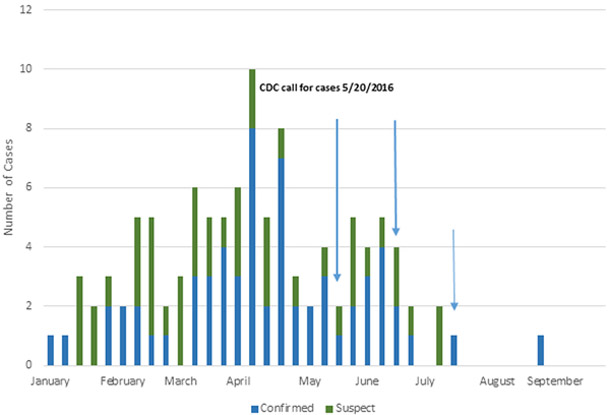
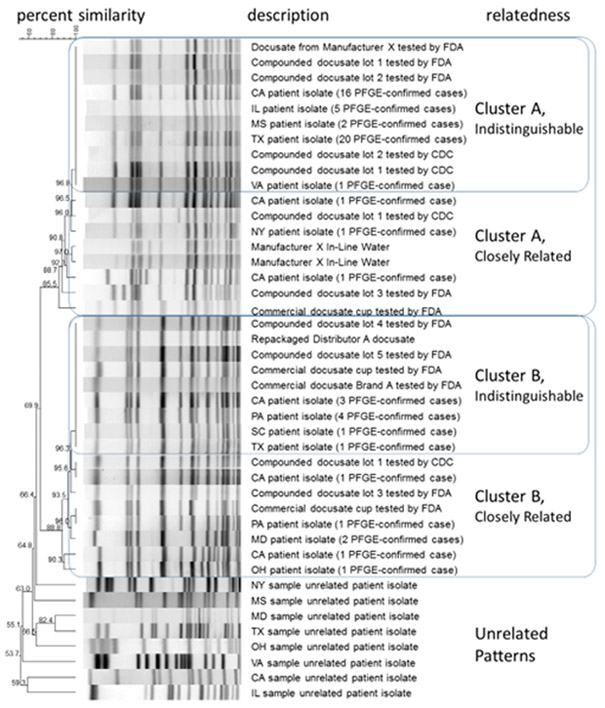
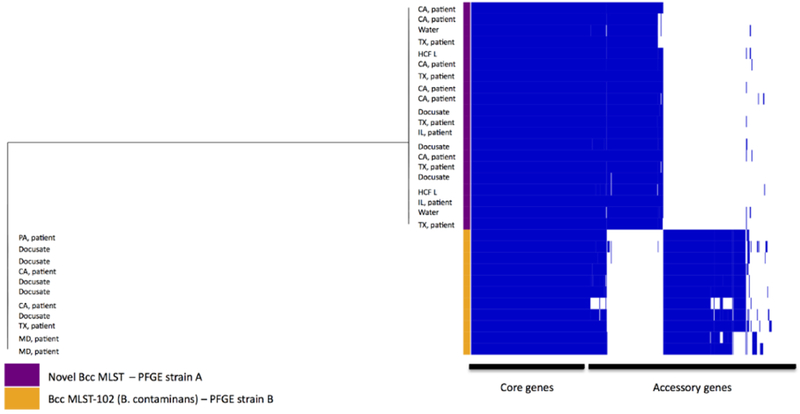
Results: One hundred and eight case patients with Bcc infections at a variety of body sites were identified in 12 states. Two distinct strains of Bcc were obtained from patient clinical cultures. These strains were found to be indistinguishable or closely related to 2 strains of Bcc obtained from cultures of water used in the production of liquid docusate, and product that had been released to the market by manufacturer X.
Conclusions: This investigation highlights the ability of bacteria present in nonsterile, liquid drugs to cause infections or colonization among susceptible patients. Prompt reporting and thorough investigation of potentially related infections may assist public health officials in identifying and removing contaminated products from the market when lapses in manufacturing occur.
Keywords: Burkholderia cepacia complex; Drug manufacturing; Health care–associated infections; Nonsterile drugs.
Copyright © 2018 Association for Professionals in Infection Control and Epidemiology, Inc. All rights reserved.
Conflict of interest statement
Figures
References
-
- List of parokaryotic names with standing in nomenclature. LPSNbacterio.net. http://www.bacterio.net/burkholderia.html Accessed February 14, 2017.
-
- Mahenthiraglingam E, Urban TA, Goldberg JB. The multifarious, multireplicon Burkholderia cepacia complex. Nat Rev Microbiol. 2005: 2:144–56. - PubMed
-
- Isles A, Mclusky I, Corey M, et al. Pseudomonas cepacia infection in cystic fibrosis: An emerging problem. J Pediatr. 1984;104: 206–10. - PubMed
-
- Ghazal S, Al-Mudalmeegh K, Fakihl E, Aserv A. Outbreak of Burkholderia cepacia bacteremia in immunocompetent children caused by contaminated nebulized salbutamol in Saudi Arabia. Am J Infect Control. 2006; 34: 394–8. - PubMed
-
- Hutchinson J, Runge W, Mulvey M, et al. Burkholderia cepacia infections associated with intrinsically contaminated ultrasound gel: the role of microbial degradation of parabens. Infect Control Hosp Epidemiol. 2004; 25:291–6. - PubMed
MeSH terms
Substances
Grants and funding
LinkOut - more resources
Full Text Sources
Other Literature Sources
