


Impact of duplicate CT scan rate after implementation of transfer image repository system at a level 1 trauma center
- PMID: 29330668
- PMCID: PMC5940706
- DOI: 10.1007/s10140-017-1575-6
Impact of duplicate CT scan rate after implementation of transfer image repository system at a level 1 trauma center
Abstract
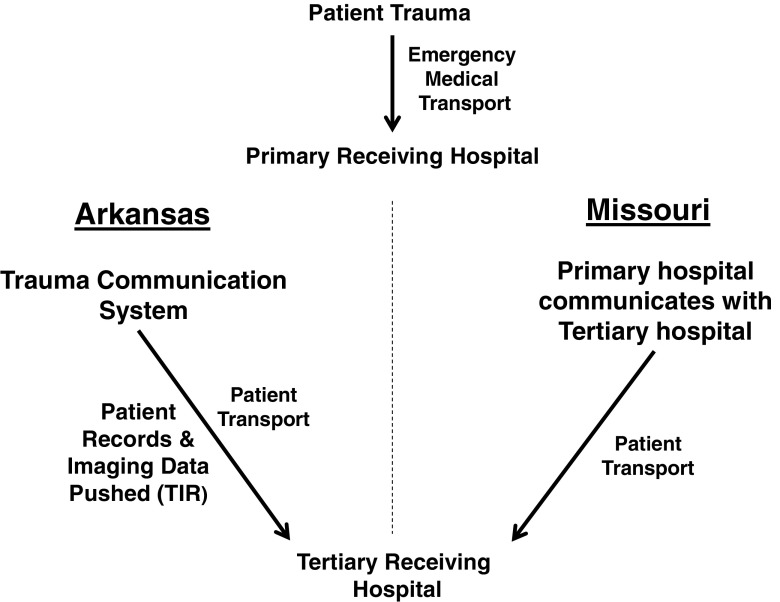
Purpose: The regionalization of trauma in the USA results in frequent transfers of patients from a primary hospital ED to a higher level trauma facility. While many hospitals have a Picture Archive Communication System (PACS) which captures digital radiological images, these are often not available to the receiving institution resulting in duplicate imaging. The state of Arkansas instituted a trauma image repository (TIR) in July 2013. We examined whether implementation of this repository would impact CT scan duplication in the trauma system.
Methods: This was a retrospective analysis of trauma patients transferred from outlying hospitals in Arkansas and Missouri to a single level 1 trauma hospital in Missouri between July 2012 and June 2015. We compared the duplicate CT rate for patients transferred from Arkansas and Missouri hospitals before and after the repository was implemented for Arkansas.
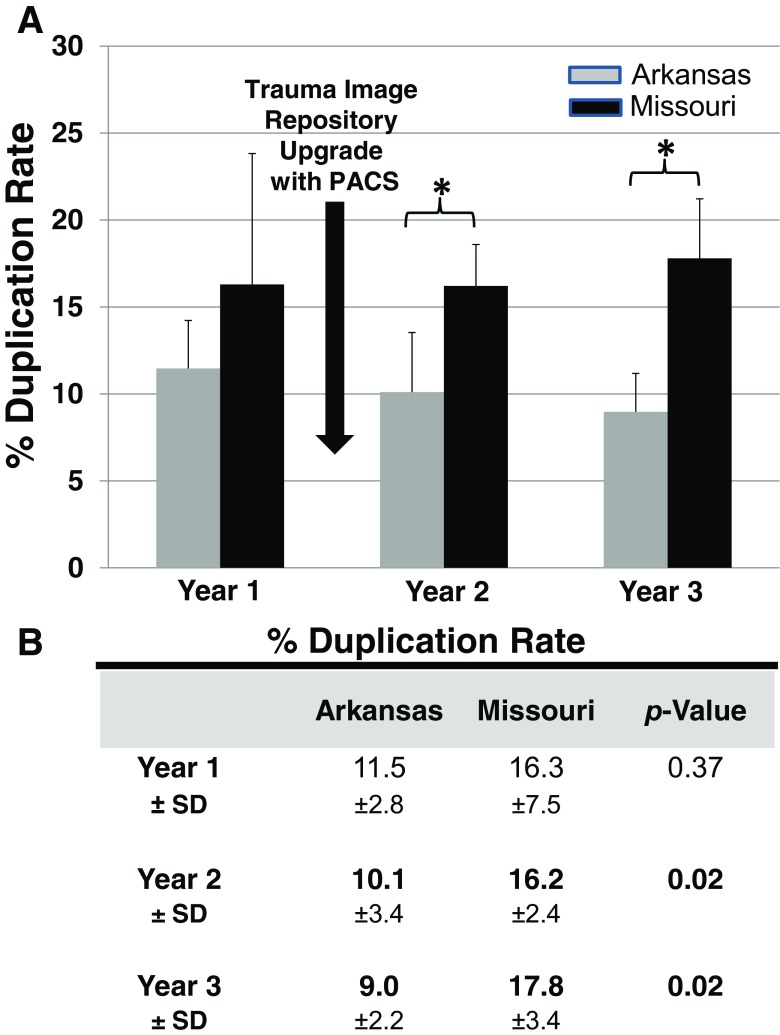
Results: Prior to implementation (July 2012-June 2013) of Arkansas TIR, duplicate CT rates were similar for patients transferred from Arkansas (11.5% ± 2.8) or Missouri (16.3% ± 7.5). Following implementation (July 2013-June 2014), the duplicate CT rate for patients transferred from Arkansas was significantly lower (Arkansas = 10.1% vs. Missouri 16.2%; CI 95%, p = 0.02), and significance continued (Arkansas = 9.0% vs. Missouri = 17.8%; CI 95%, p = 0.02) during follow-up (July 2014-June 2015).
Conclusion: Fewer patients received duplicated scans within the Arkansas as compared with the Missouri-based trauma referral systems regardless of Injury Severity Scores (ISS). Our findings suggest that TIR adoption coupled with PACS improved transferability of radiographic studies and could improve patient care while reducing costs in trauma transfers.
Keywords: CT/MRI; Computed tomography; Critical care transport; Duplicate CT; Imaging; Transfer image repository; Trauma.
Conflict of interest statement
Conflict of interest
The authors declare that they have no conflict of interest.
Figures
References
-
- (US) IoM . Regionalizing emergency care: workshop summary. Washington (DC): National Academies Press (US); 2010. Regionalized trauma care: past, present, and future. - PubMed
MeSH terms
LinkOut - more resources
Full Text Sources
Other Literature Sources
Medical
