


Manifestations and mechanisms of myocardial lipotoxicity in obesity
- PMID: 29331057
- PMCID: PMC6045461
- DOI: 10.1111/joim.12728
Manifestations and mechanisms of myocardial lipotoxicity in obesity
Abstract
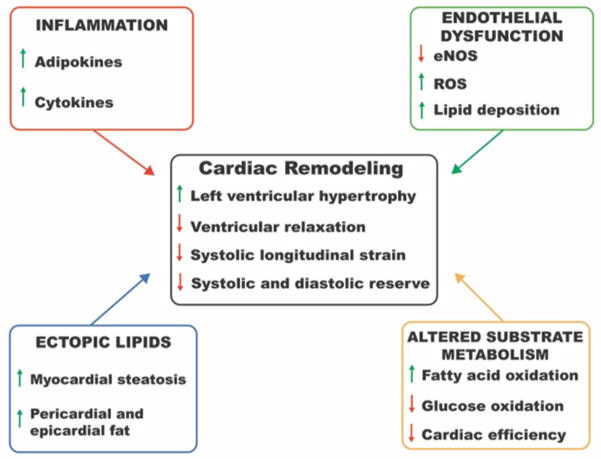
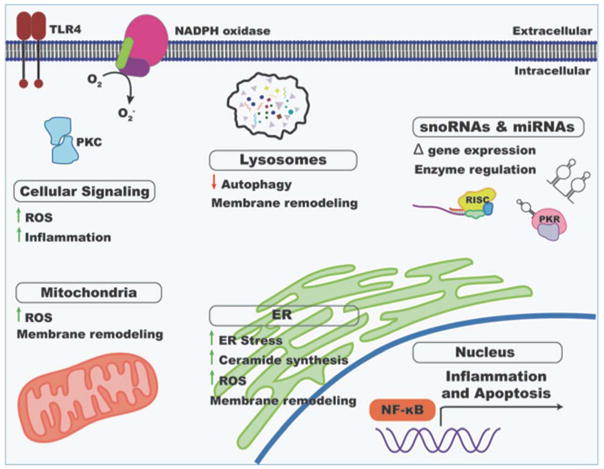
Environmental and socioeconomic changes over the past thirty years have contributed to a dramatic rise in the worldwide prevalence of obesity. Heart disease is amongst the most serious health risks of obesity, with increases in both atherosclerotic coronary heart disease and heart failure among obese individuals. In this review, we focus on primary myocardial alterations in obesity that include hypertrophic remodelling and diastolic dysfunction. Obesity-associated perturbations in myocardial and systemic lipid metabolism are important contributors to cardiovascular complications of obesity. Accumulation of excess lipid in nonadipose cells of the cardiovascular system can cause cell dysfunction and cell death, a process known as lipotoxicity. Lipotoxicity has been modelled in mice using high-fat diet feeding, inbred lines with mutations in leptin receptor signalling, and in genetically engineered mice with enhanced myocardial fatty acid uptake, altered lipid droplet homoeostasis or decreased cardiac fatty acid oxidation. These studies, along with findings in cell culture model systems, indicate that the molecular pathophysiology of lipid overload involves endoplasmic reticulum stress, alterations in autophagy, de novo ceramide synthesis, oxidative stress, inflammation and changes in gene expression. We highlight recent advances that extend our understanding of the impact of obesity and altered lipid metabolism on cardiac function.
Keywords: diabetes; heart failure; lipids; obesity.
© 2018 The Association for the Publication of the Journal of Internal Medicine.
Conflict of interest statement
The authors declare that they have no conflicts of interest.
Figures
References
-
- Kenchaiah S, Evans JC, Levy D, et al. Obesity and the risk of heart failure. N Engl J Med. 2002;347:305–13. - PubMed
-
- Murphy NF, MacIntyre K, Stewart S, Hart CL, Hole D, McMurray JJ. Long-term cardiovascular consequences of obesity: 20-year follow-up of more than 15 000 middle-aged men and women (the Renfrew-Paisley study) Eur Heart J. 2006;27:96–106. - PubMed
-
- Wilson PW, D’Agostino RB, Sullivan L, Parise H, Kannel WB. Overweight and obesity as determinants of cardiovascular risk: the Framingham experience. Arch Intern Med. 2002;162:1867–72. - PubMed
-
- Fox CS, Massaro JM, Hoffmann U, et al. Abdominal visceral and subcutaneous adipose tissue compartments: association with metabolic risk factors in the Framingham Heart Study. Circulation. 2007;116:39–48. - PubMed
Publication types
MeSH terms
Grants and funding
LinkOut - more resources
Full Text Sources
Other Literature Sources
Medical
Miscellaneous
