


The rapid diagnosis of viral respiratory tract infections and its impact on antimicrobial stewardship programs
- PMID: 29332209
- PMCID: PMC7087990
- DOI: 10.1007/s10096-017-3174-6
The rapid diagnosis of viral respiratory tract infections and its impact on antimicrobial stewardship programs
Abstract
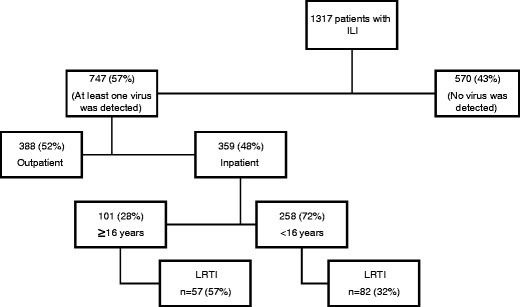
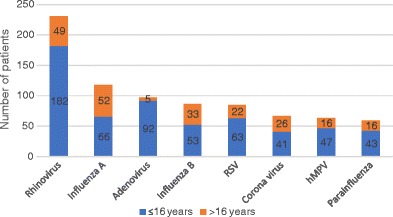
We aimed to describe the potential benefit of new rapid molecular respiratory tests (MRT) in decreasing inappropriate antibiotic use among the inpatients presenting with influenza-like illness (ILI). We included patients from inpatient and outpatient departments who had ILI and performed MRT between 1 January 2015 and 31 December 2016 in a 265-bed private hospital in Istanbul. At the end of 2015, we implemented antimicrobial stewardship including systematic use of MRT. Then, we compared our observations between the year 2015 and the year 2016. We designed the study according to the STrengthening the Reporting of OBservational studies in Epidemiology (STROBE) tool. A U.S. Food and Drug Administration (FDA)-cleared multiplexed polymerase chain reaction (PCR) system (BioFire FilmArray, Idaho Technology, Salt Lake City, UT) which detects 17 viruses and three bacteria was used for diagnosis. In total, 1317 patients were included; 630 (48%) were inpatients and 569 (43%) were older than 16 years of age. At least one virus was detected in 747 (57%) patients. Rhinovirus/enterovirus, influenza virus, and adenovirus were the most commonly detected. Among hospitalized patients, in children, a significant decrease in antibiotic use (44.5% in 2015 and 28.8% in 2016, p = 0.009) was observed, but in adults, the decrease was not statistically significant (72% in 2015 and 63% in 2016, p = 0.36). The duration of antibiotic use after the detection of virus was significantly decreased in both children and adults (p < 0.001 and p = 0.007, respectively). By using MRT, inappropriate antibiotic use and, also, duration of inappropriate antibiotic use after the detection of virus was significantly decreased. It is time to increase the awareness about the viral etiology in respiratory tract infections (RTIs) and implement MRT in clinical practice.
Conflict of interest statement
None to declare.
Figures
References
-
- Hirsch HH, Martino R, Ward KN, Boeckh M, Einsele H, Ljungman P. Fourth European Conference on Infections in Leukaemia (ECIL-4): guidelines for diagnosis and treatment of human respiratory syncytial virus, parainfluenza virus, metapneumovirus, rhinovirus, and coronavirus. Clin Infect Dis. 2013;56(2):258–266. doi: 10.1093/cid/cis844. - DOI - PMC - PubMed
-
- Jain S, Self WH, Wunderink RG, Fakhran S, Balk R, Bramley AM, Reed C, Grijalva CG, Anderson EJ, Courtney DM, Chappell JD, Qi C, Hart EM, Carroll F, Trabue C, Donnelly HK, Williams DJ, Zhu Y, Arnold SR, Ampofo K, Waterer GW, Levine M, Lindstrom S, Winchell JM, Katz JM, Erdman D, Schneider E, Hicks LA, McCullers JA, Pavia AT, Edwards KM, Finelli L, CDC EPIC Study Team Community-acquired pneumonia requiring hospitalization among U.S. adults. N Engl J Med. 2015;373(5):415–427. doi: 10.1056/NEJMoa1500245. - DOI - PMC - PubMed
-
- Ebell MH, Radke T. Antibiotic use for viral acute respiratory tract infections remains common. Am J Manag Care. 2015;21(10):e567–e575. - PubMed
MeSH terms
Substances
LinkOut - more resources
Full Text Sources
Other Literature Sources
Medical
