Review
. 2018 Mar;18(3):195-203.
doi: 10.1038/nri.2017.145. Epub 2018 Jan 15.

Improving immune-vascular crosstalk for cancer immunotherapy

Affiliations
Review

Improving immune-vascular crosstalk for cancer immunotherapy

Yuhui Huang et al. Nat Rev Immunol. 2018 Mar.

Abstract

The vasculature of tumours is highly abnormal and dysfunctional. Consequently, immune effector cells have an impaired ability to penetrate solid tumours and often exhibit compromised functions. Normalization of the tumour vasculature can enhance tissue perfusion and improve immune effector cell infiltration, leading to immunotherapy potentiation. However, recent studies have demonstrated that the stimulation of immune cell functions can also help to normalize tumour vessels. In this Opinion article, we propose that the reciprocal regulation between tumour vascular normalization and immune reprogramming forms a reinforcing loop that reconditions the tumour immune microenvironment to induce durable antitumour immunity. A deeper understanding of these pathways could pave the way for identifying new biomarkers and developing more effective combination treatment strategies for patients with cancer.


Conflict of interest statement

Competing interests

The authors declare no competing financial interests.

Figures
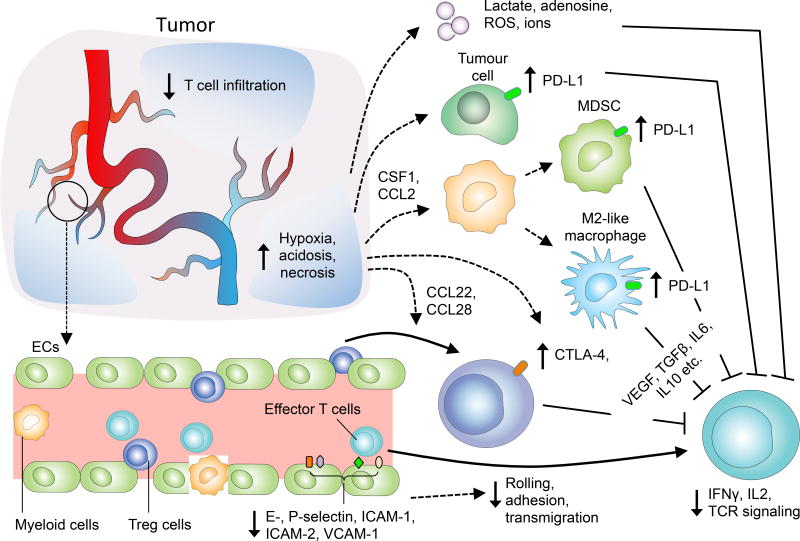
Figure 1
Figure 1. Abnormalities in the tumour vasculature contribute to immune suppression via multiple mechanisms
Impaired vessel perfusion and increased vascular permeability promote tissue hypoxia, acidosis and necrosis, which activate immune suppressive processes to inhibit effector T cell functions. Hypoxia not only induces the secretion of cytokines and chemoattractants to increase the recruitment of immunosuppressor cells, but also upregulates the expression of CTLA4 or LAG3 on Treg, and PDL1 on MDSCs, TAMs and tumour cells. The endothelial cells of tumour vessels also express lower levels of cell adhesion molecules causing endothelial anergy, thereby reducing the ability of effector T cells to infiltrate into tumours. ECs: endothelial cells; ROS, reactive oxygen species; MDSC, myeloid-derived suppressor cell, Treg, regulatory T cells; TCR, T cell receptor; CTLA4, cytotoxic T -lymphocyte associated protein-4, PDL1, programmed cell death ligand-1; TAMs, tumour associated macrophages.
Figure 2
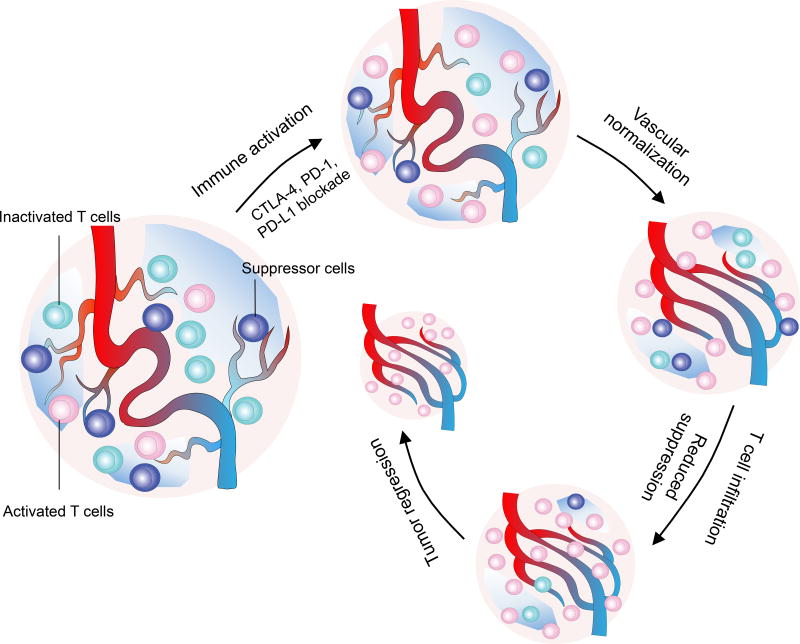
Figure 2. A reinforcing feedback loop of immune reprogramming and tumour vascular normalization
The highly immune suppressive tumour microenvironment is often dominated by the presence of immune suppressor cells and dysfunctional effector T cells. Immune checkpoint blockers activate effector T cells, which in turn promote the normalization of tumour blood vessels. The initial vascular normalization decreases immune suppressive processes within the tumour microenvironment, facilitates the infiltration and enhances the function of effector T cells, leading to further normalization of tumour blood vessels. This feedback loop between immune reprogramming and tumour vascular normalization reinforces each other, ultimately promotes immune-mediated tumour eradication. The disruption or the inability to establish such a positive reinforcement process may lead to transient therapeutic efficacy and decrease long-term tumour control of immune checkpoint inhibitors.
Figure 3
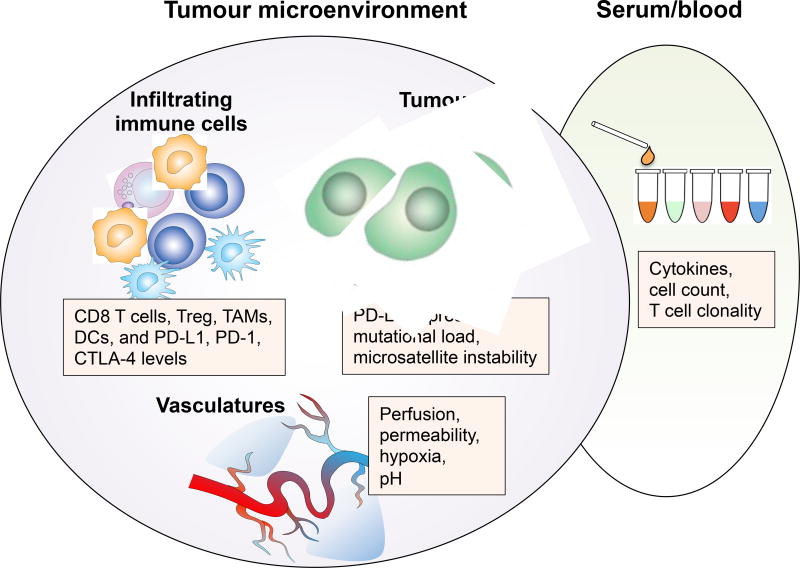
Figure 3. Biomarker discovery for immuno-oncology
The current tissue-based biomarker analysis for immuno-oncology largely focuses on intrinsic tumour cell properties and immune cell profiles within the tumour microenvironment, including PDL1 expression levels, mutational load, as well as the number of infiltrating effector T cells, immune suppressor cells, and their ratios. The vascular remodeling effects of immune checkpoint therapy provide a new rationale for assessing tumour microenvironment-based biomarkers beyond tumour and immune cells. Examination of tumour vascular-related changes such as alterations to tissue perfusion, hypoxia, pH and vascular permeability, in combination with immune cell profiling and tumour cell characterization may provide a more sensitive and dynamic way of monitoring tumour responses to immune checkpoint blockade. Together with serum-based biomarkers, tumour microenvironment-based biomarkers incorporating tumour cell, immune cell, as well as blood vessel analyses will provide a complete picture of cancer immunotherapy induced immunological changes to accurately monitor clinical responses in patients.

References

    1. Burnet FM. The concept of immunological surveillance. Prog. Exp. Tumor Res. 1970;13:1–27. - PubMed
    1. Burnet M. Cancer: a biological approach. III. Viruses associated with neoplastic conditions. IV. Practical applications. Br. Med. J. 1957;1:841–847. - PMC - PubMed
    1. Shankaran V, et al. IFNgamma and lymphocytes prevent primary tumour development and shape tumour immunogenicity. Nature. 2001;410:1107–1111. - PubMed
    1. Schreiber RD, Old LJ, Smyth MJ. Cancer immunoediting: integrating immunity's roles in cancer suppression and promotion. Science. 2011;331:1565–1570. - PubMed
    1. Khalil DN, Smith EL, Brentjens RJ, Wolchok JD. The future of cancer treatment: immunomodulation, CARs and combination immunotherapy. Nat. Rev. Clin. Oncol. 2016;13:273–290. - PMC - PubMed

Publication types

MeSH terms

LinkOut - more resources