


How heart rate variability affects emotion regulation brain networks
- PMID: 29333483
- PMCID: PMC5761738
- DOI: 10.1016/j.cobeha.2017.12.017
How heart rate variability affects emotion regulation brain networks
Abstract
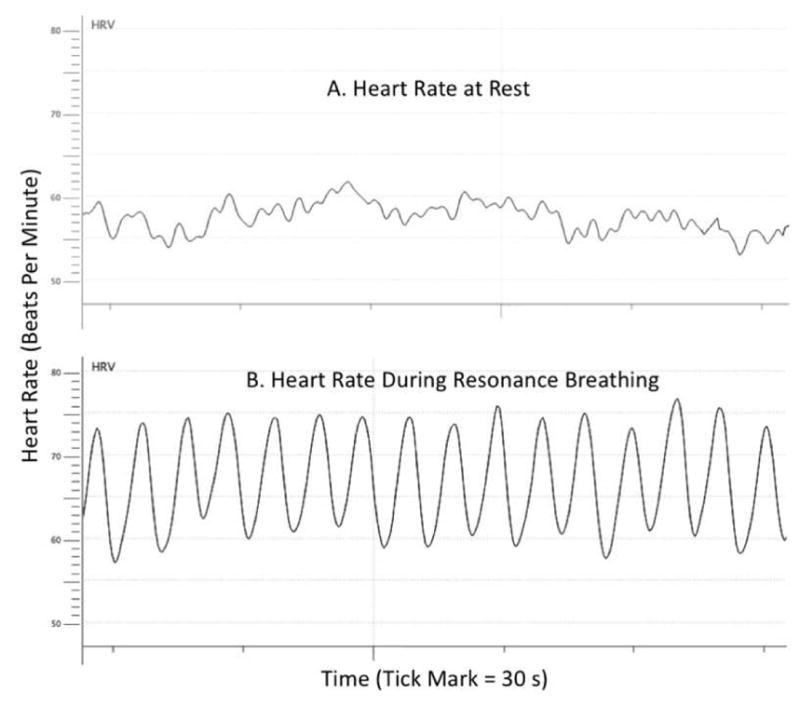
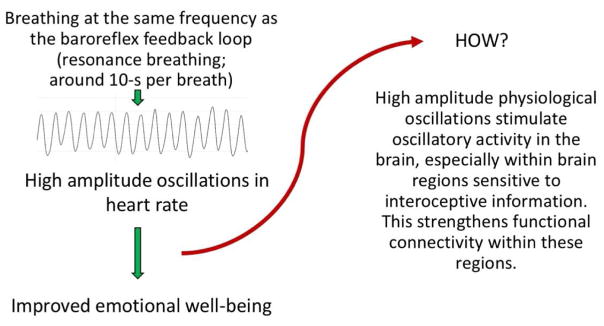
Individuals with high heart rate variability tend to have better emotional well-being than those with low heart rate variability, but the mechanisms of this association are not yet clear. In this paper, we propose the novel hypothesis that by inducing oscillatory activity in the brain, high amplitude oscillations in heart rate enhance functional connectivity in brain networks associated with emotion regulation. Recent studies using daily biofeedback sessions to increase the amplitude of heart rate oscillations suggest that high amplitude physiological oscillations have a causal impact on emotional well-being. Because blood flow timing helps determine brain network structure and function, slow oscillations in heart rate have the potential to strengthen brain network dynamics, especially in medial prefrontal regulatory regions that are particularly sensitive to physiological oscillations.
Figures
References
-
- Beauchaine TP, Thayer JF. Heart rate variability as a transdiagnostic biomarker of psychopathology. International Journal of Psychophysiology. 2015;98(2):338–350. - PubMed
-
- Kemp AH, Quintana DS. The relationship between mental and physical health: Insights from the study of heart rate variability. International Journal of Psychophysiology. 2013;89(3):288–296. - PubMed
-
- Ottaviani C, Thayer JF, Verkuil B, Lonigro A, Medea B, Couyoumdjian A, Brosschot JF. Physiological concomitants of perseverative cognition: A systematic review and meta-analysis. 2016;142(3):231–259. - PubMed
Grants and funding
LinkOut - more resources
Full Text Sources
Other Literature Sources
Medical