


Detection of Chlamydia trachomatis in Pap Smear Samples from South Khorasan Province of Iran
- PMID: 29334204
- PMCID: PMC5767929
- DOI: 10.22074/ijfs.2018.5064
Detection of Chlamydia trachomatis in Pap Smear Samples from South Khorasan Province of Iran
Abstract
Background: Chlamydia trachomatis (CT), the most common bacterial sexually transmitted infection (STI), leads to pelvic inflammatory disease, infertility and chronic pelvic pain in women as well as an increased risk of vertical transmission, conjunctivitis and pneumonitis in infants. It may also be a co-factor along with human papillomavirus (HPV) in cervical cancer progression. We aimed to determine the prevalence of CT genotypes in genital specimens of women from South Khorasan, Iran and to test the association between CT and cytology statistics.
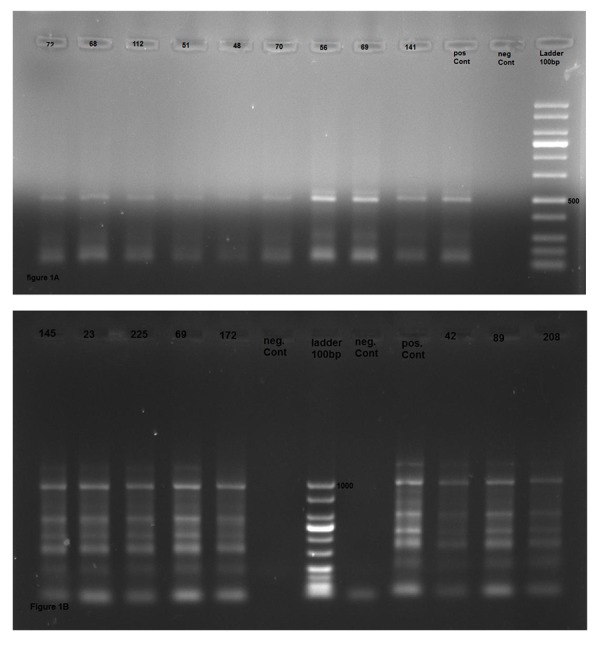
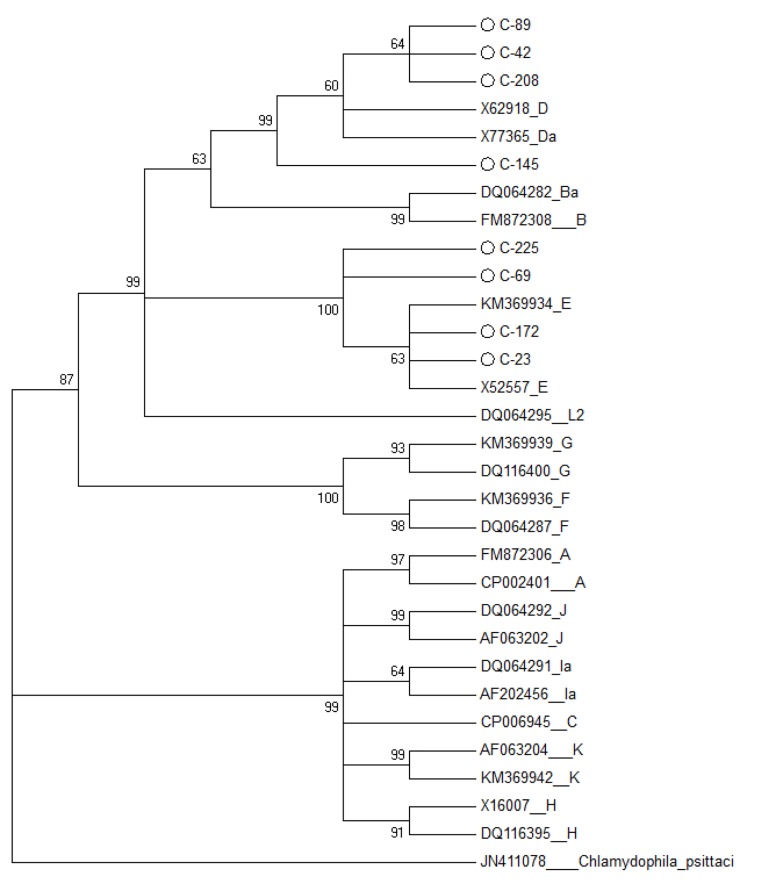
Materials and methods: This was a cross-sectional study on 248 Pap smear samples from women who visited a gynecologist for routine Pap smear testing in South Khorasan province. Nested polymerase chain reaction (PCR) was used to test the residual fluids of Pap smears for CT-DNA after cytological examination. Direct sequencing, alignment and phylogenic analyses were performed on eight samples to identify their genotypes.
Results: The mean age of patients was 37.54 ± 5.21 years. Most samples had a normal cytology (214 cases, 86.29%). Overall, 31 samples were positive for CT infection (12.5%) of which 20 (9.34%) were normal and 11 (32.35%) were abnormal, with the frequency difference being significant (P=0.022). The co-infection of CT/HPV in total was identified in 14 cases (5.6%). The results of sequencing eight samples out of the 31 CT positive samples revealed the detection of genotypes D and E, each with four cases.
Conclusion: We show that a high prevalence of genital CT infection is present in women with both normal and abnormal cytology; however, the higher prevalence among women in the abnormal group may indicate its involvement in cervical neoplasia.
Keywords: Cervical Cancer; Chlamydia trachomatis; Iran; Pap Smear; Sexually Transmitted Infection.
Copyright© by Royan Institute. All rights reserved.
Conflict of interest statement
The authors declare no conflicts of interest.
Figures
References
-
- Low N, Broutet N, Adu-Sarkodie Y, Barton P, Hossain M, Hawkes S. Global control of sexually transmitted infections. Lancet. 2006;368(9551):2001–2016. - PubMed
-
- Manavi K. A review on infection with Chlamydia trachomatis. Best Pract Res Clin Obstet Gynaecol. 2006;20(6):941–951. - PubMed
-
- Lima HE, Oliveira MB, Valente BG, Afonso DA, DaRocha WD, Souza MC, et al. Genotyping of Chlamydia trachomatis from endocervical specimens in Brazil. Sex Transm Dis. 2007;34(9):709–717. - PubMed
-
- de Jesús De Haro-Cruz M, Deleón-Rodriguez I, Escobedo-Guerra MR, López-Hurtado M, Arteaga-Troncoso G, Ortiz-Ibarra FJ, et al. Genotyping of Chlamydia trachomatis from endocervical specimens of infertile Mexican women. Enferm Infecc Microbiol Clin. 2011;29(2):102–108. - PubMed
-
- Ngandjio A, Clerc M, Fonkoua MC, Thonnon J, Lunel F, Bébéar C, et al. Restriction endonuclease patterns of the omp1 gene of reference Chlamydia trachomatis strains and characterization of isolates from Cameroonian students. J Med Microbiol. 2004;53(Pt 1):47–50. - PubMed
LinkOut - more resources
Full Text Sources
Research Materials