


Evaluation of the effects of space allowance on measures of animal welfare in laboratory mice
- PMID: 29335423
- PMCID: PMC5768730
- DOI: 10.1038/s41598-017-18493-6
Evaluation of the effects of space allowance on measures of animal welfare in laboratory mice
Abstract
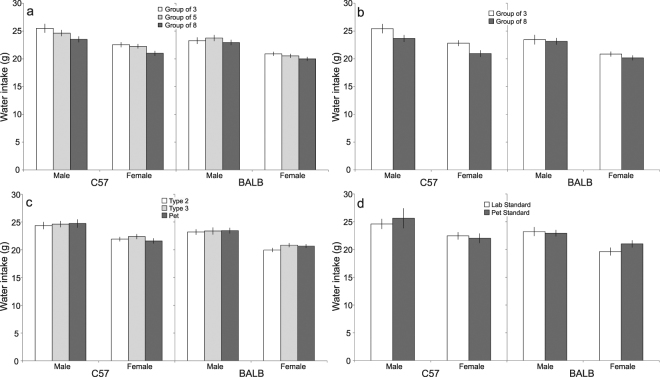
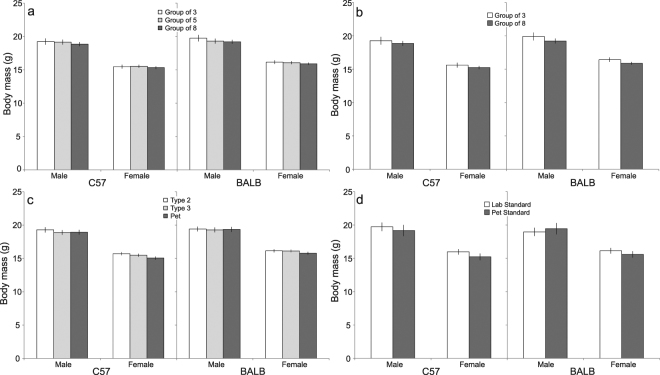
We studied how space allowance affects measures of animal welfare in mice by systematically varying group size and cage type across three levels each in both males and females of two strains of mice (C57BL/6ByJ and BALB/cByJ; n = 216 cages, a total of 1152 mice). This allowed us to disentangle the effects of total floor area, group size, stocking density, and individual space allocation on a broad range of measures of welfare, including growth (food and water intake, body mass); stress physiology (glucocorticoid metabolites in faecal boli); emotionality (open field behaviour); brain function (recurrent perseveration in a two-choice guessing task); and home-cage behaviour (activity, stereotypic behaviour). While increasing group size was associated with a decrease in food and water intake in general, and more specifically with increased attrition due to escalated aggression in male BALB mice, no other consistent effects of any aspect of space allowance were found with respect to the measures studied here. Our results indicate that within the range of conditions commonly found in laboratory mouse housing, space allowance as such has little impact on measures of welfare, except for group size which may be a risk factor for escalating aggression in males of some strains.
Conflict of interest statement
The authors declare that they have no competing interests.
Figures


References
-
- Latham N, Mason G. From house mouse to mouse house: the behavioural biology of free-living Mus musculus and its implications in the laboratory. Appl. Anim. Behav. Sci. 2004;86:261–289. doi: 10.1016/j.applanim.2004.02.006. - DOI
Publication types
MeSH terms
Grants and funding
LinkOut - more resources
Full Text Sources
Other Literature Sources
