


An Integrative Review of Nonpharmacological Interventions to Improve Sleep among Adults with Advanced Serious Illness
- PMID: 29337603
- PMCID: PMC6909694
- DOI: 10.1089/jpm.2017.0152
An Integrative Review of Nonpharmacological Interventions to Improve Sleep among Adults with Advanced Serious Illness
Abstract
Background: Sleep fragmentation is common among those with advanced serious illness. Nonpharmacological interventions to improve sleep have few, if any, adverse effects and are often underutilized in these settings.
Objective: We aimed to summarize the literature related to nonpharmacological interventions to improve sleep among adults with advanced serious illness.
Methods: We systematically searched six electronic databases for literature reporting sleep outcomes associated with nonpharmacological interventions that included participants with advanced serious illness during the period of 1996-2016.
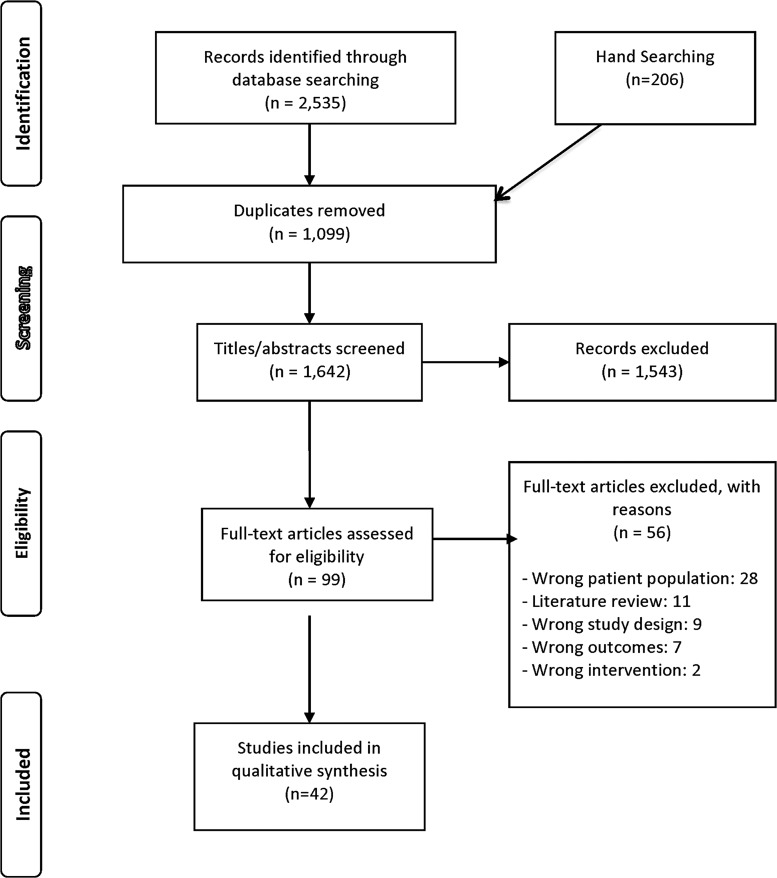
Results: From a total of 2731 results, 42 studies met the inclusion criteria. A total of 31 individual interventions were identified, each evaluated individually and some in combination with other interventions. Twelve of these studies employed either multiple interventions within an intervention category (n = 8) or a multicomponent intervention consisting of interventions from two or more categories (n = 5). The following intervention categories emerged: sleep hygiene (1), environmental (6), physical activity (4), complementary health practices (11), and mind-body practices (13). Of the 42 studies, 22 demonstrated a statistically significant, positive impact on sleep and represented each of the categories. The quality of the studies varied considerably, with 17 studies classified as strong, 17 as moderate, and 8 as weak.
Conclusions: Several interventions have been demonstrated to improve sleep in these patients. However, the small number of studies and wide variation of individual interventions within each category limit the generalizability of findings. Further studies are needed to assess interventions and determine effectiveness and acceptability.
Keywords: circadian rhythms; integrative review; nonpharmacological.
Conflict of interest statement
No competing financial interests exist.
References
-
- Fung CH, Vitiello MV, Alessi CA, et al. : Report and research agenda of the American Geriatrics Society and National Institute on Aging bedside-to-bench conference on sleep, circadian rhythms, and aging: New avenues for improving brain health, physical health, and functioning. J Am Geriatr Soc 2016;64:238–247 - PMC - PubMed
-
- Renom-Guiteras A, Planas J, Farriols C, et al. : Insomnia among patients with advanced disease during admission in a palliative care unit: A prospective observational study on its frequency and association with psychological, physical and environmental factors. BMC Palliat Care 2014;13:40. - PMC - PubMed
-
- Davis MP, Goforth HW: Long-term and short-term effects of insomnia in cancer and effective interventions. Cancer J 2014;20:330–344 - PubMed
-
- Elias RM, Chan CT, Bradley TD: Altered sleep structure in patients with end-stage renal disease. Sleep Med 2016;20:67–71 - PubMed
Publication types
MeSH terms
Grants and funding
LinkOut - more resources
Full Text Sources
Other Literature Sources
Medical
Miscellaneous
