


Safety of intravenous tranexamic acid in patients undergoing majororthopaedic surgery: a meta-analysis of randomised controlled trials
- PMID: 29337665
- PMCID: PMC5770313
- DOI: 10.2450//2017.0219-17
Safety of intravenous tranexamic acid in patients undergoing majororthopaedic surgery: a meta-analysis of randomised controlled trials
Abstract
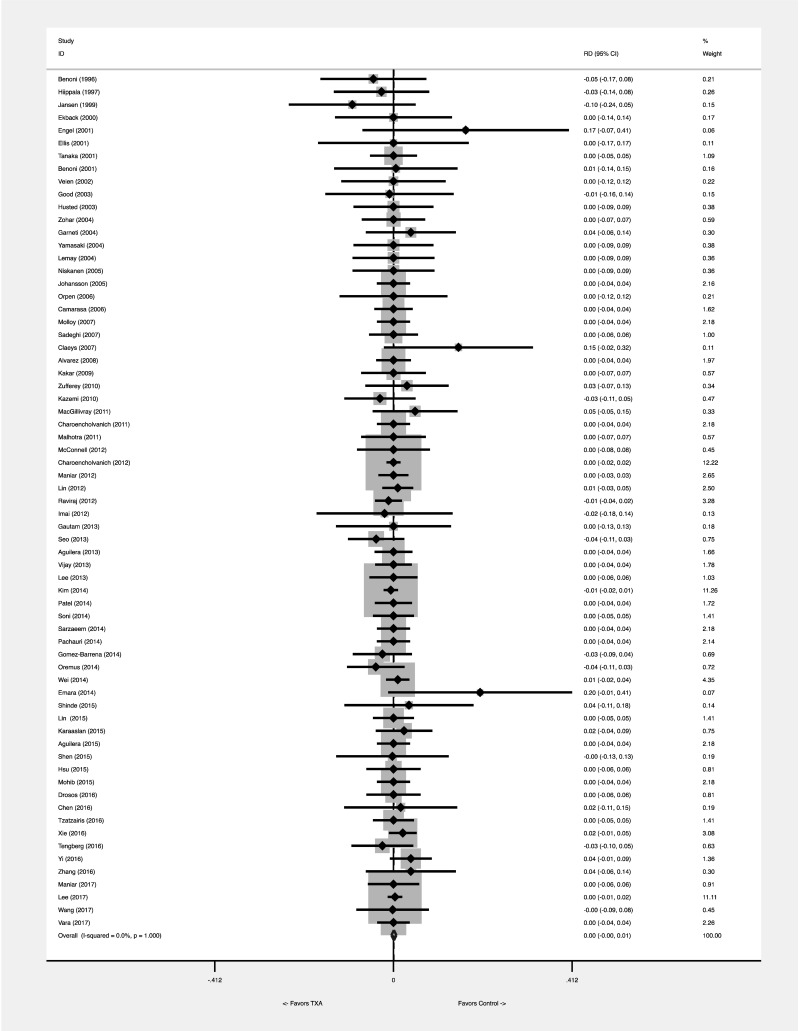
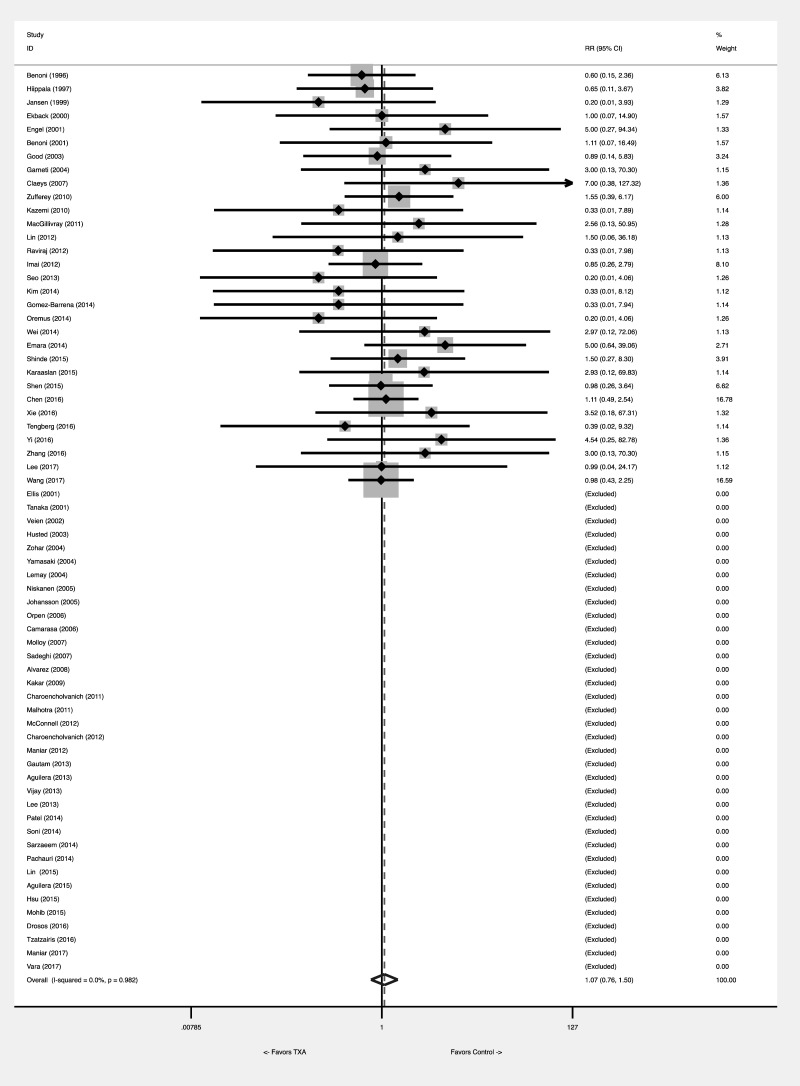
Among the various pharmacological options to decrease peri-operative bleeding, tranexamic acid appears to be one of the most interesting. Several trials have consistently documented the efficacy of this synthetic drug in reducing the risk of blood loss and the need for allogeneic blood transfusion in patients undergoing total hip and knee arthroplasty. The safety of intravenous tranexamic acid in major orthopaedic surgery, particularly regarding the risk of venous thromboembolism, was systematically analysed in this review. A systematic search of the literature identified 73 randomised controlled trials involving 4,174 patients and 2,779 controls. The raw overall incidence of venous thromboembolism was 2.1% in patients who received intravenous tranexamic acid and 2.0% in controls. A meta-analytic pooling showed that the risk of venous thromboembolism in tranexamic acid-treated patients was not significantly different from that of controls (risk difference: 0.01%, 95% confidence interval [CI]: -0.05%, 0.07%; risk ratio: 1.067, 95% CI: 0.760-1.496). Other severe drug-related adverse events occurred very rarely (0.1%). In conclusion, the results of this systematic review and meta-analysis show that intravenous tranexamic acid is a safe pharmacological treatment to reduce blood loss and transfusion requirements in patients undergoing major orthopaedic surgery.
Conflict of interest statement
GML is the Editor-in-Chief of Blood Transfusion and this manuscript has undergone additional external review as a result. The other Authors declare no conflicts of interest.
Figures

References
-
- Mannucci PM. Hemostatic drugs. N Engl J Med. 1998;339:245–53. - PubMed
-
- Franchini M, Mannucci PM. Adjunct agents for bleeding. Curr Opin Hematol. 2014;21:503–8. - PubMed
-
- Mannucci PM, Levi M. Prevention and treatment of major blood loss. N Engl J Med. 2007;356:2301–11. - PubMed
-
- Schulman S. Pharmacologic tools to reduce bleeding in surgery. Hematology Am Soc Hematol Educ Program. 2012;2012:517–21. - PubMed
-
- Shakur H, Roberts I, Bautista R, et al. Effects of tranexamic acid on death, vascular occlusive events, and blood transfusion in trauma patients with significant haemorrhage (CRASH-2): a randomised, placebo-controlled trial. Lancet. 2010;376:23–32. - PubMed
Publication types
MeSH terms
Substances
LinkOut - more resources
Full Text Sources
Medical
