


The characterization of the circadian clock in the olive fly Bactrocera oleae (Diptera: Tephritidae) reveals a Drosophila-like organization
- PMID: 29339768
- PMCID: PMC5770390
- DOI: 10.1038/s41598-018-19255-8
The characterization of the circadian clock in the olive fly Bactrocera oleae (Diptera: Tephritidae) reveals a Drosophila-like organization
Erratum in
-
Author Correction: The characterization of the circadian clock in the olive fly Bactrocera oleae (Diptera: Tephritidae) reveals a Drosophila-like organization.Sci Rep. 2018 Apr 30;8(1):7006. doi: 10.1038/s41598-018-24850-w. Sci Rep. 2018. PMID: 29712926 Free PMC article.
Abstract
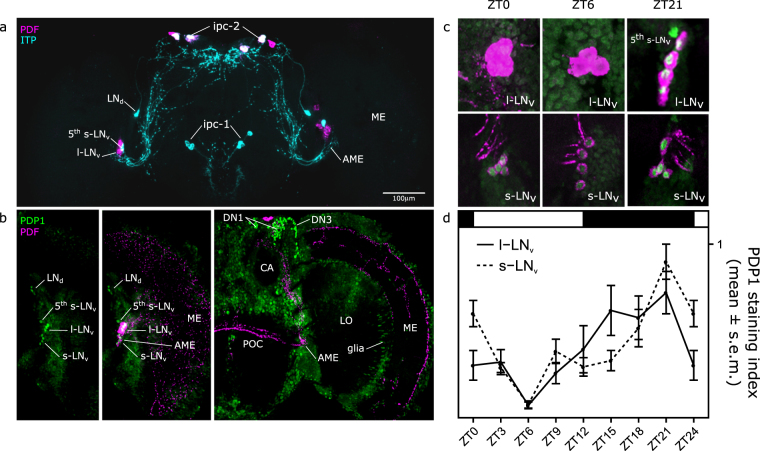
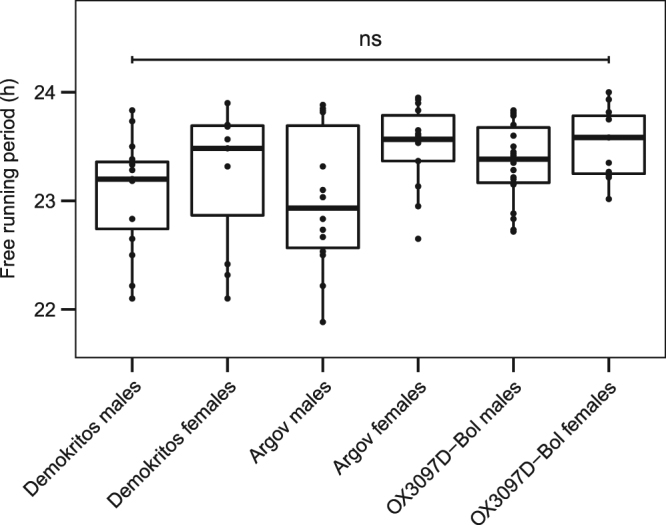
The olive fruit fly, Bactrocera oleae, is the single most important pest for the majority of olive plantations. Oxitec's self-limiting olive fly technology (OX3097D-Bol) offers an alternative management approach to this insect pest. Because of previously reported asynchrony in the mating time of wild and laboratory strains, we have characterized the olive fly circadian clock applying molecular, evolutionary, anatomical and behavioural approaches. Here we demonstrate that the olive fly clock relies on a Drosophila melanogaster-like organization and that OX3097D-Bol carries a functional clock similar to wild-type strains, confirming its suitability for operational use.
Conflict of interest statement
The authors declare that they have no competing interests.
Figures



References
-
- Tzanakakis ME. Seasonal development and dormancy of insects and mites feeding on olive: a review. Netherlands J. Zool. 2003;52:87–224. doi: 10.1163/156854203764817670. - DOI
-
- Alphey, L. S. Engineering insects for the sterile insect technique. Area-Wide Control Insect Pests From Res. to F. Implement. 51–60 (2007).
-
- Hendrichs JP. Use of the sterile insect technique against key insect pests. Sustain. Dev. Int. 2000;2:75–79.
Publication types
MeSH terms
LinkOut - more resources
Full Text Sources
Other Literature Sources
