The regulation of pre-metastatic niche formation by neutrophils
- PMID: 29340117
- PMCID: PMC5762385
- DOI: 10.18632/oncotarget.22792
The regulation of pre-metastatic niche formation by neutrophils
Abstract
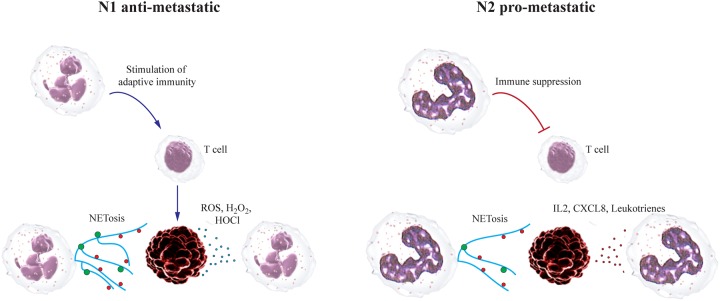
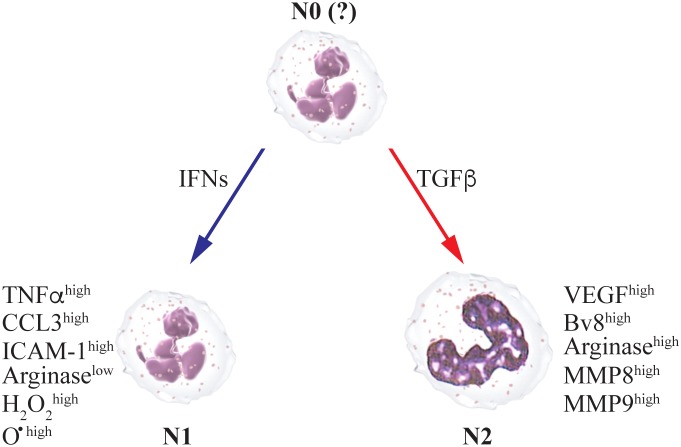
Metastasis is a multistep process requiring tumor cell detachment from the primary tumor and migration to target organs through the lymphatic or blood circulatory systems. Specific organs are predisposed to metastases in certain cancers and the formation of supportive metastatic microenvironment determines tumor cell homing. Such an environment is provided by a pre-metastatic niche that is formed through the recruitment of bone marrow-derived myeloid cells, however the mechanisms of its formation are not fully understood. Recent evidence suggests that the primary tumor itself modulates the environment of secondary organs prior to tumor cell dissemination. The contribution of neutrophils to the formation of the pre-metastatic niche is getting growing attention. Obviously, neutrophils can affect the development of metastasis in two contradicting ways, by either stimulation or inhibition of this process, depending on the activation status. Pro-tumor neutrophils actively support metastasis formation by different mechanisms, including the formation of pre-metastatic niche, tumor cell attraction, and the direct support of tumor cell proliferation. Moreover, suppressive neutrophils, which are the granulocytic arm of MDSC, promote tumor progression by dampening anti-tumor T cell immunity. On the other hand, anti-tumor neutrophils can inhibit metastasis formation by the cytotoxicity towards tumor cells in the circulation or at the pre-metastatic site, and even via stimulation of T cell proliferation. Apparently, the regulation of the pro- or anti-tumor neutrophil properties has significant implications on metastatic spread in the host. Here we provide an up to date overview of the different roles neutrophils play in regulating the metastatic processes.
Keywords: metastatic seeding; neutrophil polarization in tumor context; neutrophils; pre-metastatic niche.
Conflict of interest statement
CONFLICTS OF INTEREST Authors disclose any potential conflicts of interest.
Figures
References
-
- Kowanetz M, Wu X, Lee J, Tan M, Hagenbeek T, Qu X, Yu L, Ross J, Korsisaari N, Cao T, Bou-Reslan H, Kallop D, Weimer R, et al. Granulocyte-colony stimulating factor promotes lung metastasis through mobilization of Ly6G+Ly6C+ granulocytes. Proc Natl Acad Sci U S A. 2010;107:21248–21255. - PMC - PubMed
Publication types
LinkOut - more resources
Full Text Sources
Other Literature Sources