


Outpatient, combined use of opioid and benzodiazepine medications in the United States, 1993-2014
- PMID: 29340270
- PMCID: PMC5766756
- DOI: 10.1016/j.pmedr.2017.12.010
Outpatient, combined use of opioid and benzodiazepine medications in the United States, 1993-2014
Abstract
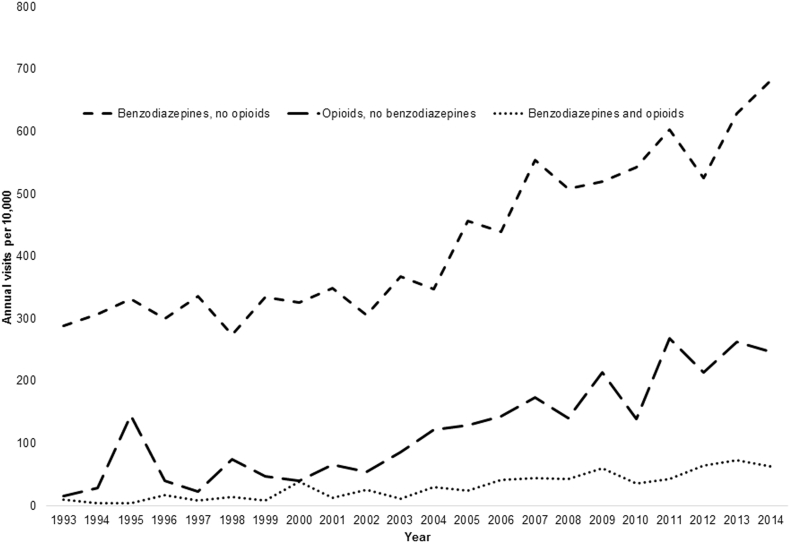
The combined use of opioid and benzodiazepine medications increases the risk of hazardous effects, such as respiratory depression. Although recent increases in outpatient use of opioid prescriptions have been documented, there are limited data regarding rates and correlates of combined opioid and benzodiazepines among adults in outpatient settings. Our objective was to examine annual trends in outpatient visits including opioids, benzodiazepines, and their combination among adults as well as clinical and demographic correlates. We used data from the 1993-2014 National Ambulatory Medical Care Survey (NAMCS) among non-elderly (i.e., ages 18-64 years) adults to examine the probability of a visit including an opioid, benzodiazepine, or their combination, in addition to clinical and demographic correlates. From 1993 to 2014, benzodiazepines-with-opioids visits increased from 9.8 to 62.5 (OR = 9.23, 95% CI = 5.45-15.65) per 10,000 visits. Highest-represented groups among benzodiazepines-with-opioids visits were older (50-64 years) (49.1%), white (88.8%), commercially insured (58.0%) patients during their first visit (87.6%) to a primary-care physician (41.9%). We identified a significant increase in the outpatient co-prescription of opioids and benzodiazepines, notably among adults aged 50-64 years during primary-care visits. Educational and policy changes to provide alternatives to benzodiazepine-with-opioid co-prescription and limiting opioid prescription to pain specialists may reduce rates of this potentially hazardous combination.
Keywords: Benzodiazepine; CDC, Centers for Disease Control and Prevention; CI, confidence interval; ICD-9-CM, International Classification of Diseases, Ninth Revision, Clinical Modification; Medication safety; NAMCS, National Ambulatory Medical Care Survey; NCHS, National Center for Health Statistics; OR, odds ratio; Opioid; Pain; Prescriptions; RFV, reason-for-visit.
Figures
References
-
- Abdel Shaheed C., Maher C.G., Williams K.A., Day R., McLachlan A.J. Efficacy, tolerability, and dose-dependent effects of opioid analgesics for low back pain: a systematic review and meta-analysis. JAMA Intern. Med. 2016;176(7):958–968. - PubMed
-
- Brands B., Blake J., Marsh D.C., Sproule B., Jeyapalan R., Li S. The impact of benzodiazepine use on methadone maintenance treatment outcomes. J. Addict. Dis. 2008;27(3):37–48. - PubMed
LinkOut - more resources
Full Text Sources
Other Literature Sources
Medical
