


Antiphospholipid Antibodies Inhibit Trophoblast Toll-Like Receptor and Inflammasome Negative Regulators
- PMID: 29342502
- PMCID: PMC5984662
- DOI: 10.1002/art.40416
Antiphospholipid Antibodies Inhibit Trophoblast Toll-Like Receptor and Inflammasome Negative Regulators
Abstract
Objective: Women with antiphospholipid antibodies (aPL) are at risk for pregnancy complications associated with poor placentation and placental inflammation. Although these antibodies are heterogeneous, some anti-β2 -glycoprotein I (anti-β2 GPI) antibodies can activate Toll-like receptor 4 (TLR-4) and NLRP3 in human first-trimester trophoblasts. The objective of this study was to determine the role of negative regulators of TLR and inflammasome function in aPL-induced trophoblast inflammation.
Methods: Human trophoblasts were not treated or were treated with anti-β2 GPI aPL or control IgG in the presence or absence of the common TAM (TYRO3, AXL, and Mer tyrosine kinase [MERTK]) receptor ligand growth arrest-specific protein 6 (GAS6) or the autophagy-inducer rapamycin. The expression and function of the TAM receptor pathway and autophagy were measured by quantitative reverse transcription-polymerase chain reaction (qRT-PCR), Western blotting, and enzyme-linked immunosorbent assay (ELISA). Antiphospholipid antibody-induced trophoblast inflammation was measured by qRT-PCR, activity assays, and ELISA.
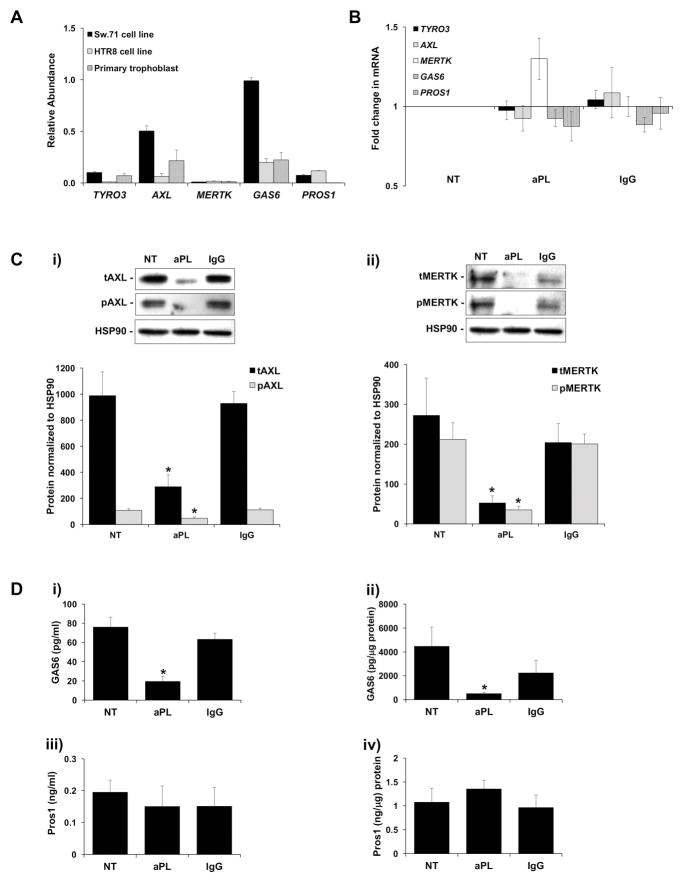
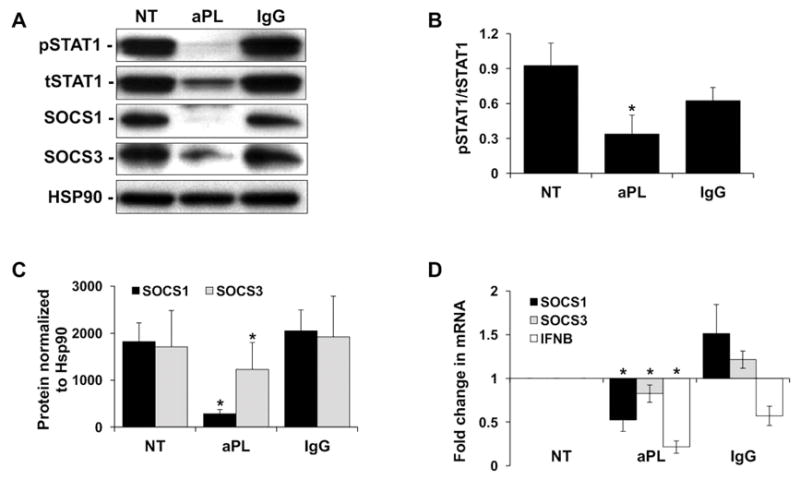
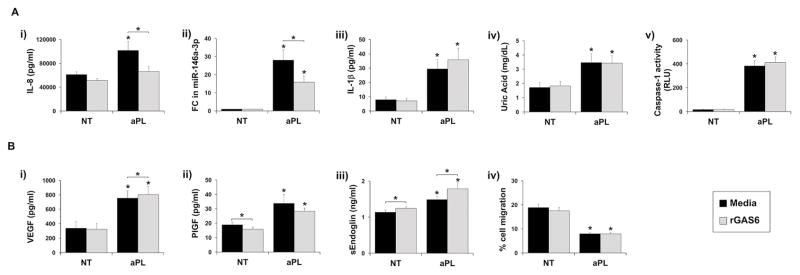
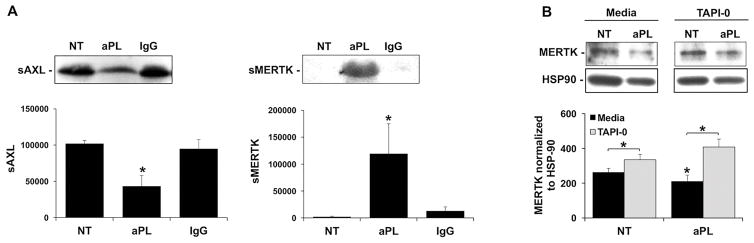
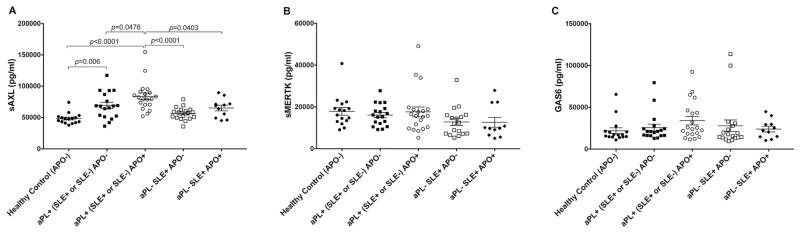
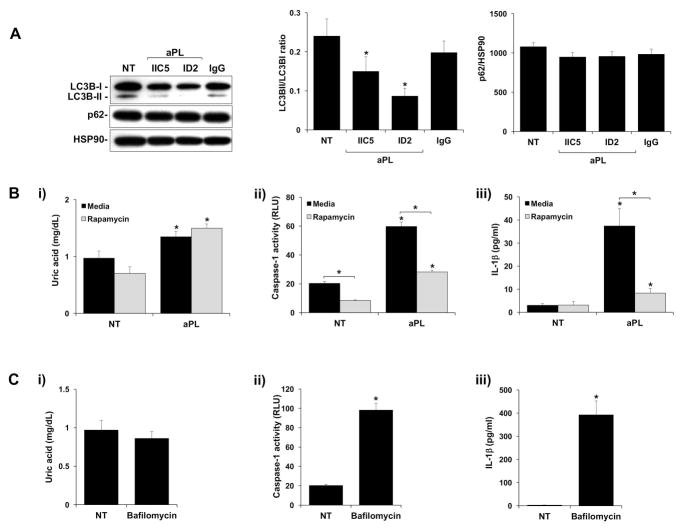
Results: Anti-β2 GPI aPL inhibited trophoblast TAM receptor function by reducing cellular expression of the receptor tyrosine kinases AXL and MERTK and the ligand GAS6. The addition of GAS6 blocked the effects of aPL on the TLR-4-mediated interleukin-8 (IL-8) response. However, the NLRP3 inflammasome-mediated IL-1β response was not affected by GAS6, suggesting that another regulatory pathway was involved. Indeed, anti-β2 GPI aPL inhibited basal trophoblast autophagy, and reversing this with rapamycin inhibited aPL-induced inflammasome function and IL-1β secretion.
Conclusion: Basal TAM receptor function and autophagy may serve to inhibit trophoblast TLR and inflammasome function, respectively. Impairment of TAM receptor signaling and autophagy by anti-β2 GPI aPL may allow subsequent TLR and inflammasome activity, leading to a robust inflammatory response.
© 2018, American College of Rheumatology.
Conflict of interest statement
The authors have no competing financial interests.
Figures
References
-
- D’Cruz DP, Khamashta MA, Hughes GR. Systemic lupus erythematosus. Lancet. 2007;369(9561):587–96. - PubMed
-
- Salmon JE, Girardi G, Lockshin MD. The antiphospholipid syndrome as a disorder initiated by inflammation: implications for the therapy of pregnant patients. Nat Clin Pract Rheumatol. 2007;3(3):140–7. quiz 1 p following 87. - PubMed
-
- Viall CA, Chamley LW. Histopathology in the placentae of women with antiphospholipid antibodies: A systematic review of the literature. Autoimmun Rev. 2015;14(5):446–71. - PubMed
-
- Tong M, Viall CA, Chamley LW. Antiphospholipid antibodies and the placenta: a systematic review of their in vitro effects and modulation by treatment. Hum Reprod Update. 2015;21(1):97–118. - PubMed
-
- Pantham P, Abrahams VM, Chamley LW. The role of anti-phospholipid antibodies in autoimmune reproductive failure. Reproduction. 2016;151(5):R79–90. - PubMed
Publication types
MeSH terms
Substances
Grants and funding
LinkOut - more resources
Full Text Sources
Other Literature Sources
Research Materials
Miscellaneous
