


Mitochondrial Mutations in Cholestatic Liver Disease with Biliary Atresia
- PMID: 29343773
- PMCID: PMC5772057
- DOI: 10.1038/s41598-017-18958-8
Mitochondrial Mutations in Cholestatic Liver Disease with Biliary Atresia
Abstract
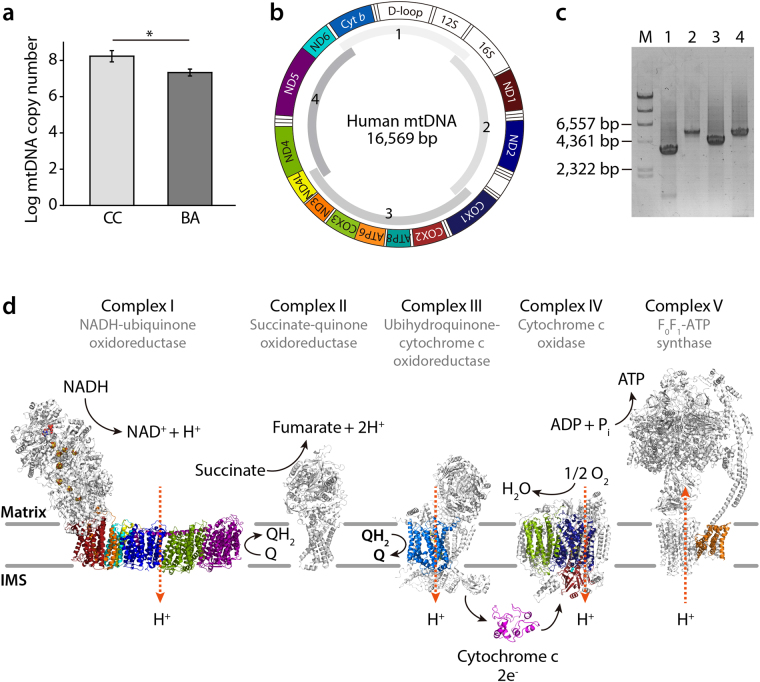
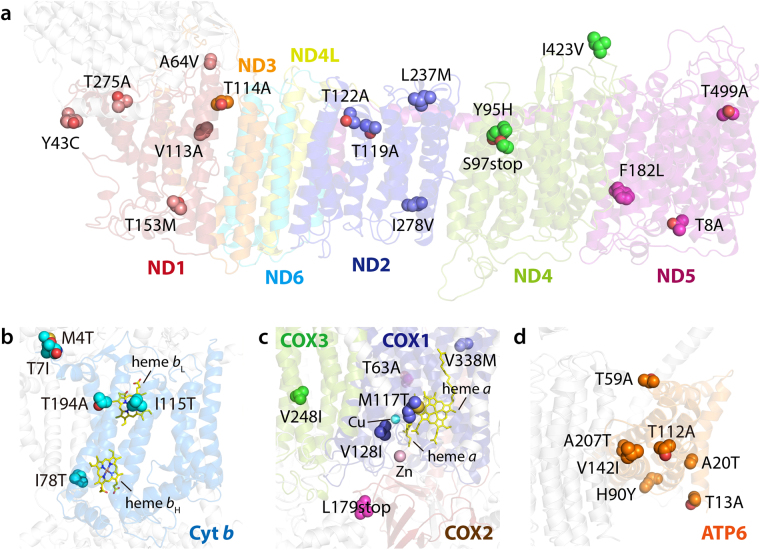
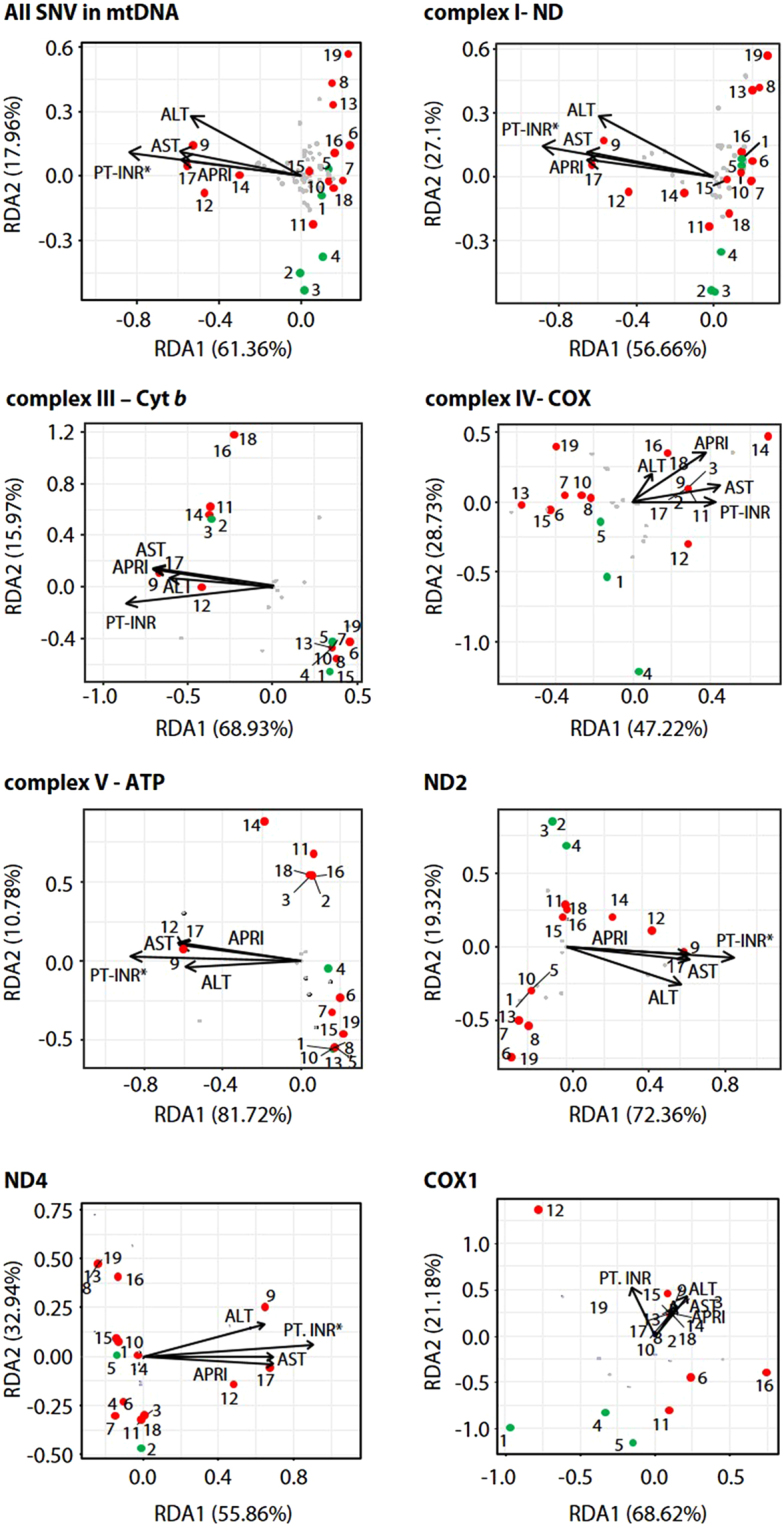
Biliary atresia (BA) results in severe bile blockage and is caused by the absence of extrahepatic ducts. Even after successful hepatic portoenterostomy, a considerable number of patients are likely to show progressive deterioration in liver function. Recent studies show that mutations in protein-coding mitochondrial DNA (mtDNA) genes and/or mitochondrial genes in nuclear DNA (nDNA) are associated with hepatocellular dysfunction. This observation led us to investigate whether hepatic dysfunctions in BA is genetically associated with mtDNA mutations. We sequenced the mtDNA protein-coding genes in 14 liver specimens from 14 patients with BA and 5 liver specimens from 5 patients with choledochal cyst using next-generation sequencing. We found 34 common non-synonymous variations in mtDNA protein-coding genes in all patients examined. A systematic 3D structural analysis revealed the presence of several single nucleotide polymorphism-like mutations in critical regions of complexes I to V, that are involved in subunit assembly, proton-pumping activity, and/or supercomplex formation. The parameters of chronic hepatic injury and liver dysfunction in BA patients were also significantly correlated with the extent of hepatic failure, suggesting that the mtDNA mutations may aggravate hepatopathy. Therefore, mitochondrial mutations may underlie the pathological mechanisms associated with BA.
Conflict of interest statement
The authors declare that they have no competing interests.
Figures
References
-
- Alpini, G. et al. Bile acid feeding induces cholangiocyte proliferation and secretion: evidence for bile acid-regulated ductal secretion. Gastroenterology116, 179–186, doi:S0016508599000499 (1999). - PubMed
Publication types
MeSH terms
Substances
LinkOut - more resources
Full Text Sources
Other Literature Sources
Medical
