


Acne Scarring-Pathogenesis, Evaluation, and Treatment Options
- PMID: 29344322
- PMCID: PMC5749614
Acne Scarring-Pathogenesis, Evaluation, and Treatment Options
Abstract
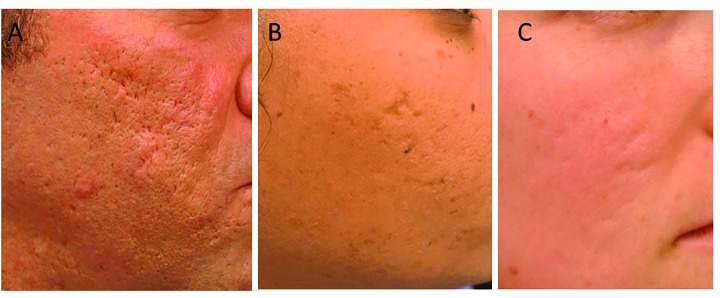
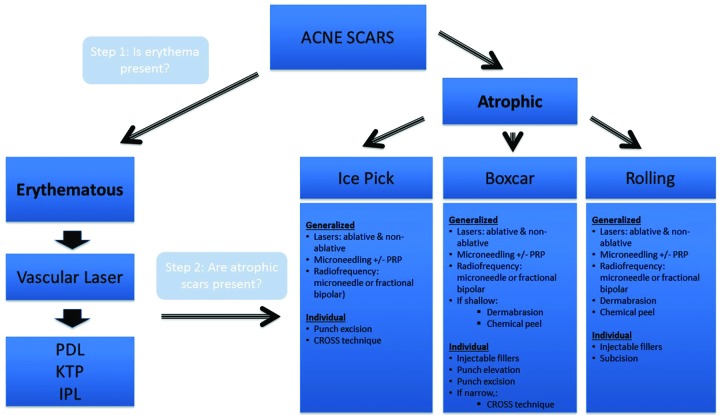
Acne vulgaris is a ubiquitous problem affecting 80 percent of people ages 11 to 30 years, with many patients experiencing some degree of scarring. This review focuses on atrophic scars, the most common type of acne scar. We briefly address the cellular sequelae that lead to scar formation and the initial evaluation of patients with acne scars. We then discuss an algorithmic approach to the treatment of acne scarring based on the classification of scars into erythematous and atrophic types. Lastly, we discuss the future treatment of acne scars and ongoing clinical trials.
Keywords: Acne scarring; acne; acne vulgaris; laser; light devices; resurfacing agents.
Conflict of interest statement
FUNDING:No funding was provided for this study. DISCLOSURES:The authors have no conflicts of interest relating to the content of this article.
Figures
References
-
- Jacob CI, Dover JS, Kaminer MS. Acne scarring: a classification system and review of treatment options. J Am Acad Dermatol. 2001;45:109–117. - PubMed
-
- Layton AM. Optimal management of acne to prevent scarring and psychological sequelae. Am J Clin Dermotol. 2001;2:135–141. - PubMed
-
- Kircik LH. Re-evaluating treatment targets in acne vulgaris: adapting to a new understanding of pathophysiology. J Drugs Dermatol. 2014;13:s57–60. - PubMed
Publication types
LinkOut - more resources
Full Text Sources
Other Literature Sources
Medical