


The role of selective serotonin reuptake inhibitors in preventing relapse of major depressive disorder
- PMID: 29344343
- PMCID: PMC5761909
- DOI: 10.1177/2045125317737264
The role of selective serotonin reuptake inhibitors in preventing relapse of major depressive disorder
Abstract
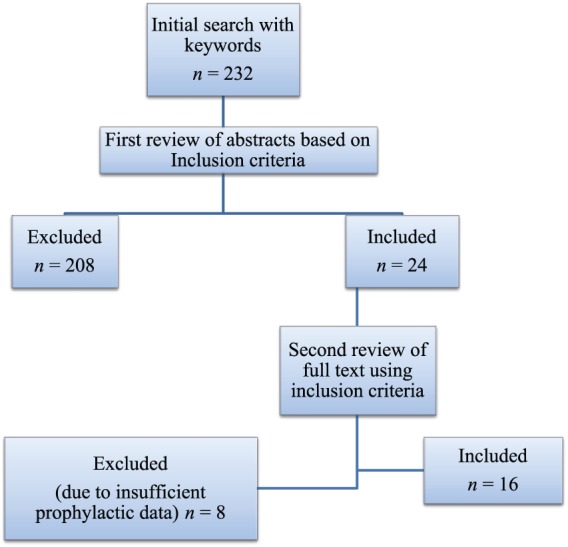
The objective of this review was to evaluate the efficacy of selective serotonin reuptake inhibitors (SSRIs) and SSRIs compared with other treatment modalities in preventing relapse after an episode of major depressive disorder (MDD). An Ovid MEDLINE and PsycINFO search (from 1987 to August 2017) was conducted using the following terms: selective serotonin reuptake inhibitors, antidepressants, depression, prevention, prophylaxis, relapse and MDD. Using predefined criteria, two authors independently selected and reached consensus on the included studies. Sixteen articles met the criteria: 10 compared the relapse rate of selective SSRIs with placebo or other SSRIs; one discussed the effectiveness of SSRIs plus psychotherapy, two compared SSRI versus tricyclic antidepressants (TCAs), two were mainly composed of TCAs plus psychotherapy, and one compared SSRIs and serotonin norepinephrine reuptake inhibitors (SNRIs). According to the included studies, the relapse risk in adults was lower when SSRIs were combined with psychotherapy. Results comparing SSRIs and SNRIs were inconclusive. TCAs may be equally as effective as SSRIs. Atypical antidepressants (mirtazapine and St John's Wort) had no significant difference in efficacy and remission rates compared with SSRIs. Escitalopram appeared to fare better in efficacy than other SSRIs, owing to a higher prophylactic efficacy and lower side effects; however, according to the current data, this difference was not significant. To conclude, this review provides evidence that continuing SSRIs for 1 year reduces risk of MDD and relapse. Furthermore, the combination of SSRIs and cognitive behavioural therapy may effectively reduce relapse. Escitalopram appeared to yield better results and fewer side effects than did other SSRIs or SNRIs. The effectiveness in reducing relapse of SSRIs was similar to that of TCAs and atypical antidepressants.
Keywords: MDD prevention; MDD prophylaxis; SSRI; antidepressants; depression; major depression; major depressive disorder; specific serotonin reuptake inhibitor.
Conflict of interest statement
Conflict of interest statement: The authors declare that there is no conflict of interest.
Figures
References
-
- World Health Organization (WHO). Depression and other common mental disorders: global health estimates, http://apps.who.int/iris/bitstream/10665/254610/1/WHO-MSD-MER-2017.2-eng... (accessed 27 August 2017).
-
- Pundiak TM, Case BG, Peselow ED, et al. Discontinuation of maintenance selective serotonin reuptake inhibitor monotherapy after 5 years of stable response: a naturalistic study. J Clin Psychiatry 2008; 69: 1811–1817. - PubMed
-
- Emslie GJ, Mayes TL, Ruberu M. Continuation and maintenance therapy of early-onset major depressive disorder. Paediatr Drugs 2005; 7: 203–217. - PubMed
Publication types
LinkOut - more resources
Full Text Sources
Other Literature Sources
Miscellaneous
