


Bio-fortification potential of global wild annual lentil core collection
- PMID: 29346404
- PMCID: PMC5773171
- DOI: 10.1371/journal.pone.0191122
Bio-fortification potential of global wild annual lentil core collection
Abstract
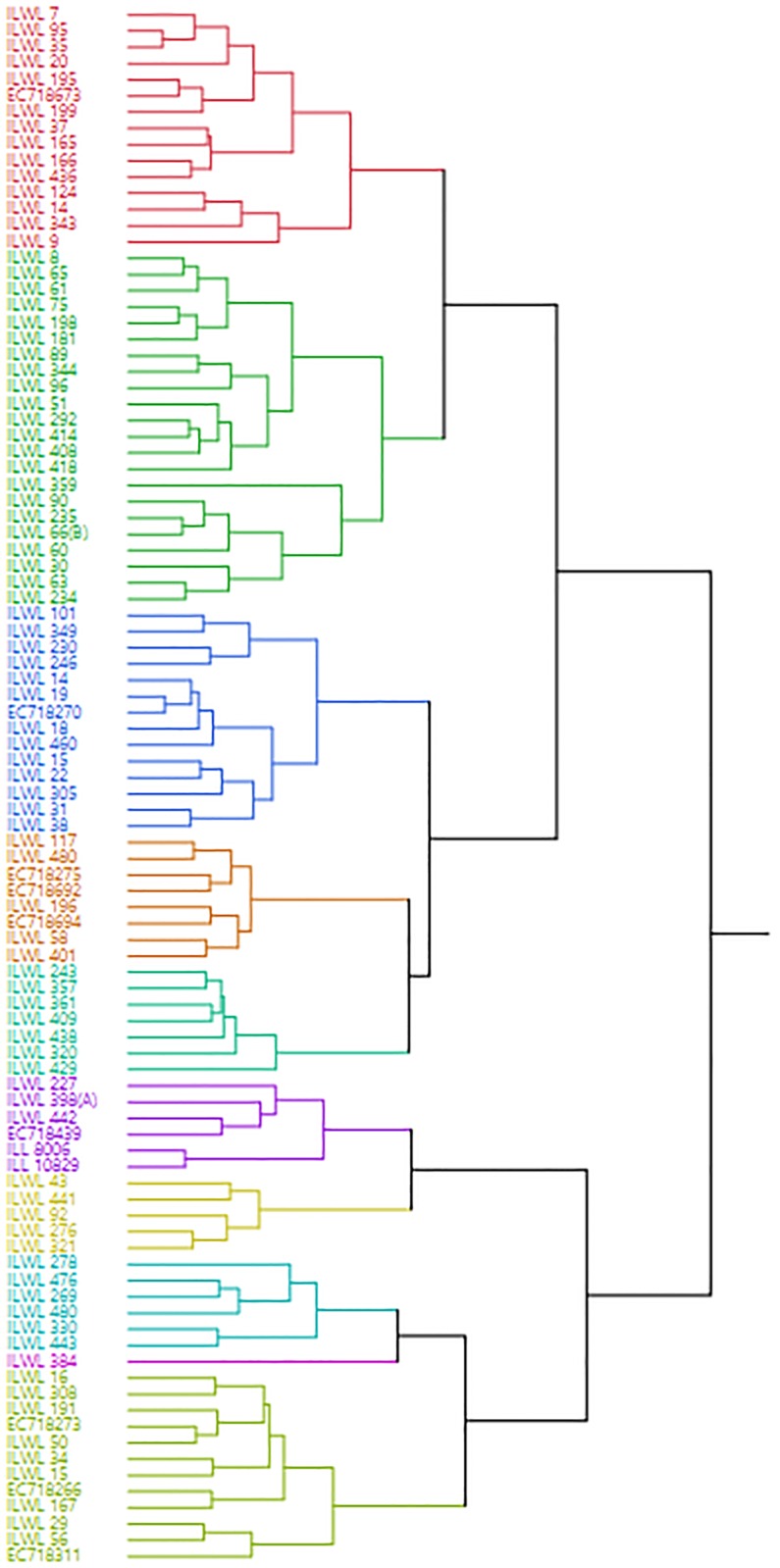
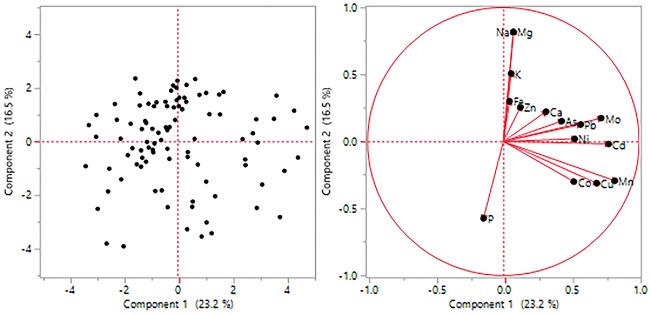
Lentil, generally known as poor man's' meat due to its high protein value is also a good source of dietary fiber, antioxidants and vitamins along with fast cooking characteristics. It could be used globally as a staple food crop to eradicate hidden hunger, if this nutritionally rich crop is further enriched with essential minerals. This requires identification of essential mineral rich germplasm. So, in the present study, a core set of 96 wild accessions extracted from 405 global wild annual collections comprising different species was analyzed to determine its bio-fortification potential. Impressive variation (mg/100 g) was observed for different minerals including Na (30-318), K (138.29-1578), P (37.50-593.75), Ca (4.74-188.75), Mg (15-159), Fe (2.82-14.12), Zn (1.29-12.62), Cu (0.5-7.12), Mn (1.22-9.99), Mo (1.02-11.89), Ni (0.16-3.49), Pb (0.01-0.58), Cd (0-0.03), Co (0-0.63) and As (0-0.02). Hierarchical clustering revealed high intra- and inter-specific variability. Further, correlation study showed positive significant association among minerals and between minerals including agro-morphological traits. Accessions representation from Turkey and Syria had maximum variability for different minerals. Diversity analysis exhibited wide geographical variations across gene-pool in core set. Potential use of the identified trait-specific genetic resources could be initial genetic material, for genetic base broadening and biofortification of cultivated lentil.
Conflict of interest statement
Figures
References
-
- White PJ, Broadly MR. Biofortification of crops with seven mineral elements often lacking in human diets—Iron, zinc, copper, calcium, magnesium, selenium and iodine. New Phytol. 2009;182:49–84. doi: 10.1111/j.1469-8137.2008.02738.x - DOI - PubMed
-
- Yang XE, Chen WR, Feng Y. Improving human micronutrient nutrition through biofortification in the soil plant system: China as a case study. Environ Geochem Health. 2007; 29(5): 413–428. doi: 10.1007/s10653-007-9086-0 - DOI - PubMed
-
- Hotz C, Brown KH. Assessment of the risk of zinc deficiency in populations and options for its control. Food Nutr Bull. 2004; 25(1) Suppl 2: S94–S204. - PubMed
-
- Cundeva K, Pavlovovska G, Stafilov T. Fe (III) heptthyldithiocarbamate as a new collector for floatation separation and preconcentration of Cr, Cu, and Pb, from fresh waters before their determination by ETAAS. J BrazChem Soc. 2007; 18: 1207–1214.
-
- Kaplan JH. Biochemistry of Na, K-ATPase. Ann Rev Biochem. 2002; 71: 511–535. doi: 10.1146/annurev.biochem.71.102201.141218 - DOI - PubMed
Publication types
MeSH terms
Substances
LinkOut - more resources
Full Text Sources
Other Literature Sources
Research Materials
