. 2018 Jan 18;14(1):e1006796.
doi: 10.1371/journal.ppat.1006796. eCollection 2018 Jan.

Influenza A virus hemagglutinin glycosylation compensates for antibody escape fitness costs

Affiliations

Influenza A virus hemagglutinin glycosylation compensates for antibody escape fitness costs

Ivan Kosik et al. PLoS Pathog. .

Erratum in

Abstract

Rapid antigenic evolution enables the persistence of seasonal influenza A and B viruses in human populations despite widespread herd immunity. Understanding viral mechanisms that enable antigenic evolution is critical for designing durable vaccines and therapeutics. Here, we utilize the primerID method of error-correcting viral population sequencing to reveal an unexpected role for hemagglutinin (HA) glycosylation in compensating for fitness defects resulting from escape from anti-HA neutralizing antibodies. Antibody-free propagation following antigenic escape rapidly selected viruses with mutations that modulated receptor binding avidity through the addition of N-linked glycans to the HA globular domain. These findings expand our understanding of the viral mechanisms that maintain fitness during antigenic evolution to include glycan addition, and highlight the immense power of high-definition virus population sequencing to reveal novel viral adaptive mechanisms.


Conflict of interest statement

The authors have declared that no competing interests exist.

Figures
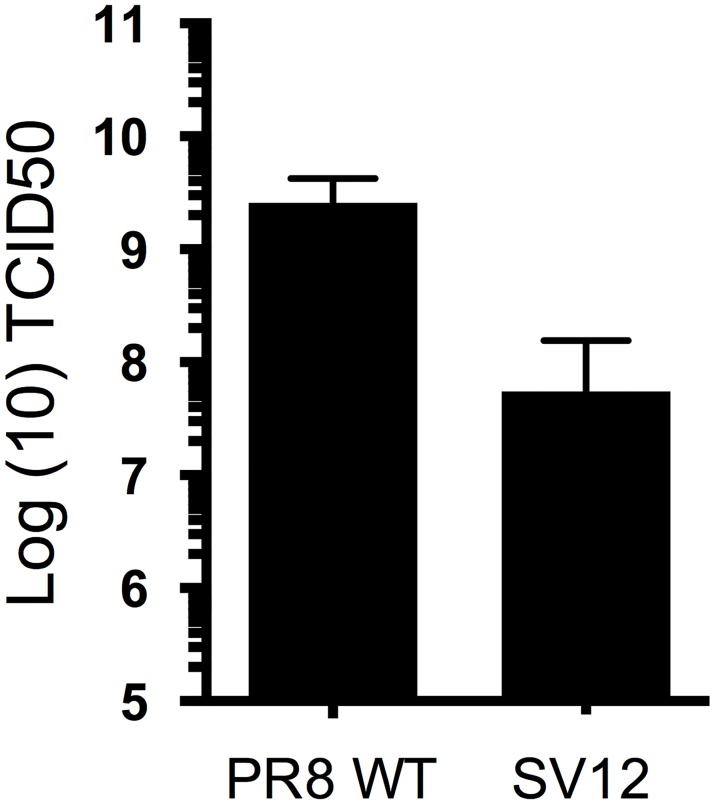
Fig 1
Fig 1. Fitness tradeoff associated with the accumulation of antigenic escape substitutions in HA.
Growth of plaque purified biological clones of PR8 WT and SV12 was compared in eggs. Eggs were infected in triplicate with 500 TCID50 of the indicated virus. 48 hours later, viral loads in allantoic cavities were titered by TCID50 assay.
Fig 2
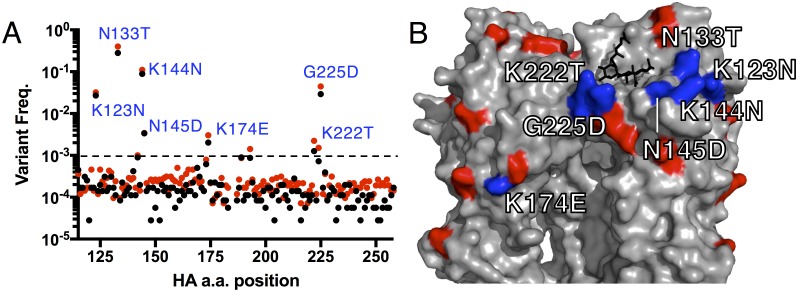
Fig 2. Identification of variants that emerge on the SV12 background after passage in eggs in the absence of antibody.
(A) Amino acid variant frequencies within SV12 HA following limited passage in eggs, as determined by primerID sequencing. Red and black data points represent frequencies obtained from two stocks separately expanded one time in eggs prior to sequencing. Amino acid positions with >0.1% variability (dashed line) in both stocks are labeled with the most abundant substitution at the position. Codons 184–186 were not captured by sequencing. (B) HA structure (PDB 1RU7) with the SV12-defining substitutions (red) and emerging amino acid substitutions (labeled in 2A) (blue) highlighted. The black stick model represents sialic acid situated in the receptor binding pocket.
Fig 3
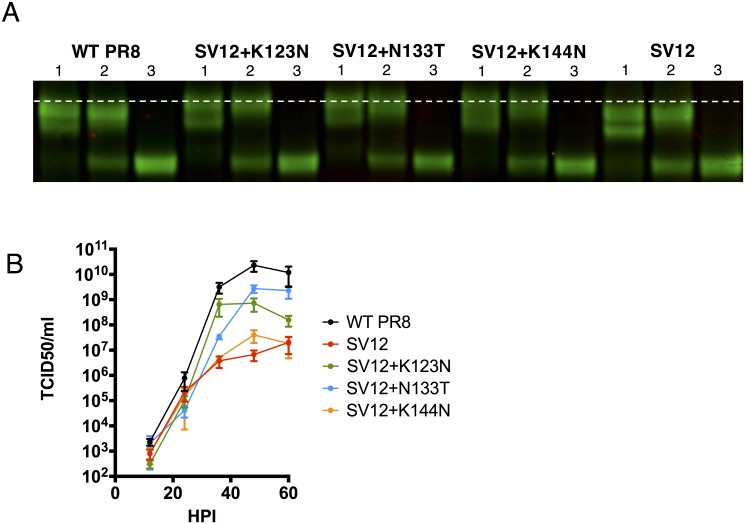
Fig 3. Characterization of compensatory glycan additions.
(A) Western blot comparison of HA glycosylation mutants following endoglycosidase treatment. Treatment 1 = undigested, treatment 2 = Endo H digested, treatment 3 = PNGase digested. (B) Growth comparison of PR8, SV12, and SV12 plus individual compensatory mutations in eggs. Eggs were inoculated with 500 TCID50, and viral loads within allantoic cavities were assessed by TCID50 assay at the indicated time points.
Fig 4
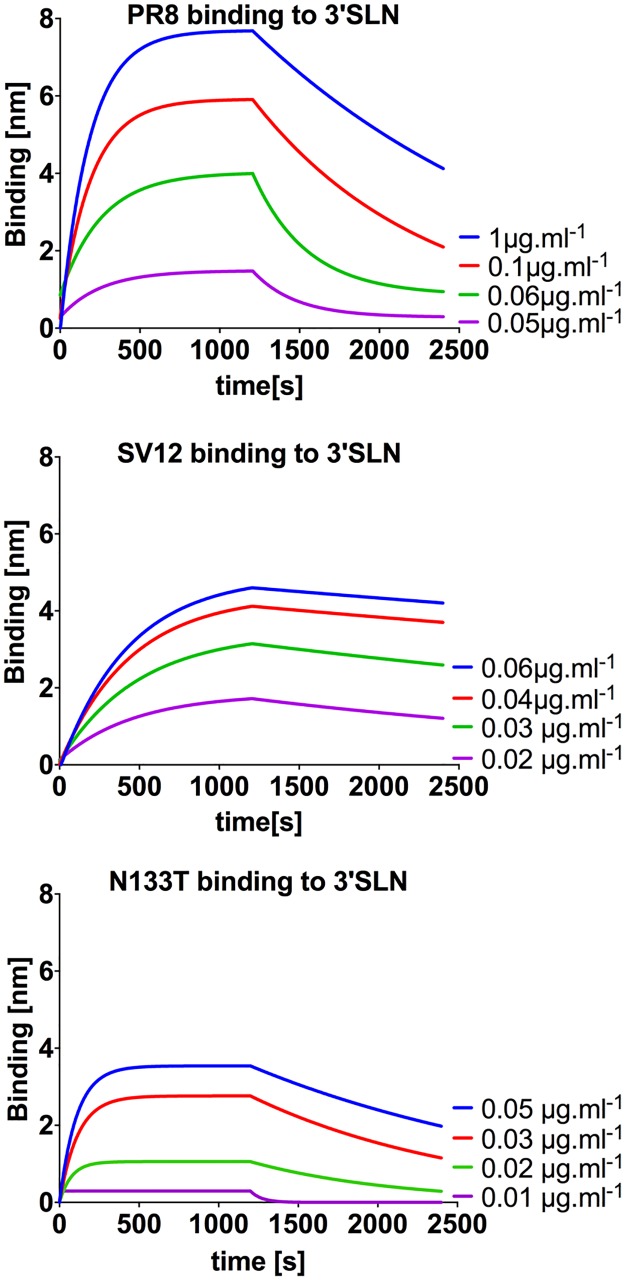
Fig 4. Bio-layer interferometry comparison of binding properties of WT, SV12 and SV12-N133T.
To measure binding properties of WT PR8, SV12, and the compensatory glycan addition mutant N133T, we bound biotinylated 3’SLN to sensor at different concentrations, and measured the Kon and Koff of intact purified virions in the presence and absence of the NA inhibitor oseltamivir, respectively. We fit two-phase (association then dissociation) nonlinear regression curves based on the average of 2–3 experiments.
Fig 5
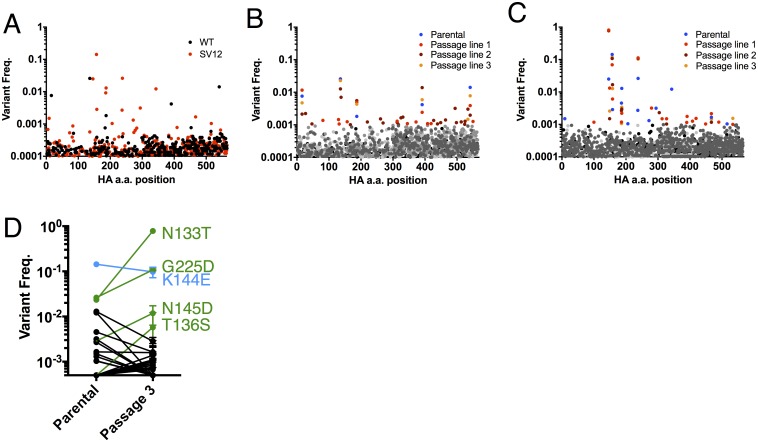
Fig 5. PrimerID sequencing of HA genes from recombinant WT and SV12-HA following passage.
Recombinant PR8 (WT) and rSV12-HA (SV12) viruses were rescued via reverse genetics. (A) Amino acid variant frequencies within WT (black) and SV12 HA (red) populations collected from rescue supernatants without amplification, as determined by primerID sequencing. (B,C) Amino acid variant frequencies within WT (B) and rSV12-HA (C) populations following three passages in eggs. For each population, all variants over 0.1% are colored to allow them to be visually distinguished. (D) Comparison of amino acid variant frequencies within rSV12-HA populations before and after 3 passages in eggs. Passage 3 data represents mean +/- SD of three independent passage lines. All amino acid numbering indicated on graphs A-C is from initiating methionine, not according to H3 system.
Fig 6
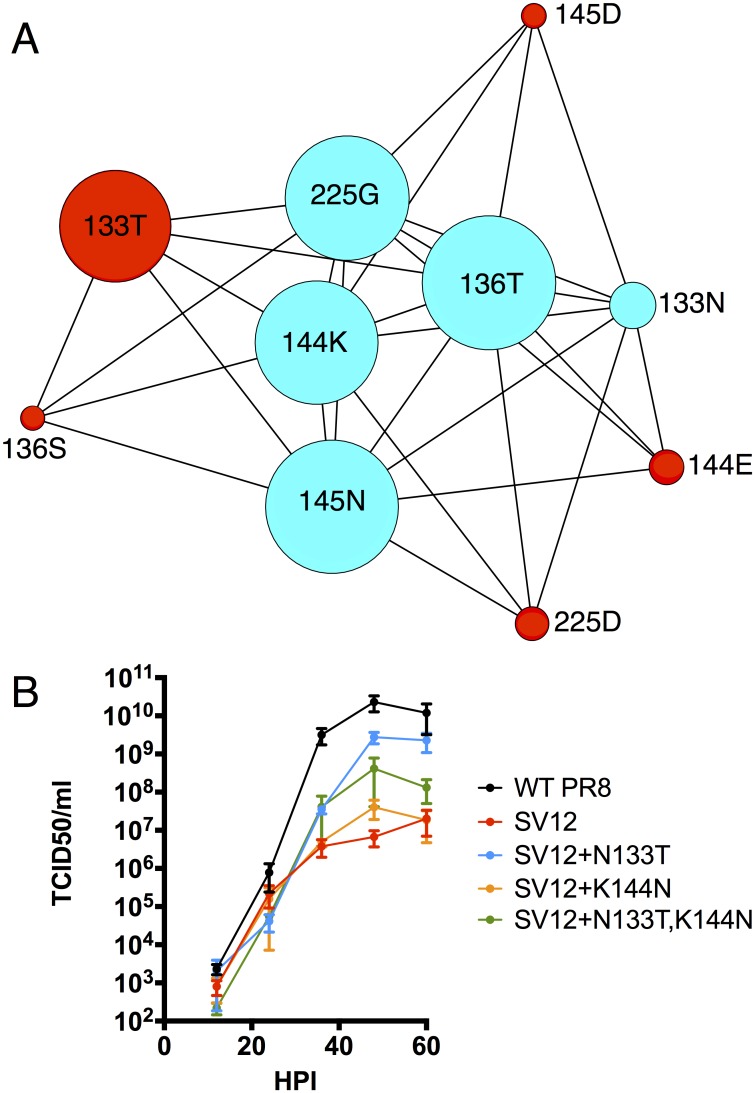
Fig 6. Linkage analysis of high frequency variants that emerged during rSV12-HA passage.
(A) Graphical representation of genetic linkage between selected variants within the three parallel passage 3 rSV12-HA populations, based on PrimerID sequencing. Node size is proportional to relative frequency of the indicated allele across the three populations. Aqua nodes indicate parental amino acids and red nodes represent variant amino acids. Edges connect pairs of amino acids that were linked in greater than 0.02% of all primerID consensus reads examined. (B) Multi-step growth comparison of the indicated viruses in eggs.

References

    1. Wiley DC, Wilson IA, Skehel JJ. Structural identification of the antibody-binding sites of Hong Kong influenza haemagglutinin and their involvement in antigenic variation. Nature. 1981. January 29;289(5796):373–8. - PubMed
    1. Caton AJ, Brownlee GG, Yewdell JW, Gerhard W. The antigenic structure of the influenza virus A/PR/8/34 hemagglutinin (H1 subtype). Cell. 1982. December;31(2 Pt 1):417–27. - PubMed
    1. Thyagarajan B, Bloom JD. The inherent mutational tolerance and antigenic evolvability of influenza hemagglutinin. eLife. 2014;3. - PMC - PubMed
    1. Angeletti D, Gibbs JS, Angel M, Kosik I, Hickman HD, Frank GM, et al. Defining B cell immunodominance to viruses. Nat Immunol. 2017. February 13;18(4):456–63. doi: 10.1038/ni.3680 - DOI - PMC - PubMed
    1. Das SR, Hensley SE, David A, Schmidt L, Gibbs JS, Puigbò P, et al. Fitness costs limit influenza A virus hemagglutinin glycosylation as an immune evasion strategy. Proc Natl Acad Sci U S A. 2011. December 20;108(51):E1417–1422. doi: 10.1073/pnas.1108754108 - DOI - PMC - PubMed

Publication types

MeSH terms

Substances