Updated efficacy of avelumab in patients with previously treated metastatic Merkel cell carcinoma after ≥1 year of follow-up: JAVELIN Merkel 200, a phase 2 clinical trial
- PMID: 29347993
- PMCID: PMC5774167
- DOI: 10.1186/s40425-017-0310-x
Updated efficacy of avelumab in patients with previously treated metastatic Merkel cell carcinoma after ≥1 year of follow-up: JAVELIN Merkel 200, a phase 2 clinical trial
Abstract
Background: Merkel cell carcinoma (MCC) is a rare, aggressive skin cancer associated with poor survival outcomes in patients with distant metastatic disease (mMCC). In an initial analysis from JAVELIN Merkel 200, a phase 2, prospective, open-label, single-arm trial in mMCC, avelumab-a human anti-programmed death-ligand 1 (PD-L1) monoclonal antibody-showed promising efficacy and a safety profile that was generally manageable and tolerable. Here, we report the efficacy of avelumab after ≥1 year of follow-up in patients with distant mMCC that had progressed following prior chemotherapy for metastatic disease.
Patients and methods: Patients received avelumab 10 mg/kg by 1-h intravenous infusion every 2 weeks until confirmed disease progression, unacceptable toxicity, or withdrawal. The primary endpoint was best overall response. Secondary endpoints included duration of response (DOR), progression-free survival (PFS), and overall survival (OS).
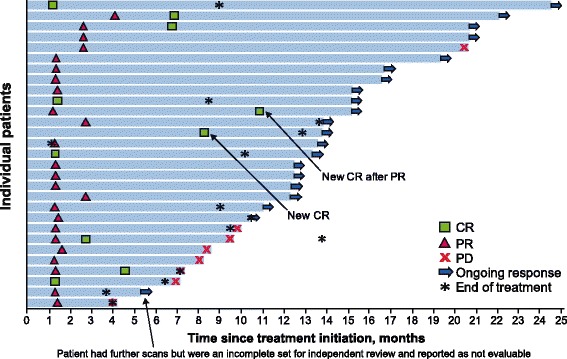
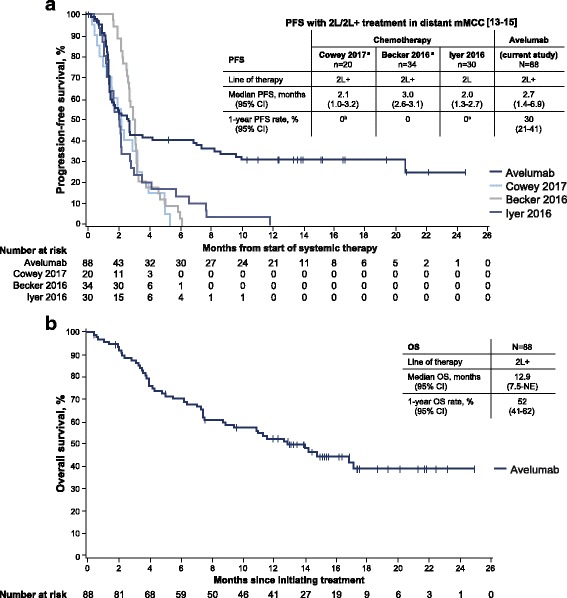
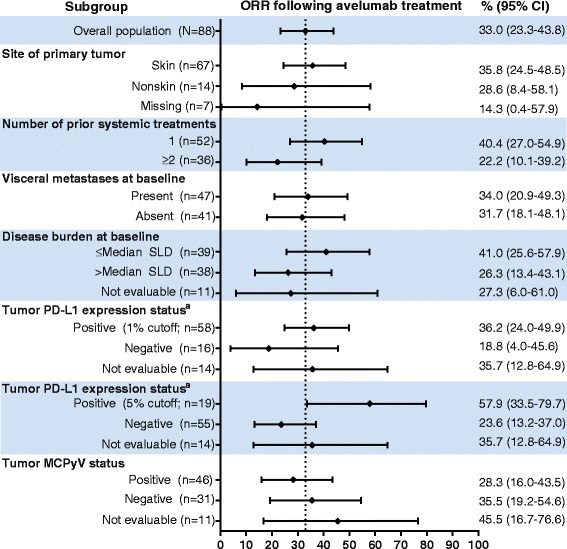
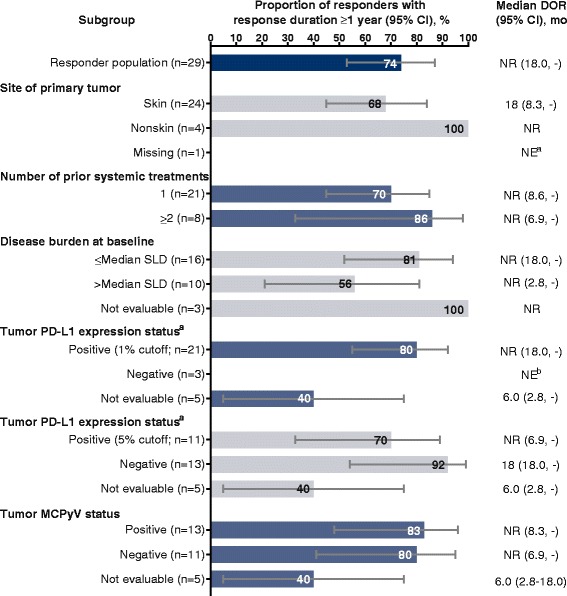
Results: Patients (N = 88) were followed for a minimum of 12 months. The confirmed objective response rate was 33.0% (95% CI, 23.3%-43.8%; complete response: 11.4%). An estimated 74% of responses lasted ≥1 year, and 72.4% of responses were ongoing at data cutoff. Responses were durable, with the median DOR not yet reached (95% CI, 18.0 months-not estimable), and PFS was prolonged; 1-year PFS and OS rates were 30% (95% CI, 21%-41%) and 52% (95% CI, 41%-62%), respectively. Median OS was 12.9 months (95% CI, 7.5-not estimable). Subgroup analyses suggested a higher probability of response in patients receiving fewer prior lines of systemic therapy, with a lower baseline disease burden, and with PD-L1-positive tumors; however, durable responses occurred irrespective of baseline factors, including tumor Merkel cell polyomavirus status.
Conclusions: With longer follow-up, avelumab continues to show durable responses and promising survival outcomes in patients with distant mMCC whose disease had progressed after chemotherapy.
Trial registration: Clinicaltrials.gov identifier: NCT02155647.
Keywords: Avelumab; Javelin; Merkel cell carcinoma; Pd-L1.
Conflict of interest statement
Ethics approval and consent to participate
All patients were enrolled in accordance with approved protocols, international standards of good clinical practice, institutional review board approvals, and institutional safety monitoring. Written informed consent was provided.
Consent for publication
Not applicable.
Competing interests
HLK reports consultancy for and honoraria from Amgen, Celldex, Compass Therapeutics, EMD Serono, Prometheus, Sanofi, Turnstone Biologics, and Merck KGaA, Darmstadt, Germany; reports research funding from Amgen, EMD Serono, Prometheus, Viralytics, and Merck KGaA, Darmstadt, Germany; and is a member of a speaker’s bureau for Merck KGaA, Darmstadt, Germany. JSR reports consultancy for EMD Serono. OH reports consultancy for Amgen, Novartis, Roche, Bristol-Myers Squibb, and Merck KGaA, Darmstadt, Germany; is a member of a speaker’s bureau for Bristol-Myers Squibb, Genentech, Novartis, and Amgen; and has received research funding from Astra Zeneca, Bristol-Myers Squibb, Celldex, Genentech, Immunocore, Incyte, Merck KGaA, Darmstadt, Germany, Merck Serano, MedImmune, Novartis, Pfizer, Rinat and Roche. SB received research support from EMD Serono. PT has received reimbursement and non-financial support from other commercial sponsors, outside the submitted work. SPD reports employment at Memorial Sloan Kettering Cancer Center and is a member of advisory boards for EMD Serrano, Nektar, and Amgen. CL reports advisory and consultancy for Roche, Bristol-Myers Squibb, Novartis, Amgen, GlaxoSmithKline, and Merck, Sharpe, and Dohme; has received research support from Roche and Bristol-Myers Squibb; is a member of a speaker’s bureau for Bristol-Myers Squibb, Amgen, Roche, and Novartis; has received honoraria from Roche, Bristol-Myers Squibb, Novartis, Amgen, and Merck, Sharpe, and Dohme; and has received travel accommodations from Roche, Bristol-Myers Squibb, and Novartis. KDL has received research support from EMD Serono. JHL has received research support from Novartis, Takeda-Millennium, and Bristol-Myers Squibb; and is a member of an advisory board for Bristol-Myers Squibb and Eisai. AvH reports employment at and is a stock shareholder of Merck KGaA, Darmstadt, Germany. MH reports employment at EMD Serono. PN has received research support from EMD Serono and Bristol-Myers Squibb; and has received personal fees from EMD Serono and Pfizer outside the submitted work. The remaining authors have no conflicts of interest to disclose.
Publisher’s Note
Springer Nature remains neutral with regard to jurisdictional claims in published maps and institutional affiliations.
Figures
References
-
- Terheyden P, Becker JC. New developments in the biology and the treatment of metastatic Merkel cell carcinoma. Curr Opin Oncol. 2017; March 9. [Epub ahead of print] - PubMed
-
- NCCN . Clinical practice guidelines in oncology: Merkel cell carcinoma. 2018.
Publication types
MeSH terms
Substances
Associated data
Grants and funding
LinkOut - more resources
Full Text Sources
Other Literature Sources
Medical
Research Materials