Review
. 2018 Jan 19;122(2):319-336.
doi: 10.1161/CIRCRESAHA.117.310978.

Multifunctional Role of Chymase in Acute and Chronic Tissue Injury and Remodeling

Affiliations
Review

Multifunctional Role of Chymase in Acute and Chronic Tissue Injury and Remodeling

Louis J Dell'Italia et al. Circ Res. .

Abstract

Chymase is the most efficient Ang II (angiotensin II)-forming enzyme in the human body and has been implicated in a wide variety of human diseases that also implicate its many other protease actions. Largely thought to be the product of mast cells, the identification of other cellular sources including cardiac fibroblasts and vascular endothelial cells demonstrates a more widely dispersed production and distribution system in various tissues. Furthermore, newly emerging evidence for its intracellular presence in cardiomyocytes and smooth muscle cells opens an entirely new compartment of chymase-mediated actions that were previously thought to be limited to the extracellular space. This review illustrates how these multiple chymase-mediated mechanisms of action can explain the residual risk in clinical trials of cardiovascular disease using conventional renin-angiotensin system blockade.

Keywords: angiotensin II; chymases; endothelial cells; mast cells; renin.


Conflict of interest statement

Conflicts of Interest: None.

Figures
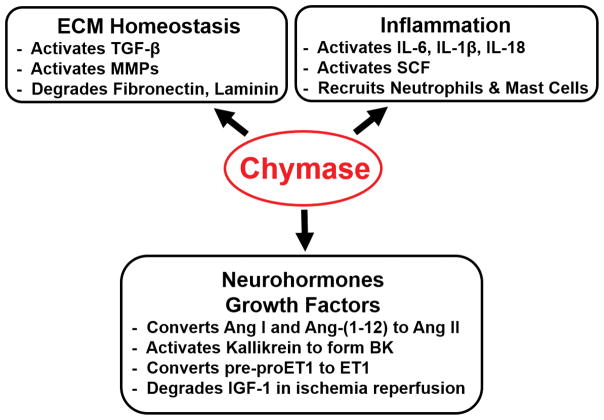
Figure 1
Figure 1
Multifunctional Actions of Chymase in Acute and Chronic Tissue Injury and Remodeling.
Figure 2
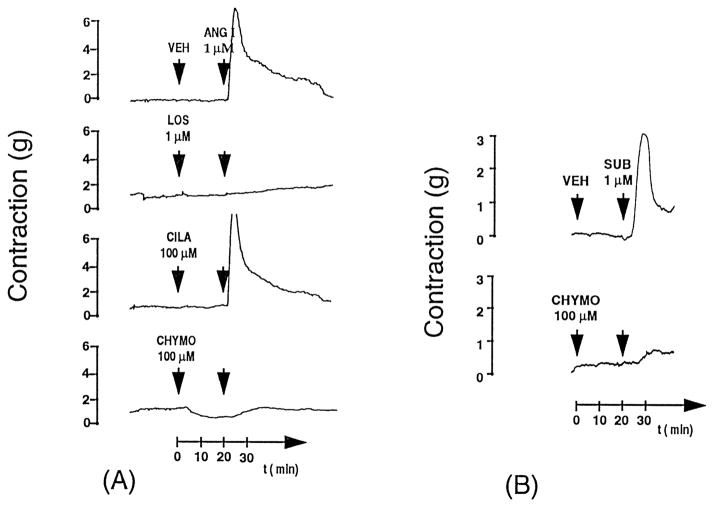
Figure 2. Original tracings of human coronary artery ring preparations from patients with heart failure
Panel A demonstrates the pressor response to 1 μmol/L Ang I or chymase-specific substrate [Pro11DAla12] Ang I (SUB) with cilazaprilat (CILA, 100 μmol/L), chymostatin (CHYMO, 100 μmol/L), chymostatin and cilazaprilat together, and losartan (LOS, 1 μmol/L). Arrowheads indicate the time of application. The inhibitors were added 20 minutes before the substrates. VEH indicates vehicle. Losartan and chymostatin completely blocked the pressor response to Ang I, whereas cilazaprilat was ineffective. As further confirmation of the chymase function, the chymase specific substrated (SUB) pro-Dala-Ang I contraction is completely by chymostatin. Reproduced with permission of the American Heart Association.
Figure 3
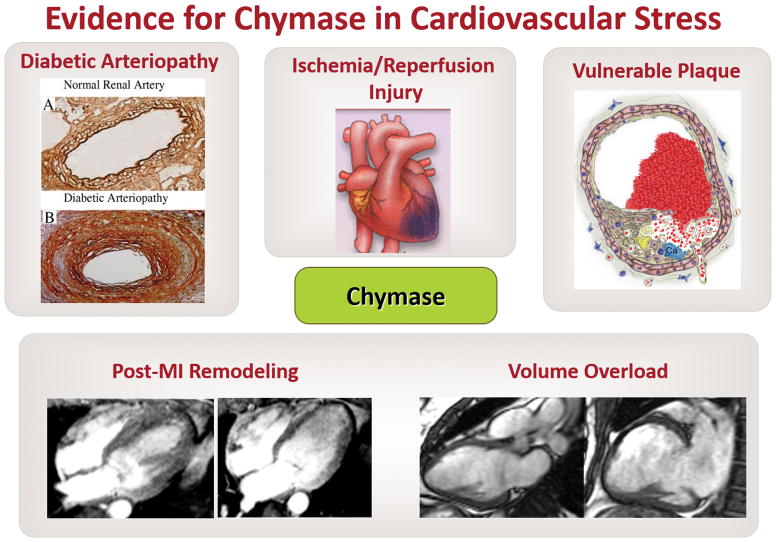
Figure 3. Evidence from human pathology and preclinical animal models supports the important role for chymase in cardiovascular stress
Upper left panel: demonstrates a cross-section of a human renal artery with marked increase in chymase (brown) extending from the endothelium to adventitia in a patient with diabetes (reproduced with permission of the American Heart Association). Center and upper right panels: cartoons demonstrate the potential role of chymase in attenuating ischemia/reperfusion injury and promoting stablization of the vulnerable athersclerotic plaque (reproduced with permission of the American Heart Association). Bottom right panel: demonstrate the marked increase in LV volume and LV wall thinning in a patient with chronic MR (right image) compared with a normal subject (left image) (reproduced with permission of the American Heart Association). Bottom left panel: demonstrates the increase in LV volume and apical wall thinning in a patient 6 months after an antero-apical myocardial infarction (right image) compared with three days after myocardial infarction (MI; left image) (reproduced with permission of the American Heart Journal). Targeting the multifunctional roles of chymase (Figure 1) in each of these conditions by chymase inhibition will complement conventional RAS blockade in promoting better outcomes and tissue protection.
Figure 4
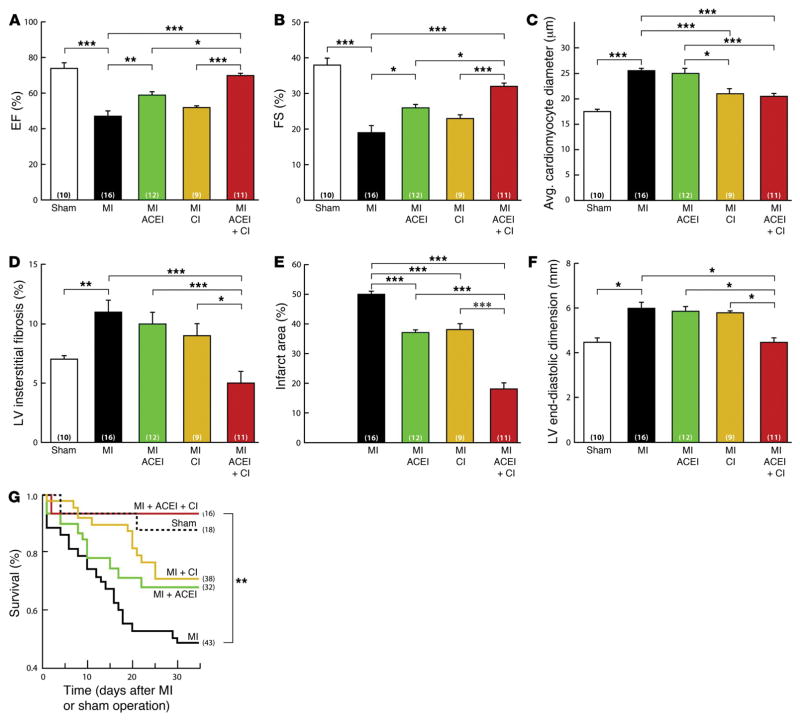
Figure 4. LV function and mortality after left anterior descending (LAD) artery occlusion in hamster
The combination of ACE inhibition (ACEi) and chymase inhibition (CI) produces the greatest improvement in LV ejection fraction (EF) (A), fractional shortening (FS) (B), cardiomyocyte diameter (C), LV fibrosis (D), infarct area (E), LV end-diastolic dimension (F), and survival (G) 1 month after LAD occlusion. Drug administration was started within 24 hours after LAD occlusion. Reproduced with permission of the American Society of Clinical Investigation.
Figure 5
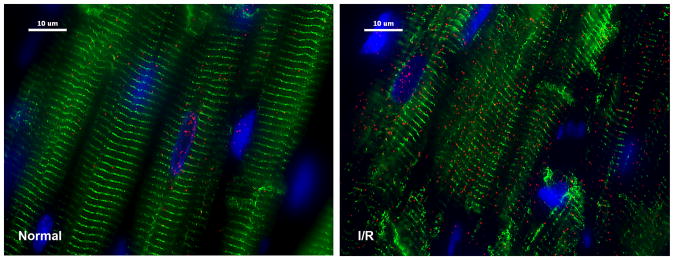
Figure 5. Chymase inside dog cardiomyocytes during ischemia/reperfusion
Adult dogs subjected to 60 minutes of LAD occlusion and 100 minutes of reperfusion (right panel) or normal controls (left panel). Ischemia/reperfusion LV led to a marked increase in chymase (red) in cardiomyocytes with breakdown of desmin (green, right). I/R: ischemia/reperfusion; blue: DAPI. Reproduced with permission of Plos One.
Figure 6
Figure 6
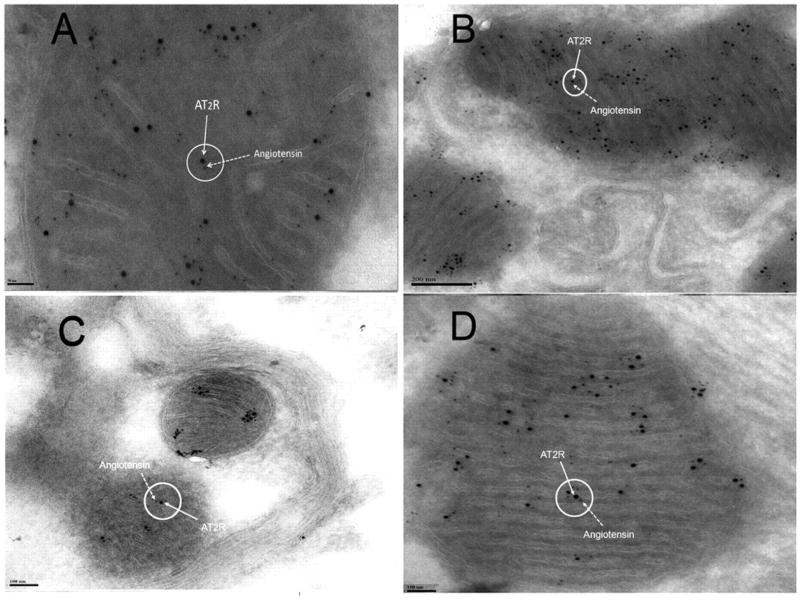
Immunogold transmission electron microscopy using gold-labeled anti-AT2R antibody (12 nm gold) and a gold-labeled anti-Ang antibody (6 nm gold) demonstrates the localization of the AT2 receptor and binding thereof to Ang in the mitochondria of mouse hepatocytes (A), kidney tubular cells (B), neurons (C), and cardiac myocytes (D). Reproduced with permission of PNAS.

References

    1. Trivedi NN, Caughey GH. Mast cell peptidases: chameleons of innate immunity and host defense. Am J Respir Cell Mol Biol. 2010;42:257–267. - PMC - PubMed
    1. Caughey GH. Mast cell proteases as protective and inflammatory mediators. Adv Exp Med Biol. 2011;716:212–234. - PMC - PubMed
    1. Caughey GH. Mast cell proteases as pharmacological targets. Eur J Pharmacol. 2016;778:44–55. - PMC - PubMed
    1. He A, Shi GP. Mast cell chymase and tryptase as targets for cardiovascular and metabolic diseases. Curr Pharm Des. 2013;19:1114–1125. - PMC - PubMed
    1. Heutinck K, ten Berge I, Hack C, Hamann J, Rowshani A. Serine proteases of the human immune system in health and disease. Mol Immunol. 2010;47:1943–1955. - PubMed

Publication types

MeSH terms