


Motor signatures of emotional reactivity in frontotemporal dementia
- PMID: 29348485
- PMCID: PMC5773553
- DOI: 10.1038/s41598-018-19528-2
Motor signatures of emotional reactivity in frontotemporal dementia
Abstract
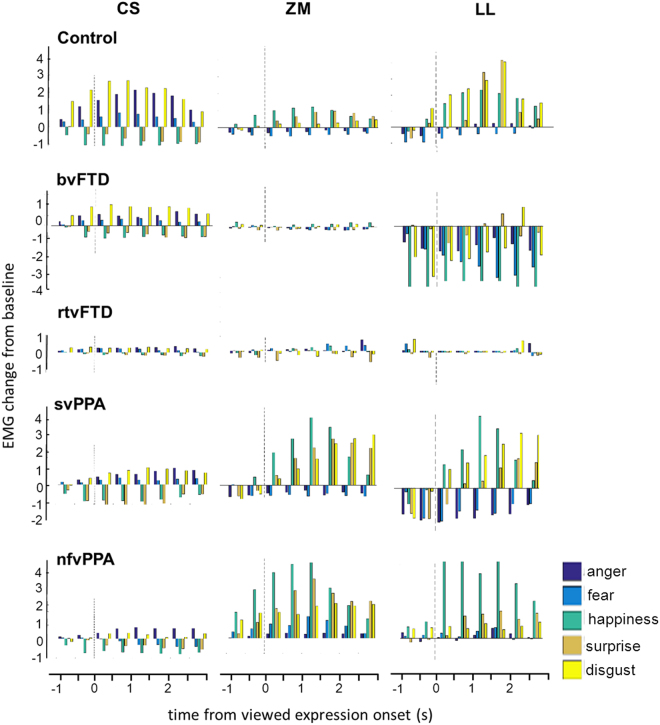
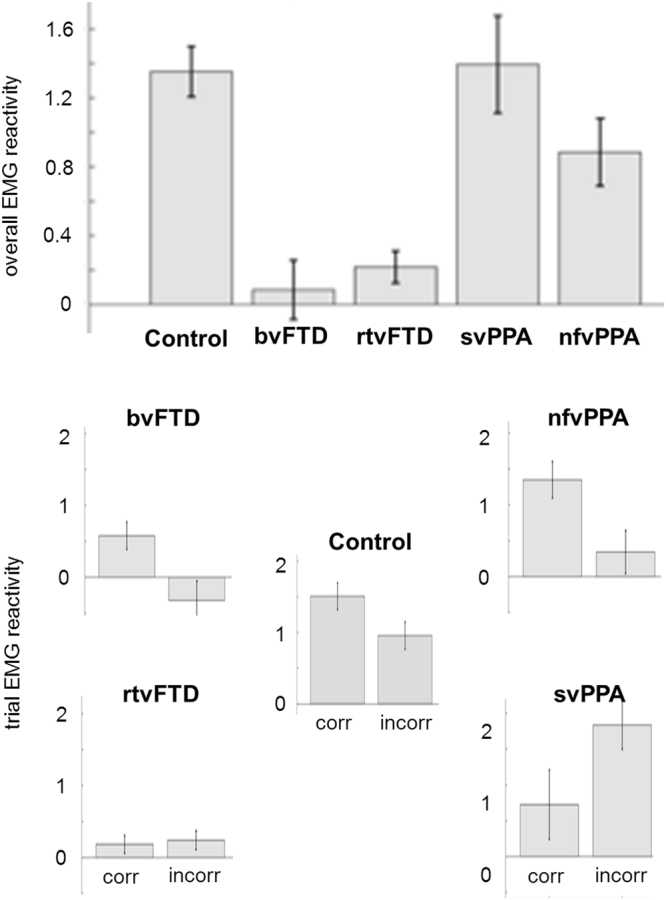
Automatic motor mimicry is essential to the normal processing of perceived emotion, and disrupted automatic imitation might underpin socio-emotional deficits in neurodegenerative diseases, particularly the frontotemporal dementias. However, the pathophysiology of emotional reactivity in these diseases has not been elucidated. We studied facial electromyographic responses during emotion identification on viewing videos of dynamic facial expressions in 37 patients representing canonical frontotemporal dementia syndromes versus 21 healthy older individuals. Neuroanatomical associations of emotional expression identification accuracy and facial muscle reactivity were assessed using voxel-based morphometry. Controls showed characteristic profiles of automatic imitation, and this response predicted correct emotion identification. Automatic imitation was reduced in the behavioural and right temporal variant groups, while the normal coupling between imitation and correct identification was lost in the right temporal and semantic variant groups. Grey matter correlates of emotion identification and imitation were delineated within a distributed network including primary visual and motor, prefrontal, insular, anterior temporal and temporo-occipital junctional areas, with common involvement of supplementary motor cortex across syndromes. Impaired emotional mimesis may be a core mechanism of disordered emotional signal understanding and reactivity in frontotemporal dementia, with implications for the development of novel physiological biomarkers of socio-emotional dysfunction in these diseases.
Conflict of interest statement
Dr. Marshall is supported by the Leonard Wolfson Experimental Neurology Centre. Mr Hardy holds a MRC UK PhD studentship. Ms Russell reports no biomedical financial interests or potential conflicts of interest. Dr. Clark was supported by The National Brain Appeal – Frontotemporal Dementia Research Fund. Ms Bond holds a MRC UK PhD studentship. Ms Dick is funded by the Alzheimer’s Society. Ms Brotherhood reports no biomedical financial interests or potential conflicts of interest. Dr. Mummery reports no biomedical financial interests or potential conflicts of interest. Dr. Schott reports no biomedical financial interests or potential conflicts of interest. Dr. Rohrer is a MRC UK Clinical Scientist. Dr. Kilner reports no biomedical financial interests or potential conflicts of interest. Prof Warren was supported by a Wellcome Trust Senior Clinical Fellowship and receives funding from the Alzheimer’s Society.
Figures

References
-
- Dimberg U, Thunberg M, Grunedal S. Facial reactions to emotional stimuli: Automatically controlled emotional responses. Cognition Emotion. 2002;16:449–471. doi: 10.1080/02699930143000356. - DOI
Publication types
MeSH terms
Grants and funding
LinkOut - more resources
Full Text Sources
Other Literature Sources
