


Socioeconomic status indicators and common mental disorders: Evidence from a study of prenatal depression in Pakistan
- PMID: 29349268
- PMCID: PMC5769091
- DOI: 10.1016/j.ssmph.2017.10.004
Socioeconomic status indicators and common mental disorders: Evidence from a study of prenatal depression in Pakistan
Abstract
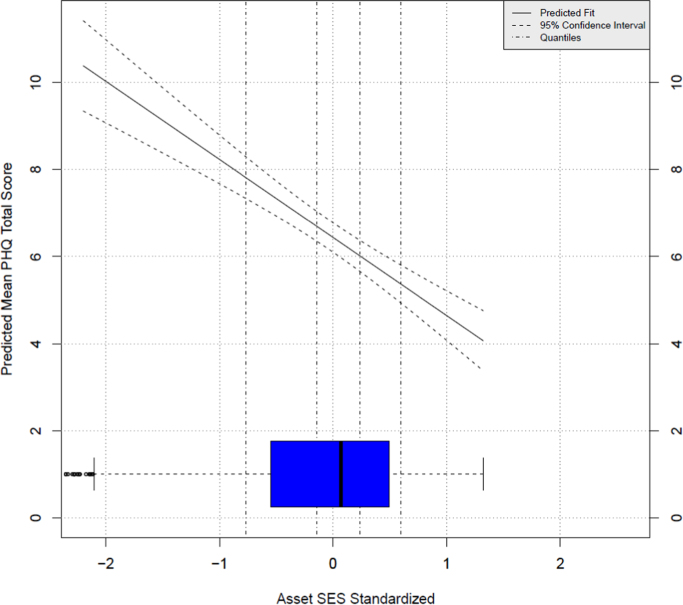
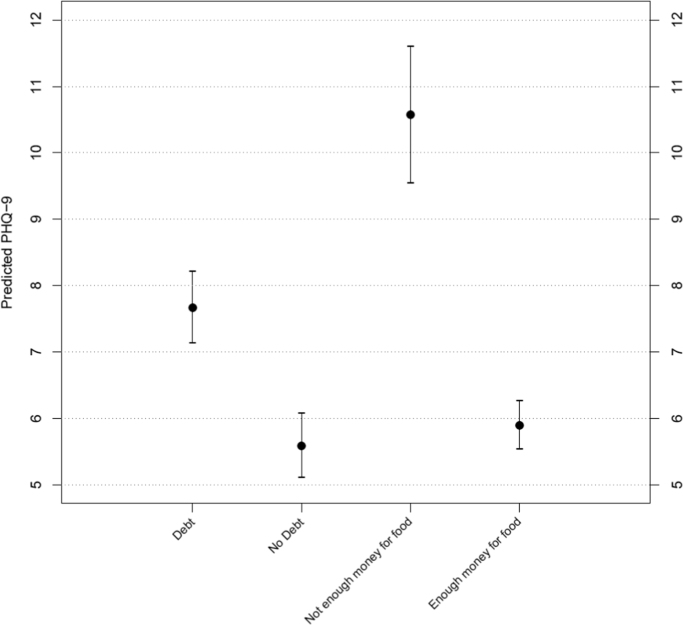
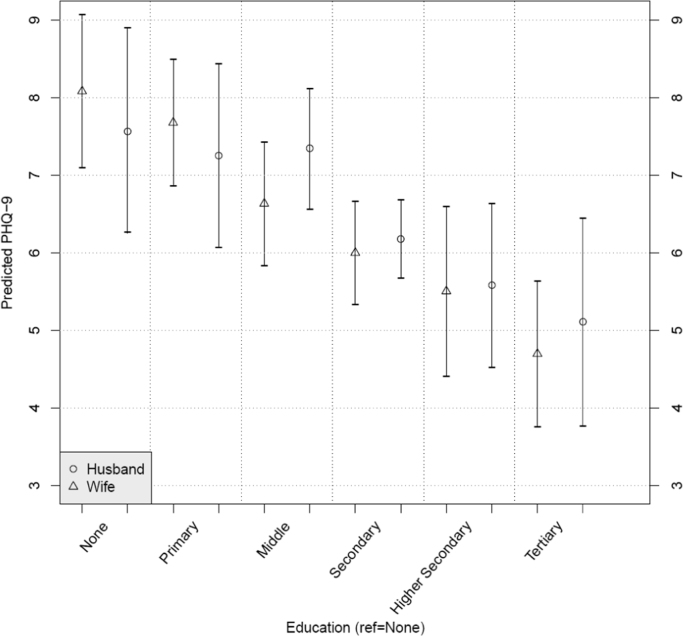
There is growing interest in the relationship between socioeconomic status (SES), poverty, and mental health in low and middle-income countries (LMIC). However, it is not clear whether a gradient approach focused on a wider SES distribution or a binary poverty approach is more salient for mental health in LMIC. Yet this distinction has implications for interventions aimed at improving population health. We contribute to the literature by examining how multiple indicators of socioeconomic status, including gradient SES and binary poverty indicators, contribute to prenatal depression symptoms in a LMIC context. Prenatal depression is an important public health concern with negative sequela for the mother and her children. We use data on assets, education, food insecurity, debt, and depression symptoms from a sample of 1154 pregnant women residing in rural Pakistan. Women who screened positive for depression participated in a cluster randomized controlled trial of a perinatal depression intervention; all women were interviewed October 2015-February 2016, prior to the start of the intervention. Cluster-specific sampling weights were used to approximate a random sample of pregnant women in the area. Findings indicate that fewer assets, experiencing food insecurity, and having household debt are independently associated with worse depression symptoms. The association with assets is linear with no evidence of a threshold effect, supporting the idea of a gradient in the association between levels of SES and depression symptoms. A gradient was also initially observed with woman's educational attainment, but this association was attenuated once other SES variables were included in the model. Together, the asset, food insecurity, and debt indicators explain 14% of the variance in depression symptoms, more than has been reported in high income country studies. These findings support the use of multiple SES indicators to better elucidate the complex relationship between socioeconomic status and mental health in LMIC.
Keywords: LMIC; Maternal depression; Poverty; Prenatal depression; Socioeconomic status; South Asia.
Figures
References
-
- Banerjee, A. and Duflo E. (2011). Poor Economics: A Radical Rethinking of the Way to Fight Global Poverty, PublicAffairs.
-
- Baranov, V., Bhalotra S., Biroli P. and Maselko J. (2017). Maternal Depression, Women’s Empowerment, and Parental Investment: Evidence from a Large Randomized Control Trial Working Paper.
-
- Bolton P., Bass J., Neugebauer R., Verdeli H., Clougherty K.F., Wickramaratne P., Speelman L., Ndogoni L., Weissman M. Group interpersonal psychotherapy for depression in rural Uganda - A randomized controlled trial. JAMA—Journal of the American Medical Association. 2003;289(23):3117–3124. - PubMed
-
- Brown S., Lumley J. Physical health problems after childbirth and maternal depression at six to seven months postpartum. British Journal of Obstetrics and Gynaecology. 2000;107(10):1194–1201. - PubMed
Grants and funding
LinkOut - more resources
Full Text Sources
Other Literature Sources
