


Highly favorable physiological responses to concurrent resistance and high-intensity interval training during chemotherapy: the OptiTrain breast cancer trial
- PMID: 29349712
- PMCID: PMC5882634
- DOI: 10.1007/s10549-018-4663-8
Highly favorable physiological responses to concurrent resistance and high-intensity interval training during chemotherapy: the OptiTrain breast cancer trial
Abstract
Background: Advanced therapeutic strategies are often accompanied by significant adverse effects, which warrant equally progressive countermeasures. Physical exercise has proven an effective intervention to improve physical function and reduce fatigue in patients undergoing chemotherapy. Effects of high-intensity interval training (HIIT) in this population are not well established although HIIT has proven effective in other clinical populations. The aim of the OptiTrain trial was to examine the effects of concurrent resistance and high-intensity interval training (RT-HIIT) or concurrent moderate-intensity aerobic and high-intensity interval training (AT-HIIT), to usual care (UC) on pain sensitivity and physiological outcomes in patients with breast cancer during chemotherapy.
Methods: Two hundred and forty women were randomized to 16 weeks of RT-HIIT, AT-HIIT, or UC.
Outcomes: cardiorespiratory fitness, muscle strength, body mass, hemoglobin levels, and pressure-pain threshold.
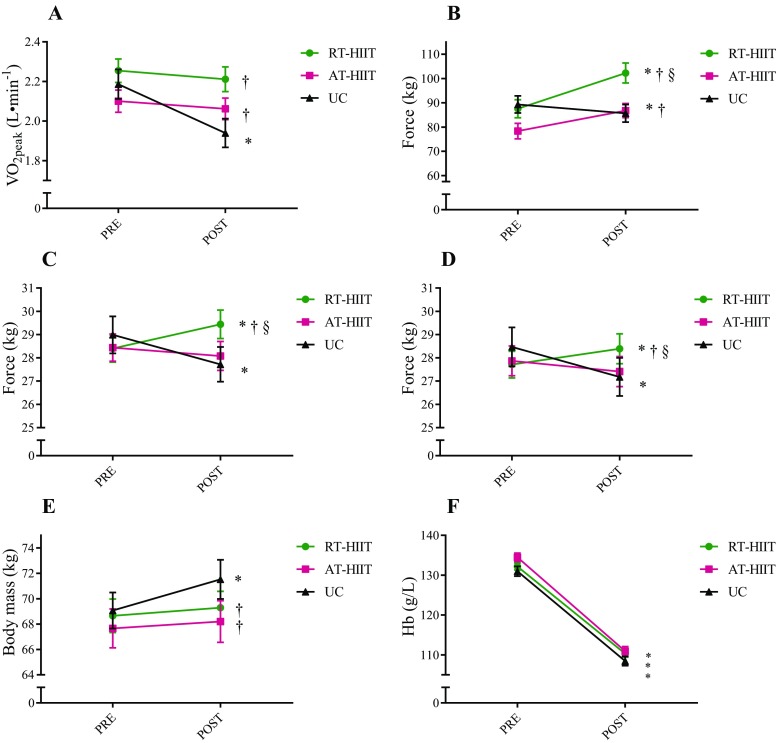
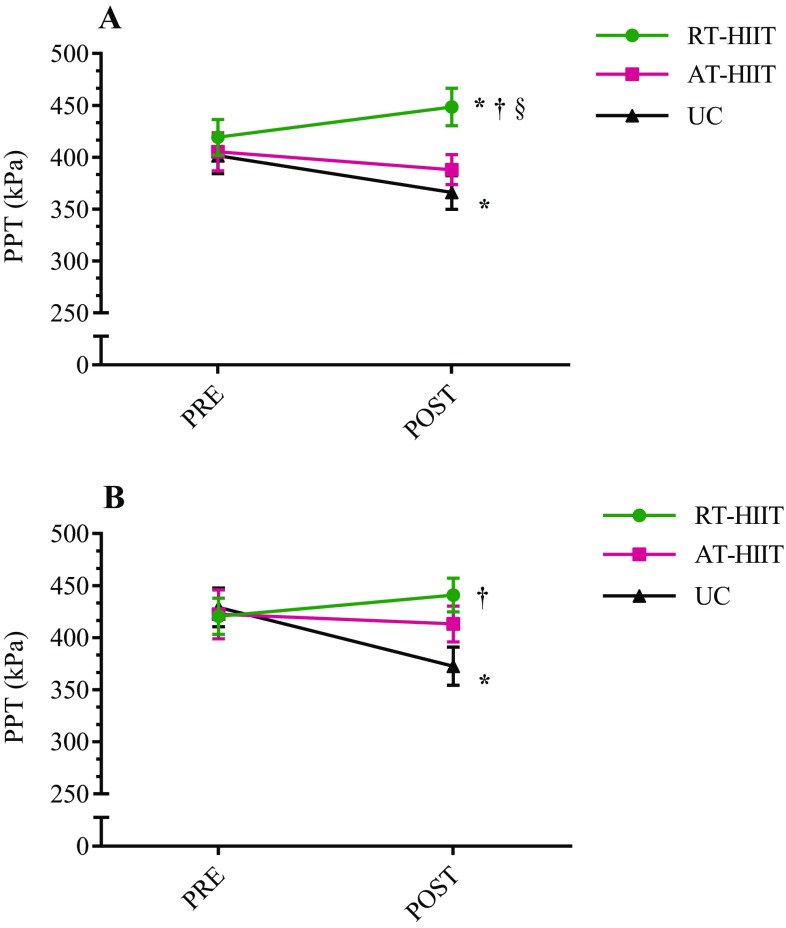
Results: Pre- to post-intervention, RT-HIIT (ES = 0.41) and AT-HIIT (ES = 0.42) prevented the reduced cardiorespiratory fitness found with UC. Handgrip strength (surgery side: RT-HIIT vs. UC: ES = 0.41, RT-HIIT vs. AT-HIIT: ES = 0.28; non-surgery side: RT-HIIT vs. UC: ES = 0.35, RT-HIIT vs. AT-HIIT: ES = 0.22) and lower-limb muscle strength (RT-HIIT vs. UC: ES = 0.66, RT-HIIT vs. AT-HIIT: ES = 0.23) were significantly improved in the RT-HIIT. Increases in body mass were smaller in RT-HIIT (ES = - 0.16) and AT-HIIT (ES = - 0.16) versus UC. RT-HIIT reported higher pressure-pain thresholds than UC (trapezius: ES = 0.46, gluteus: ES = 0.53) and AT-HIIT (trapezius: ES = 0.30).
Conclusion: Sixteen weeks of RT-HIIT significantly improved muscle strength and reduced pain sensitivity. Both exercise programs were well tolerated and were equally efficient in preventing increases in body mass and in preventing declines in cardiorespiratory fitness. These results highlight the importance of implementing a combination of resistance and high-intensity interval training during chemotherapy for women with breast cancer.
Keywords: Breast cancer; Chemotherapy; High-intensity interval training; Pressure-pain threshold.
Conflict of interest statement
The authors declare no conflict of interest.
Figures
References
-
- International Agency for Research on Cancer: Cancer fact sheets Breast cancer (2016). https://www.iarc.fr/. Accessed 9 Mar 2017
-
- Davis MP, Walsh D. Mechanisms of fatigue. J Support Oncol. 2010;8(4):164–174. - PubMed
-
- Cramp F, Daniel J. Exercise for the management of cancer-related fatigue in adults. Cochrane Database Syst Rev. 2008;2:CD006145. - PubMed
-
- Mijwel S, Backman M, Bolam KA, Jervaeus A, Sundberg CJ, Margolin S, Browall M, Rundqvist H, Wengström Y. Adding high-intensity interval training to conventional training modalities: optimizing health-related outcomes during chemotherapy for breast cancer: the OptiTrain randomized controlled trial. Breast Cancer Res Treat. 2017 - PMC - PubMed
Publication types
MeSH terms
Grants and funding
LinkOut - more resources
Full Text Sources
Other Literature Sources
Medical
