


Bystin (BYSL) as a possible marker of severe hypoxic-ischemic changes in neuropathological examination of forensic cases
- PMID: 29349722
- PMCID: PMC5830468
- DOI: 10.1007/s12024-017-9942-x
Bystin (BYSL) as a possible marker of severe hypoxic-ischemic changes in neuropathological examination of forensic cases
Abstract
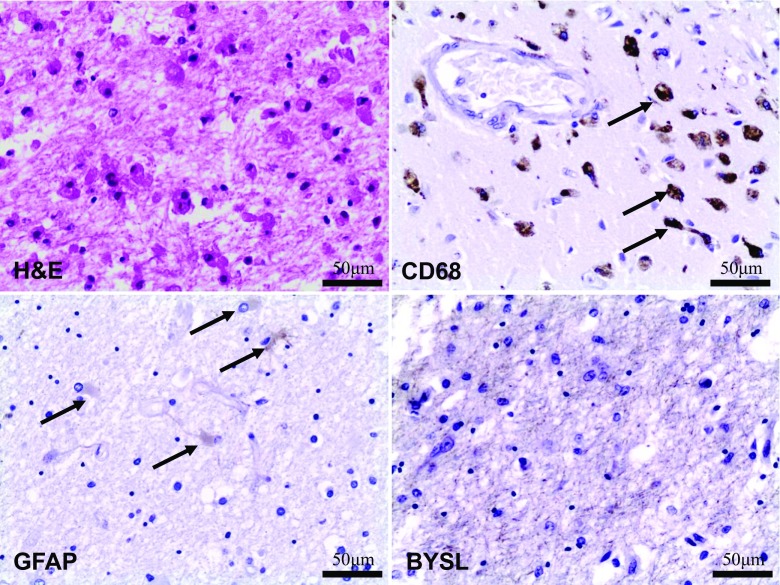
Bystin (BYSL) is a 306-amino acid protein encoded in humans by the BYSL gene located on the 6p21.1 chromosome. It is conserved across a wide range of eukaryotes. BYSL was reported to be a sensitive marker for the reactive astrocytes induced by ischemia/reperfusion and chemical hypoxia in vitro and is considered to be one of the common characteristics of astrogliosis. In our study we examined whether BYSL could be used as a marker for hypoxic-ischemic changes in forensic cases. Groups suspected of acute hypoxic-ischemic changes presented strong BYSL expression in the cytoplasm of neocortical neurons especially in layers 3-5, that seemed to be short-lasting. In the hypoxic-ischemic-reperfusion group we did not find BYSL expression. BYSL expression in the cytoplasm of cortical neurons was minimal in the control group (cardiac arrest). BYSL seems to be a promising early marker of severe hypoxic-ischemic changes in neuropathological examination of forensic cases and certainly requires further studies.
Keywords: Brain ischemia; Bystin; Hypoxia-ischemia; Marker.
Conflict of interest statement
Conflict of interest
All authors declare that they have no conflict of interest.
Ethical approval
For this type of study formal consent is not required.
Financial disclosure statement
None.
Clinical trial registry name
None.
Figures

References
MeSH terms
Substances
LinkOut - more resources
Full Text Sources
Other Literature Sources
