


Living with chronic pain: perceptions of breast cancer survivors
- PMID: 29350307
- PMCID: PMC6147242
- DOI: 10.1007/s10549-018-4670-9
Living with chronic pain: perceptions of breast cancer survivors
Abstract
Purpose: Breast cancer treatments may lead to chronic pain. For some breast cancer survivors (BCS), this experience can develop into the perception of living with chronic pain. The majority of BCS are postmenopausal and have hormone receptor-positive (HR+) breast cancer requiring aromatase inhibitors (AIs). Neither the prevalence nor risk factors associated with the perception of living with chronic pain among this population are well defined.
Methods: We conducted a cross-sectional survey among postmenopausal, HR+ BCS who previously took or were currently taking AIs. The primary outcome was patients' perception of living with chronic pain over the past 6 months. We measured pain and demographic and clinical variables. Multivariable logistic regression analysis was performed to evaluate risk factors associated with the perception of chronic pain.
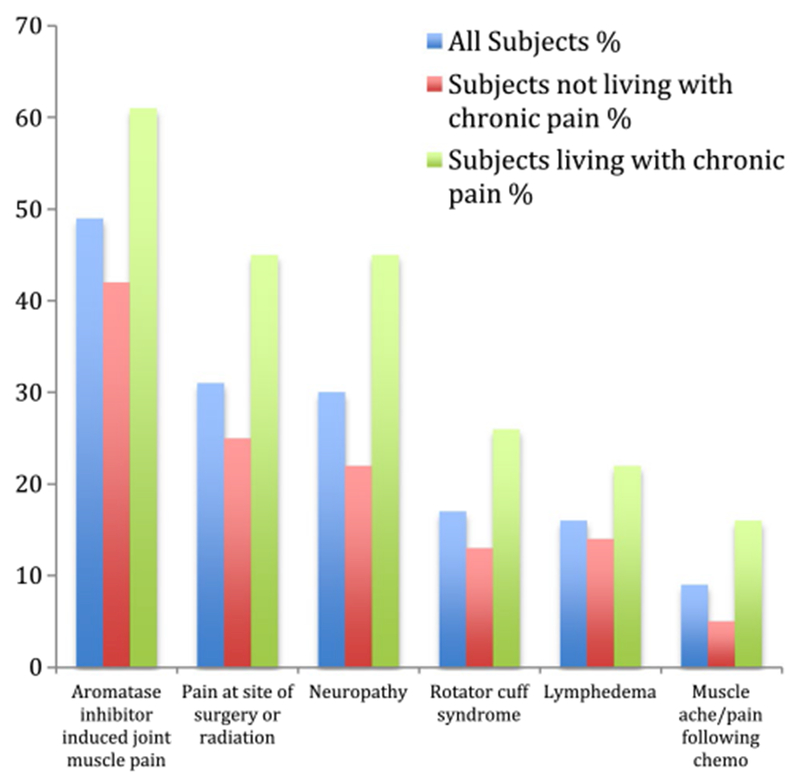
Results: Among 1280 participants, 167 (13%) reported having the perception of living with chronic pain before their breast cancer diagnosis; 426 (34%) reported this perception after completion of non-hormonal cancer treatment. Seventy-eight percent of BCSs reported experiencing at least one type of treatment-related pain within the past 7 days, with 23% experiencing at least three types. The most common types of pain were AI-induced musculoskeletal pain (49%) and pain at the surgery or radiation site (31%). Younger age (< 56), BMI > 25, and the perception of living with chronic pain before diagnosis were risk factors associated with the perception of living with chronic pain.
Conclusions: One in three postmenopausal, HR+ BCS considered themselves to be living with chronic pain. Effective interventions to reduce chronic pain are needed.
Keywords: Aromatase inhibitors; Breast cancer; Chronic pain; Musculoskeletal pain.
Conflict of interest statement
Figures
References
-
- Cancer Facts and Statistics 2017, American Cancer Society, 2017
-
- Peuckmann V, Ekholm O, Rasmussen NK et al. (2009) Chronic pain and other sequelae in long-term breast cancer survivors: nationwide survey in Denmark. Eur J Pain 13:478–485 - PubMed
-
- De Oliveira GS Jr, Chang R, Khan SA et al. (2014) Factors associated with the development of chronic pain after surgery for breast cancer: a prospective cohort from a tertiary center in the United States. Breast J 20:9–14 - PubMed
-
- Schou Bredal I, Smeby NA, Ottesen S et al. (2014) Chronic pain in breast cancer survivors: comparison of psychosocial, surgical, and medical characteristics between survivors with and without pain. J Pain Symptom Manag 48:852–862 - PubMed
-
- Gartner R, Jensen MB, Nielsen J et al. (2009) Prevalence of and factors associated with persistent pain following breast cancer surgery. JAMA 302:1985–1992 - PubMed
MeSH terms
Substances
Grants and funding
LinkOut - more resources
Full Text Sources
Other Literature Sources
Medical
Miscellaneous
