


Utilizing Dietary Micronutrient Ratios in Nutritional Research May be More Informative than Focusing on Single Nutrients
- PMID: 29351249
- PMCID: PMC5793335
- DOI: 10.3390/nu10010107
Utilizing Dietary Micronutrient Ratios in Nutritional Research May be More Informative than Focusing on Single Nutrients
Abstract
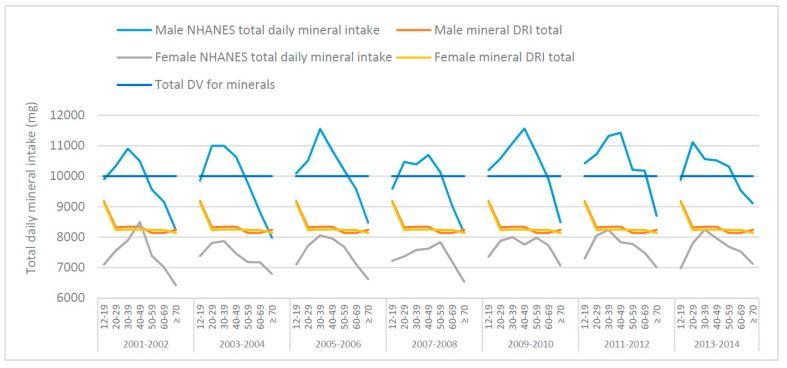
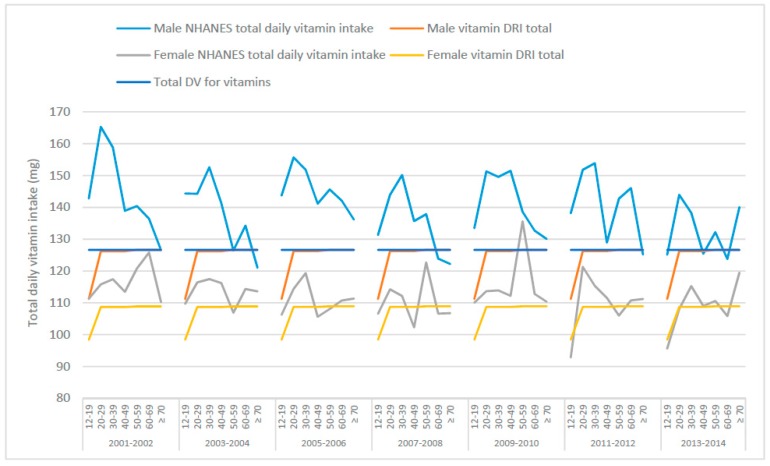
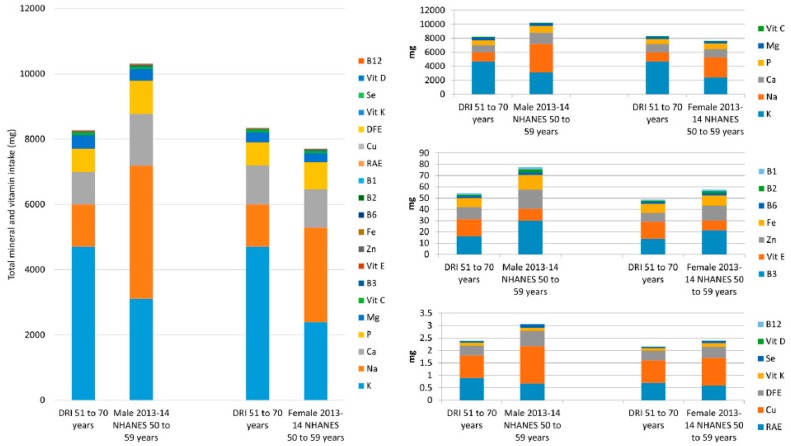
The 2015 US dietary guidelines advise the importance of good dietary patterns for health, which includes all nutrients. Micronutrients are rarely, if ever, consumed separately, they are not tissue specific in their actions and at the molecular level they are multitaskers. Metabolism functions within a seemingly random cellular milieu however ratios are important, for example, the ratio of adenosine triphosphate to adenosine monophosphate, or oxidized to reduced glutathione. Health status is determined by simple ratios, such as the waist hip ratio, or ratio of fat mass to lean mass. Some nutrient ratios exist and remain controversial such as the omega-6/omega-3 fatty acid ratio and the sodium/potassium ratio. Therefore, examining ratios of micronutrients may convey more information about how diet and health outcomes are related. Summarized micronutrient intake data, from food only, from the National Health and Nutrition Examination Survey, were used to generate initial ratios. Overall, in this preliminary analysis dietary ratios of micronutrients showed some differences between intakes and recommendations. Principles outlined here could be used in nutritional epidemiology and in basic nutritional research, rather than focusing on individual nutrient intakes. This paper presents the concept of micronutrient ratios to encourage change in the way nutrients are regarded.
Keywords: daily values; dietary guidelines; dietary patterns; dietary reference intakes; micronutrient ratios; micronutrients; mineral; vitamin.
Conflict of interest statement
All authors have no conflicts of interest. O.J.K. and J.C.G. are salaried employees of Abbott Nutrition.
Figures
References
-
- Gaither C.C., Cavazos-Gaither A.E. Gaither’s Dictionary of Scientific Quotations. 2nd ed. Springer; Berlin, Germany: 2012.
-
- Carpenter K.J. A short history of nutritional science: Part 1 (1785–1885) J. Nutr. 2003;133:638–645. - PubMed
-
- Carpenter K.J. A short history of nutritional science: Part 2 (1885–1912) J. Nutr. 2003;133:975–984. - PubMed
-
- Carpenter K.J. A short history of nutritional science: Part 3 (1912–1944) J. Nutr. 2003;133:3023–3032. - PubMed
-
- Carpenter K.J. A short history of nutritional science: Part 4 (1945–1985) J. Nutr. 2003;133:3331–3342. - PubMed
MeSH terms
Substances
LinkOut - more resources
Full Text Sources
Other Literature Sources
