Understanding the legal trade of cattle and camels and the derived risk of Rift Valley Fever introduction into and transmission within Egypt
- PMID: 29351273
- PMCID: PMC5792020
- DOI: 10.1371/journal.pntd.0006143
Understanding the legal trade of cattle and camels and the derived risk of Rift Valley Fever introduction into and transmission within Egypt
Abstract
Rift Valley Fever (RVF) is a mosquito-borne zoonosis, which may cause significant losses for the livestock sector and have serious public health implications. Egypt has been repeatedly affected by RVF epidemics, mainly associated to the importation of animals from sub-Saharan countries, where the disease is endemic. The objective of our study was the improvement of the surveillance and control strategies implemented in Egypt. In order to do that, first we evaluated the legal trade of live animals into and within Egypt. Then, we assessed the risk of Rift Valley Fever virus (RVFV) transmission within the country using a multi-criteria evaluation approach. Finally, we combined the animal trade and the risk of RVFV transmission data to identify those areas and periods in which the introduction of RVFV is more likely. Our results indicate that the main risk of RVFV introduction is posed by the continuous flow of large number of camels coming from Sudan. The risk of RVFV transmission by vectors is restricted to the areas surrounding the Nile river, and does not vary significantly throughout the year. Imported camels are taken to quarantines, where the risk of RVFV transmission by vectors is generally low. Then, they are taken to animal markets or slaughterhouses, many located in populated areas, where the risk of RVFV transmission to animals or humans is much higher. The measures currently implemented (quarantines, vaccination or testing) seem to have a limited effect in reducing the risk of RVFV introduction, and therefore other (risk-based) surveillance strategies are proposed.
Conflict of interest statement
The authors have declared that no competing interests exist.
Figures
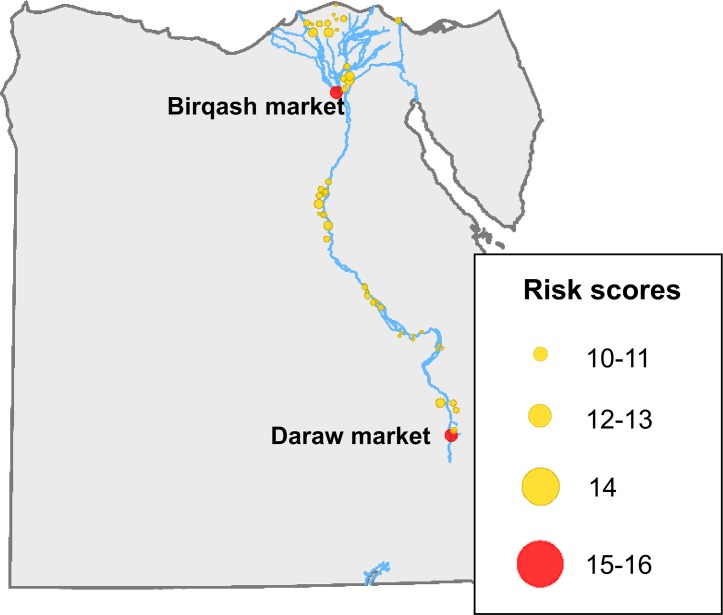
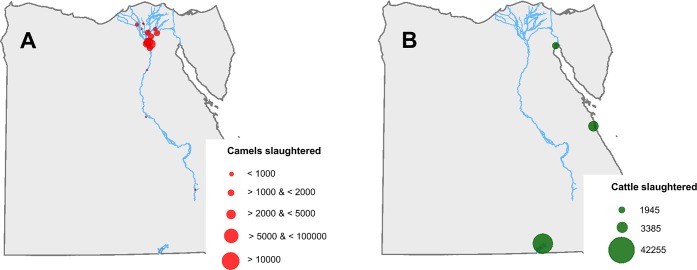
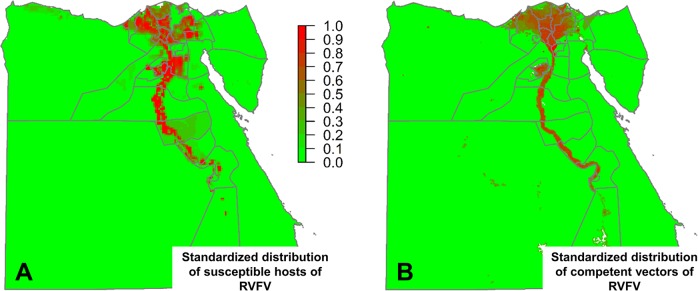
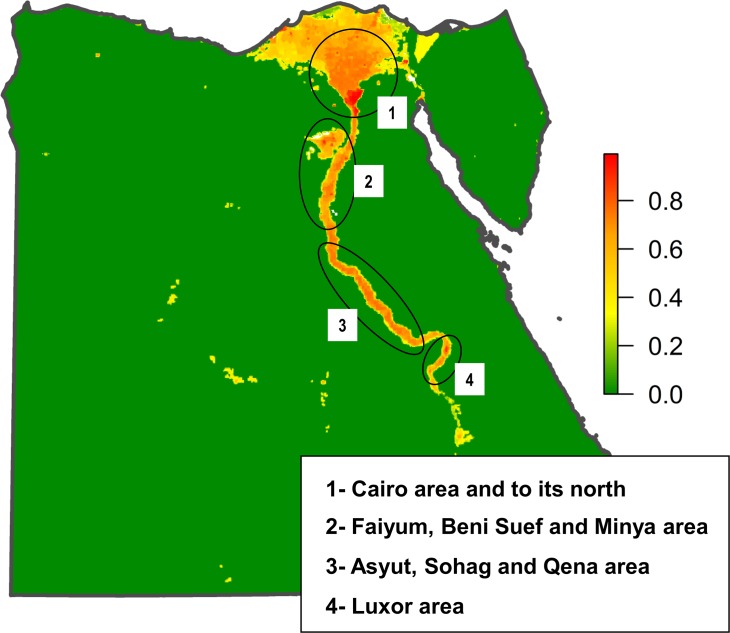
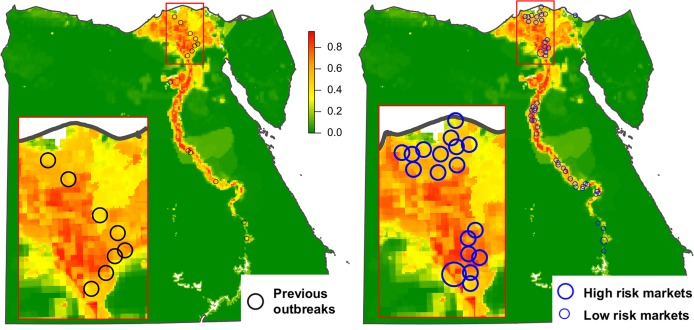
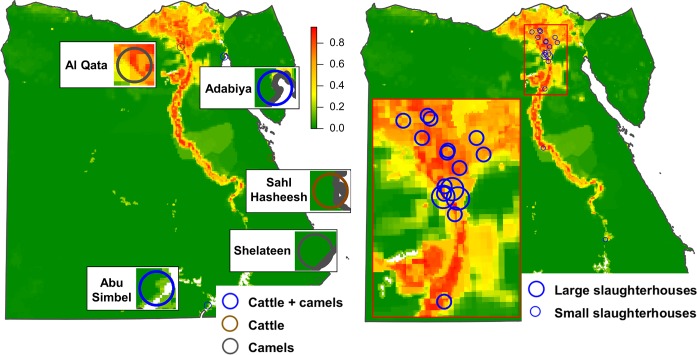
References
-
- Ikegami T, Makino S. The pathogenesis of Rift Valley fever. Viruses 2011; 3: 493–519. doi: 10.3390/v3050493 - DOI - PMC - PubMed
-
- Pepin M, Bouloy M, Bird BH, Kemp A, Paweska J. Rift Valley fever virus (Bunyaviridae: Phlebovirus): an update on pathogenesis, molecular epidemiology, vectors, diagnostics and prevention. Vet Res 2010; 41:61 doi: 10.1051/vetres/2010033 - DOI - PMC - PubMed
-
- Chevalier V, Pépin M, Plée L, Lancelot R. Rift Valley fever—a threat for Europe? Euro Surveill 2010; 15:19506 - PubMed
-
- Peyre M, Chevalier V, Abdo-Salem S, Velthuis A, Antoine-Moussiaux N, Thiry E, et al. A Systematic Scoping Study of the Socio-Economic Impact of Rift Valley Fever: Research Gaps and Needs. Zoonoses Public Health 2015; 62:309–325. doi: 10.1111/zph.12153 - DOI - PubMed
-
- Meegan JM. The Rift Valley fever epizootic in Egypt 1977–78. 1. Description of the epizootic and virological studies. Trans R Soc Trop Med Hyg 1979a;73: 618–623. - PubMed
Publication types
MeSH terms
LinkOut - more resources
Full Text Sources
Other Literature Sources
Medical