


Invasive bacterial disease trends and characterization of group B streptococcal isolates among young infants in southern Mozambique, 2001-2015
- PMID: 29351318
- PMCID: PMC5774717
- DOI: 10.1371/journal.pone.0191193
Invasive bacterial disease trends and characterization of group B streptococcal isolates among young infants in southern Mozambique, 2001-2015
Abstract
Background: Maternal group B streptococcal (GBS) vaccines under development hold promise to prevent GBS disease in young infants. Sub-Saharan Africa has the highest estimated disease burden, although data on incidence and circulating strains are limited. We described invasive bacterial disease (IBD) trends among infants <90 days in rural Mozambique during 2001-2015, with a focus on GBS epidemiology and strain characteristics.
Methods: Community-level birth and mortality data were obtained from Manhiça's demographic surveillance system. IBD cases were captured through ongoing surveillance at Manhiça district hospital. Stored GBS isolates from cases underwent serotyping by multiplex PCR, antimicrobial susceptibility testing, and whole genome sequencing.
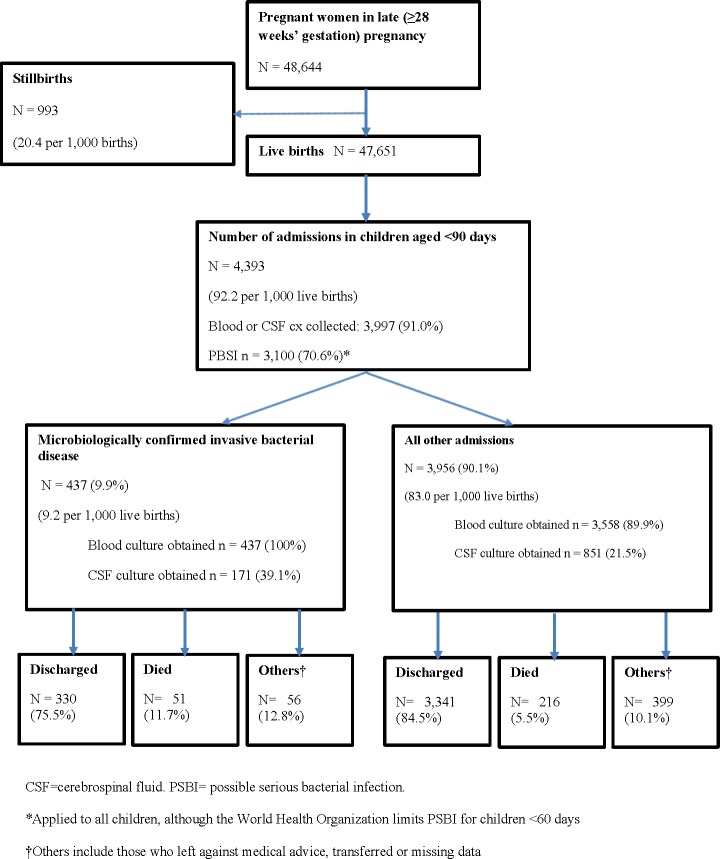
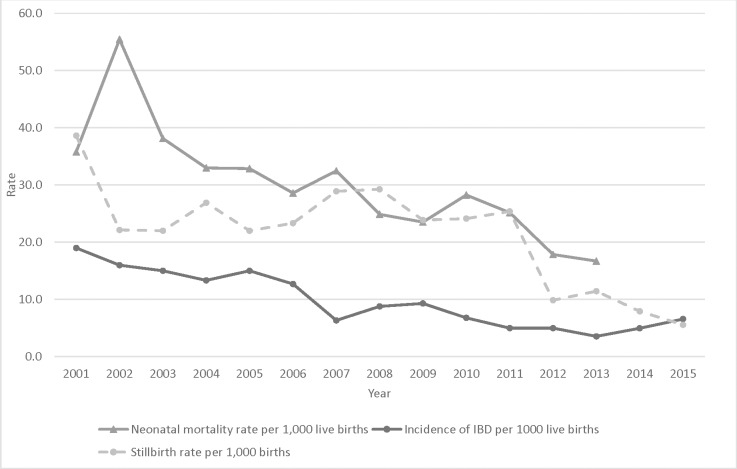
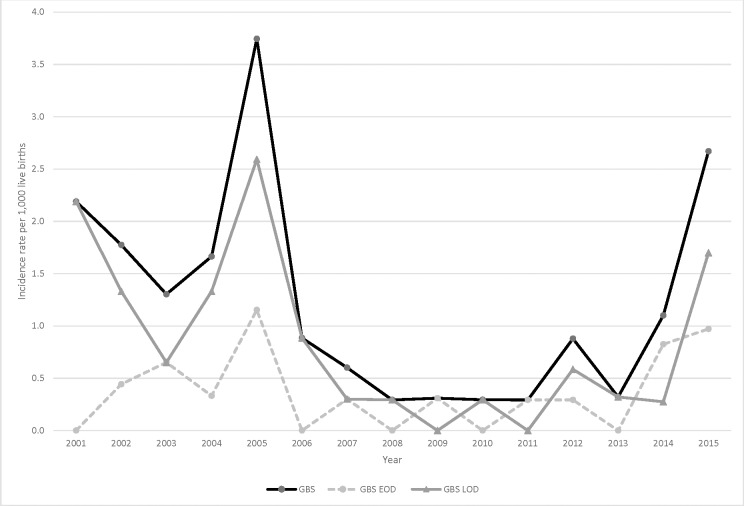
Results: There were 437 IBD cases, including 57 GBS cases. Significant declines in overall IBD, neonatal mortality, and stillbirth rates were observed (P<0.0001), but not for GBS (P = 0.17). In 2015, GBS was the leading cause of young infant IBD (2.7 per 1,000 live births). Among 35 GBS isolates available for testing, 31 (88.6%) were highly related serotype III isolates within multilocus sequence types (STs) 17 (68.6%) or 109 (20.0%). All seven ST109 isolates (21.9%) had elevated minimum inhibitory concentration (MIC) to penicillin (≥0.12 μg/mL) associated with penicillin-binding protein (PBP) 2x substitution G398A. Epidemiologic and molecular data suggest this is a well-established clone.
Conclusion: A notable young infant GBS disease burden persisted despite improvements in overall maternal and neonatal health. We report an established strain with pbp2x point mutation, a first-step mutation associated with reduced penicillin susceptibility within a well-known virulent lineage in rural Mozambique. Our findings further underscores the need for non-antibiotic GBS prevention strategies.
Conflict of interest statement
Figures
References
-
- Liu L, Oza S, Hogan D, Perin J, Rudan I, Lawn JE, et al. Global, regional, and national causes of child mortality in 2000–13, with projections to inform post-2015 priorities: an updated systematic analysis. Lancet (London, England). 2015;385(9966):430–40. Epub 2014/10/05. doi: 10.1016/s0140-6736(14)61698-6 . - DOI - PubMed
-
- Stoll BJ, Hansen NI, Sanchez PJ, Faix RG, Poindexter BB, Van Meurs KP, et al. Early onset neonatal sepsis: the burden of group B Streptococcal and E. coli disease continues. Pediatrics. 2011;127(5):817–26. Epub 2011/04/27. doi: 10.1542/peds.2010-2217 ; PubMed Central PMCID: PMCPmc3081183. - DOI - PMC - PubMed
-
- Thigpen MC, Whitney CG, Messonnier NE, Zell ER, Lynfield R, Hadler JL, et al. Bacterial meningitis in the United States, 1998–2007. The New England journal of medicine. 2011;364(21):2016–25. Epub 2011/05/27. doi: 10.1056/NEJMoa1005384 . - DOI - PubMed
-
- Cutland CL, Madhi SA, Zell ER, Kuwanda L, Laque M, Groome M, et al. Chlorhexidine maternal-vaginal and neonate body wipes in sepsis and vertical transmission of pathogenic bacteria in South Africa: a randomised, controlled trial. Lancet (London, England). 2009;374(9705):1909–16. Epub 2009/10/23. doi: 10.1016/s0140-6736(09)61339-8 . - DOI - PubMed
-
- Baker CJ. Early onset group B streptococcal disease. The Journal of pediatrics. 1978;93(1):124–5. Epub 1978/07/01. . - PubMed
Publication types
MeSH terms
Substances
LinkOut - more resources
Full Text Sources
Other Literature Sources
Medical
Research Materials
Miscellaneous
