A Membrane G-Protein-Coupled Estrogen Receptor Is Necessary but Not Sufficient for Sex Differences in Zebra Finch Auditory Coding
- PMID: 29351614
- PMCID: PMC5839738
- DOI: 10.1210/en.2017-03102
A Membrane G-Protein-Coupled Estrogen Receptor Is Necessary but Not Sufficient for Sex Differences in Zebra Finch Auditory Coding
Abstract
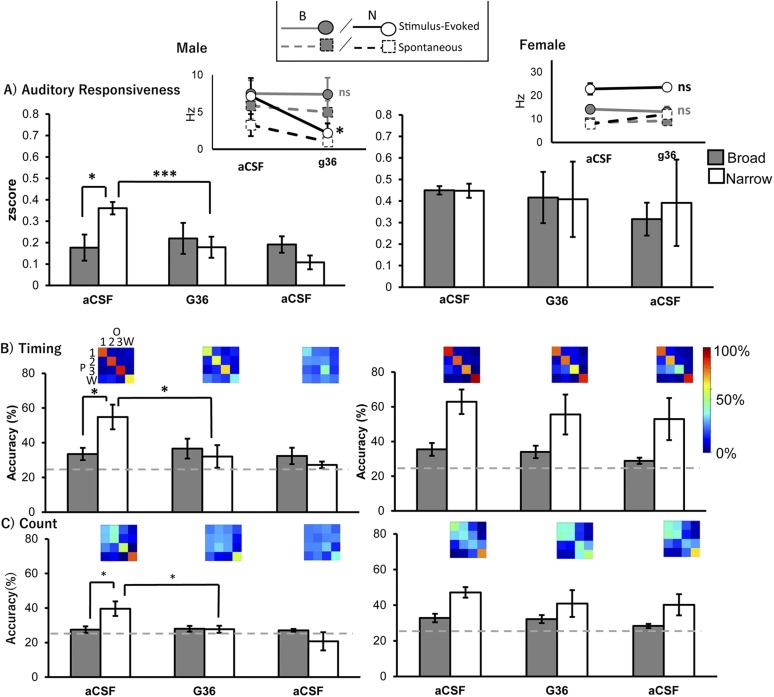
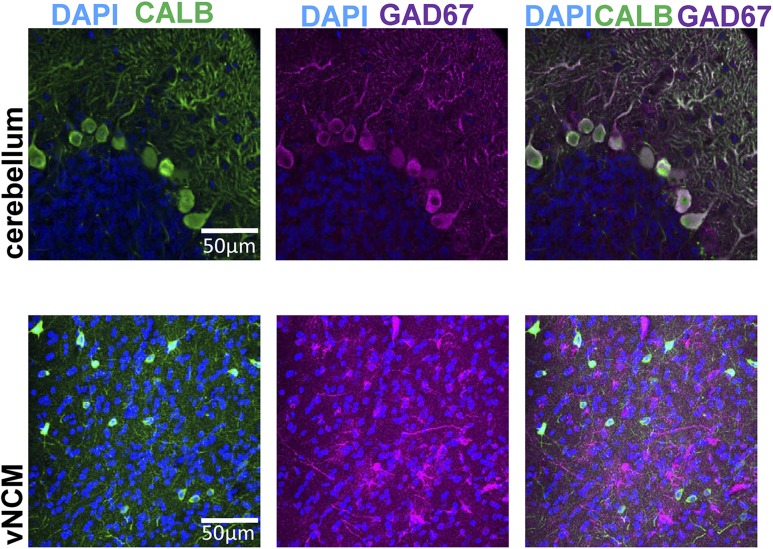
Estradiol acts as a neuromodulator in brain regions important for cognition and sensory processing. Estradiol also shapes brain sex differences but rarely have these concepts been considered simultaneously. In male and female songbirds, estradiol rapidly increases within the auditory forebrain during song exposure and enhances local auditory processing. We tested whether G-protein-coupled estrogen receptor 1 (GPER1), a membrane-bound estrogen receptor, is necessary and sufficient for neuroestrogen regulation of forebrain auditory processing in male and female zebra finches (Taeniopygia guttata). At baseline, we observed that females had elevated single-neuron responses to songs vs males. In males, narrow-spiking (NS) neurons were more responsive to conspecific songs than broad-spiking (BS) neurons, yet cell types were similarly auditory responsive in females. Following acute inactivation of GPER1, auditory responsiveness and coding were suppressed in male NS yet unchanged in female NS and in BS of both sexes. By contrast, GPER1 activation did not mimic previously established estradiol actions in either sex. Lastly, the expression of GPER1 and its coexpression with an inhibitory neuron marker were similarly abundant in males and females, confirming anatomical similarity in the auditory forebrain. In this study, we found: (1) a role for GPER1 in regulating sensory processing and (2) a sex difference in auditory processing of complex vocalizations in a cell type-specific manner. These results reveal sex specificity of a rapid estrogen signaling mechanism in which neuromodulation accounts and/or compensates for brain sex differences, dependent on cell type, in brain regions that are anatomically similar in both sexes.
Conflict of interest statement
The authors have nothing to disclose.
Figures





References
-
- Nottebohm F, Arnold AP. Sexual dimorphism in vocal control areas of the songbird brain. Science. 1976;194(4261):211–213. - PubMed
-
- Hamaide J, De Groof G, Van Steenkiste G, Jeurissen B, Van Audekerke J, Naeyaert M, Van Ruijssevelt L, Cornil C, Sijbers J, Verhoye M, Van der Linden A. Exploring sex differences in the adult zebra finch brain: in vivo diffusion tensor imaging and ex vivo super-resolution track density imaging. Neuroimage. 2017;146:789–803. - PubMed
Publication types
MeSH terms
Substances
Grants and funding
LinkOut - more resources
Full Text Sources
Other Literature Sources
Miscellaneous