Prevalence and characteristics of metabolic syndrome in adults from the French childhood leukemia survivors' cohort: a comparison with controls from the French population
- PMID: 29351982
- PMCID: PMC5865433
- DOI: 10.3324/haematol.2017.176123
Prevalence and characteristics of metabolic syndrome in adults from the French childhood leukemia survivors' cohort: a comparison with controls from the French population
Abstract
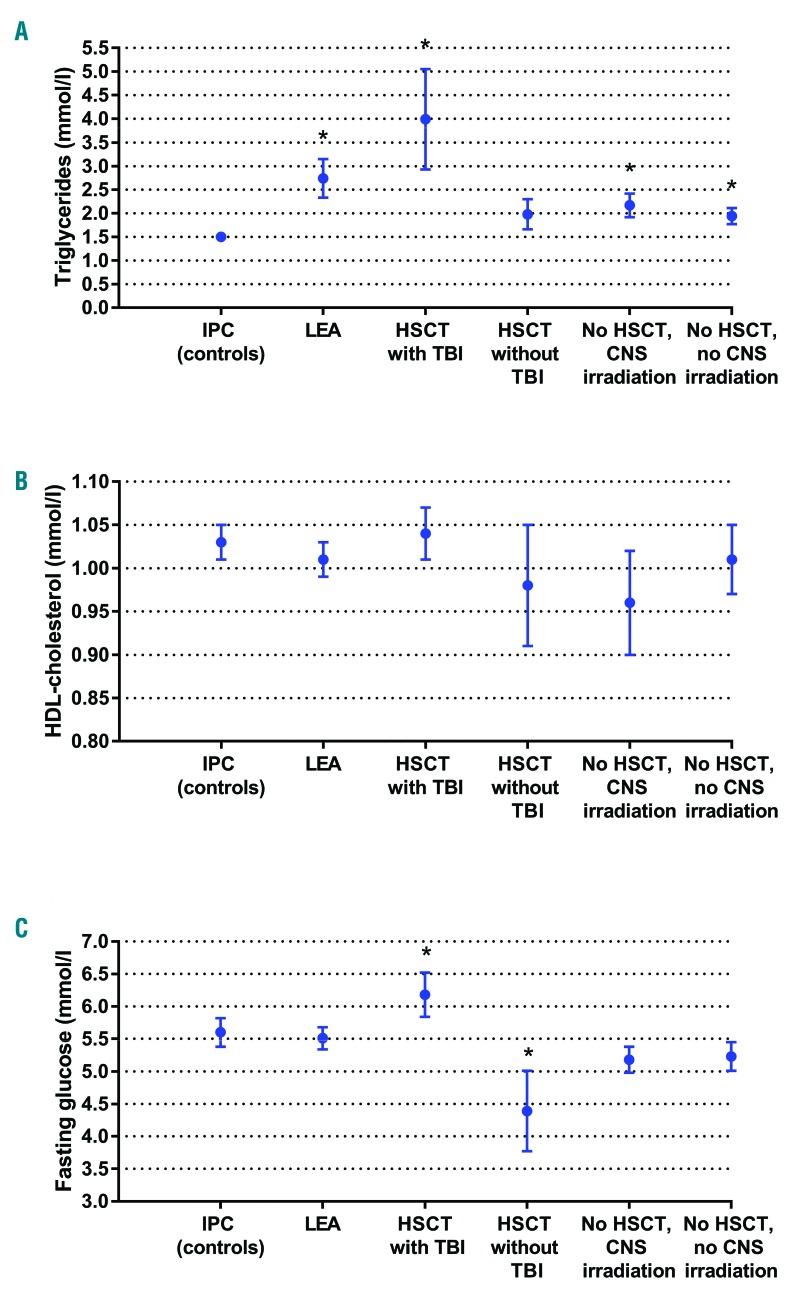
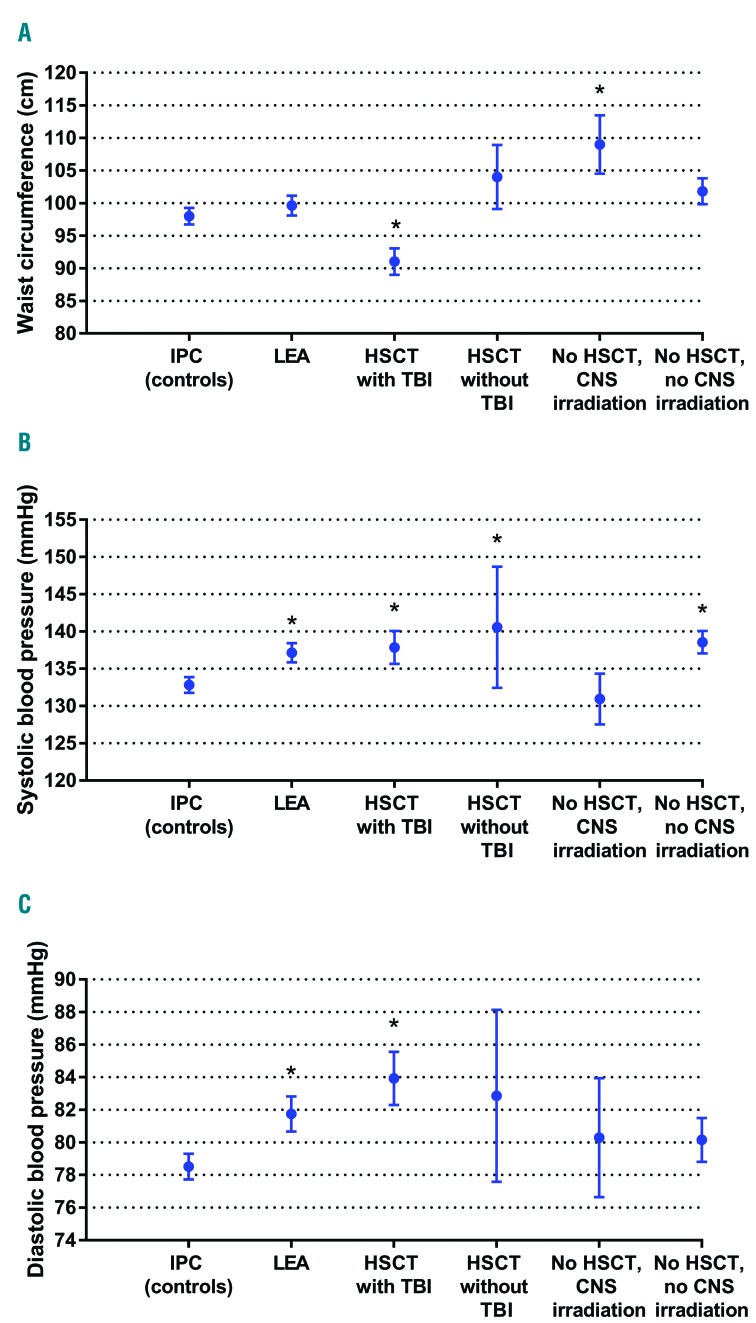
The prevalence of the metabolic syndrome among adults from the French LEA childhood acute leukemia survivors' cohort was prospectively evaluated considering the type of anti-leukemic treatment received, and compared with that of controls. The metabolic profile of these patients was compared with that of controls. A total of 3203 patients from a French volunteer cohort were age- and sex-matched 3:1 to 1025 leukemia survivors (in both cohorts, mean age: 24.4 years; females: 51%). Metabolic syndrome was defined according to the National Cholesterol Education Program's Adult Treatment Panel III criteria. Metabolic syndrome was found in 10.3% of patients (mean follow-up duration: 16.3±0.2 years) and 4.5% of controls, (OR=2.49; P<0.001). Patients transplanted with total body irradiation presented the highest risk (OR=6.26; P<0.001); the other treatment groups also showed a higher risk than controls, including patients treated with chemotherapy only. Odd Ratios were 1.68 (P=0.005) after chemotherapy only, 2.32 (P=0.002) after chemotherapy and cranial irradiation, and 2.18 (P=0.057) in patients transplanted without irradiation. Total body irradiation recipients with metabolic syndrome displayed a unique profile compared with controls: smaller waist circumference (91 vs 99.6 cm; P=0.01), and increased triglyceride levels (3.99 vs 1.5 mmol/L; P<0.001), fasting glucose levels (6.2 vs 5.6 mmol/L; P=0.049), and systolic blood pressure (137.9 vs 132.8 mmHg; P=0.005). By contrast, cranial irradiation recipients with metabolic syndrome had a larger waist circumference (109 vs 99.6 cm; P=0.007) than controls. Regardless of the anti-leukemic treatment, metabolic syndrome risk was higher among childhood leukemia survivors. Its presentation differed depending on the treatment type, thus suggesting a divergent pathophysiology. This study is registered at clinicaltrials.gov identifier: 01756599.
Trial registration: ClinicalTrials.gov NCT01756599.
Copyright© 2018 Ferrata Storti Foundation.
Figures
References
-
- Hunger SP, Mullighan CG. Acute Lymphoblastic Leukemia in Children. N Engl J Med. 2015;373(16):1541–1552. - PubMed
-
- Creutzig U, Zimmermann M, Bourquin JP, et al. Randomized trial comparing liposomal daunorubicin with idarubicin as induction for pediatric acute myeloid leukemia: results from Study AML-BFM 2004. Blood. 2013;122(1):37–43. - PubMed
Publication types
MeSH terms
Substances
Associated data
LinkOut - more resources
Full Text Sources
Other Literature Sources
Medical